Monday, 20 July 2026

Review: Golem for Broke: A Magical Midlife Urban Fantasy

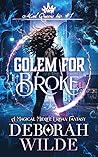
Golem for Broke: A Magical Midlife Urban Fantasy Golem for Broke: A Magical Midlife Urban Fantasy by Deborah Wilde
My rating: 4 of 5 stars

Midlife urban fantasy is often an ever-so-slightly reskinned version of what I always refer to as This Damn Thing Again, where a middle-aged woman with no ties (instead of a young woman with no ties) inherits property from an elderly relative, returns to her hometown, discovers her magical heritage, meets a hot werewolf and/or cop, gets a cute familiar and solves a bland and obvious mystery while not putting much work into a small business.

This book is not that.

Instead, it's set in a world similar to ours - maybe a little too similar, given that the difference is that a lot of people have magic, and this is publicly known, and apparently this has been the case for a long time, maybe forever. The protagonist is Jewish, and for some unexplored reason, even though people from every culture have magic, the apparently universally used terms for people with and without magic, and the name of the group that polices it, are Hebrew terms.

The original (as far as I know) twist to this particular setting is that magic comes to people through transitions or traumatic life events, including but not limited to puberty and menopause. The protagonist and her three friends, collectively the Mad Queens, have magic they got at menopause, which reflects menopausal changes - hot flashes giving fire magic, brain fog the ability to make other people forget things, and so on. They also have secret secondary magic, secret because (again, for reasons unexplored beyond "historically, people with two powers have been a problem"), that's drastically illegal and will get you imprisoned for life or killed. This provides stakes; Tovah, the protagonist, must protect her secret, and so hesitates to use her second power (of unravelling magic) in case it leads to detection for her and her friends, but sometimes that's her only option if she's going to survive.

They function as a kind of problem-solving agency, not exactly private detectives but similar, and have managed to find a legal loophole that means they aren't regulated by the authorities. This puts the protagonist at odds with her cousin, who's the head of Gevurah, the supernatural policing agency for the Canadian city where they all live. Not least because she inherited the Mad Queens agency from her aunt, the cousin's mother.

The book opens with a tone-setting scene, simultaneously hilarious, ridiculous, suspenseful and occasionally coarse, in which Tovah, in the middle of a mammogram, topless and clamped into the machine, must fight off a rogue golem who's threatening both her and her mammography technician. This leads into a mystery/thriller plot that kept me interested, and mostly puzzled (in a good way), throughout.

There are a few flaws. I've already mentioned some bits of worldbuilding that didn't completely convince me. There's an enemies-to-lovers romance arc that didn't convince me either. Firstly, not a lot of work has gone into the "enemies" bit; there's no backstory (as far as I remember) of any specific incidents or reasons why Tovah and the golem maker are enemies, it's just "this bastard is my brother's best friend and we don't get on." Then the handling of the actual arc reminded me of an early British motor car, in that it was so obviously "enemies to lovers" it might as well have had a man walking in front of it waving a big flag and letting off fireworks every time he reached an intersection. And then there are a few minor issues, like why a golem made of fired porcelain would leave clay under the fingernails of a woman she'd attacked.

But the golems and gargoyles are cool, the world is interesting if occasionally thin, the plot is sound, the multicultural middle-aged women are gloriously indifferent to what other people think, the threats feel genuinely threatening and the protagonist feels genuinely competent and intelligent, the writing craft is solid, and the editing is mostly very clean. I'd definitely read a sequel.

View all my reviews

Friday, 17 July 2026

Review: Dancers In Mourning

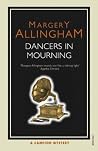
Dancers In Mourning Dancers In Mourning by Margery Allingham
My rating: 5 of 5 stars

Unusually, this book includes a callback to earlier in the series: a character from Police at the Funeral reappears, and is the means of introducing Campion into the investigation into what is, at first, just a series of nasty pranks played on a prominent theatrical producer/dancer with the apparent goal of disrupting his show and/or emotional stability (inasmuch as theatre people can be said to have emotional stability).

It omits a callback to Sweet Danger, in which Campion more-or-less promised a very young woman that when she was old enough, they would try a relationship. (It's less creepy than it sounds, in context.) I would have expected some such callback, because in this book he inadvertently and rather to his dismay falls in love with his client's wife.

Campion's love interests always seem to be unavailable. A good half of them end up with (or, in this case, start out with) someone else, for a start. Having played out a similar pattern - excluding the someone-else's-wife part - in my own young adult life, I sympathise, though I got past it at a younger age than Campion; it's a form of self-sabotage, probably, or self-protection against actually having to deal with a relationship.

As always, all the characters are vivid, individual and mostly eccentric, or at least distinctive in some way. Not the least vivid of them is Lugg, Campion's ex-con manservant. Sent to fill in as butler at the country house that's the centre of the events when the existing butler resigns, Lugg declares, "I'll do anything, as long as it's not common." Which is amusing, because Lugg is always common, as his habit of addressing his employer as "cock" attests. He ends up teaching the theatrical manager's six-year-old daughter to pick locks with a hairpin and run the three-card-monte scam, much to her delight, and probably nobody else's.

To my surprise, I figured out the murderer some time before Campion did, though I didn't have his personal stake in the answer. It's not the best of the series, but mainly because of the character work I still feel it deserves five stars.

View all my reviews

Review: The Blotting Book

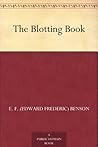
The Blotting Book The Blotting Book by E.F. Benson
My rating: 2 of 5 stars

Rather disappointing as a mystery, and not much to my taste as a novel either.

I bounced off Benson's Mrs Mapp, a thoroughly nasty, small-minded woman, after already having been less than delighted by his character Lucia's pretentious self-involvement. The characters here are not wonderful people either, and all in all Benson comes off as a misanthrope. Even the person for whom his omniscient narrator's viewpoint has little but praise acts completely out of character for what we're told about him, and since we don't see the key scenes it's never explicitly explored how he came to do so. (His motive is clear, but not how such a person comes to do such a thing.)

The mystery isn't particularly puzzling. A young man (22) reposes complete trust in a lawyer who has looked after his inheritance almost all his life, and been like a father, or at least an uncle, to him. What he doesn't know is that the lawyer had made some foolish investments and lost a lot of the young man's money, and is now attempting to get it back again. The lawyer's partner, who does know this, uses the knowledge to blackmail the first lawyer. The partner, knowing that the young man comes into his inheritance if he marries, also slanders him to his intended's father so that the marriage won't proceed, reducing the risk that he'll become aware of the shenanigans.

The young man becomes murderously furious about the slander, which doesn't succeed in its goal (since the intended believes in him), and when the partner is found murdered close to the intended's home, where the young man was around the presumed time of the murder, he is arrested and tried for the crime.

There's very little investigation shown; the investigating officer isn't even very bright. We're mostly shown the trial, at which evidence comes out that points to the (extremely obvious) actual murderer. It's a short book, and the whole thing wraps up quickly and linearly.

Not a success for me, and I think I'm done with Benson after this.

View all my reviews

Wednesday, 15 July 2026

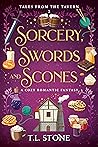
Review: Sorcery, Swords and Scones

Sorcery, Swords and Scones Sorcery, Swords and Scones by T.L. Stone
My rating: 4 of 5 stars

A pleasant cozy, and a good follow-up that builds on the first book in the series.

This time, the main focus is on Sass, the dwarf partner in the tavern of the series title, rather than on her half-elf business partner Lira, as in book one. Lira's story does continue to progress, though. (view spoiler) We learn what Sass was running from, and get to meet her best friend Thrain (Lord of the Rings readers will recognise this as the name of Thorin Oakenshield's father - we're not in Middle-Earth, but it's a nice homage).

There's a good deal of cozy food and drink and cute animal time, and the slow progression of a romance for Sass, but intermingled with this is a more serious threat from Sass's past, the reason she left home and ended up in the village of Wayside. (view spoiler)

I noticed some typos and other issues, though fewer than in the previous book, and reported them to the author using an email address she includes in the book for that purpose (showing a commitment to quality).

Like the first book, then, this has a few flaws from my perspective, but they're not fatal ones for my enjoyment, and I will continue to follow the series.

View all my reviews

Tuesday, 14 July 2026

Review: The Talleyrand Maxim

The Talleyrand Maxim The Talleyrand Maxim by J.S. Fletcher
My rating: 4 of 5 stars

The maxim of the title is "With time and patience, mulberry leaves become velvet." Which skips a lot of important steps, notably the role of the silk moth caterpillar, but never mind.

This is a beloved saying of the main character, who is not the detective, but the villain, in a move which Fletcher also used in The Paradise Mystery . He's a law clerk in a Yorkshire town, a man fit for treasons, stratagems and spoils, and always on the lookout for a chance to improve his fortunes, at the expense of others should that be necessary.

He gets this chance through a series of unlikely events. First, a wealthy mill owner is killed by a falling chimney in his mill, along with both witnesses to his will, which he has only just finished making (for no readily explicable reason). The will has been put in an old book, again for no obvious reason, so it isn't found after his death, and he's assumed to have been intestate. This means that his niece and nephew inherit, as his closest relatives.

The book falls into the hands of a local antiquarian bookseller, who brings it at the end of the workday to the solicitor's office where our villain works. Everyone else has gone home (or so the villain believes, at least), so when the old man dies immediately after telling him about the will and saying he hasn't told anyone else, he takes it to use as leverage against the heirs, or rather their mother, the late mill-owner's sister-in-law, who is doing a lot of the actual managing of the inheritance. The nephew lacks drive and focus, and the villain dismisses the niece as unimportant, which is a mistake.

This scheme starts unravelling almost immediately, and continues to do so until the end of the book. He soon finds himself in the "two can keep a secret if one of them is dead" situation. Meanwhile, the late bookseller's grandson, a barrister, comes to wrap up his estate, and ends up setting up in practice in the town, not least because of the late mill owner's niece, who has also attracted the villain's attention (more for her wealth than for the attractions of person and character which the barrister notices).

As well as being mostly (particularly at first) from the viewpoint of the villain, this book is notable in having an ensemble cast put together the various clues that the villain doesn't know about or has left inadvertently. There's his employer the solicitor, the young barrister, a police detective, and the honest niece of the mill owner, who isn't just a passive love interest but plays a vital role in the plot, not least by sensibly confiding in people she trusts. Various honest locals (speaking Yorkshire dialect) provide clues, the importance of which they are unaware of.

There's a strong message throughout that unearned wealth is a potential corrupting influence, and that a person is better off working at something meaningful. Interestingly, even the villain seems to know this; his blackmail demand isn't money, but a position as steward or agent managing some of the inheritance. It will make him more money than his law-clerk job, and it's not a post he could get without the leverage, but he is competent to do it and intends to work at it honestly. It's just that his means of getting there are villainous in the extreme.

Overall, it's something out of the ordinary for a Golden Age detective mystery, in a good way, which is my experience of Fletcher's books in general. I plan to read several more.

View all my reviews

Review: The Enterprising Burglar

The Enterprising Burglar The Enterprising Burglar by Hearnden Balfour
My rating: 3 of 5 stars

Yes, the title is a quotation from Gilbert and Sullivan.

Returned from World War I, and both bored and also outraged at the plight of returned soldiers who starve while war profiteers revel in their wealth, the Enterprising Burglar embarks on a Robin Hood campaign, stealing from the profiteers and giving the money to support... anti-Bolshevik causes? Yes, rather than thinking "The problem here is that capital has too much power and labour too little, I will attempt to shift the balance" or "I'll help support my former comrades who now can't get jobs," he takes on a revolutionary conspiracy that he comes across, the aim of which is to install a dictator in Britain after overthrowing the government. Said dictator candidate is inspirational, plausible, charismatic. His followers, rather than being just working-class Reds, are honest Englishmen of all classes and backgrounds. The Burglar - professionally known as Vive le Sport, legal name Stephen Nicholson, Nick to his friends - wants to foil the uprising while not, if he can help it, landing anyone in trouble other than the Chief, whose identity he is trying to ascertain. Because the other conspirators are just decent fellows who've been misled.

He confides in his old friend Jack and Jack's twin sister Jill (yes, really). Jack is a Scotland Yard detective, who has to pretend he doesn't know about Vive le Sport's activities because, don't you know, they're old friends, what? Knew each other in the trenches, and all that sort of thing. But Jack is being sent by his idiot superiors, who don't believe in the conspiracy, to Russia, so he can't be of much initial help.

Nick has been to a meeting of the conspirators in Wales (he's a master of disguise and has penetrated the organisation relatively easily), and is returning by train to London, in the same compartment as the leader of the conspiracy for the Western area, a Welshman. He's just hoping for some lucky chance that will enable him to go more deeply into the conspiracy and maybe get a clue to the Chief's identity when the author generously provides a train crash, in which the Welshman is badly injured, allowing Nick to impersonate him (swathed in bandages) at the big meeting. There, he gets away with the McGuffin: a signed list of all the members, which was going to be sent to Russia as the only collateral for a loan to fund the revolution. He then tries to use it as leverage to get the Chief to cancel the revolt and stand everyone down. He gives him until a month before the scheduled day.

Of course, the Chief isn't having that, and launches a series of attempts to get the McGuffin back. In the course of these, by the usual credulity-stretching coincidences that were so common in fiction of this period, the same people keep encountering each other in different contexts, and we end up with a love interest for Nick (I thought it was going to be Jill, but no; there are actually three named female characters with lines in this book, and I think they may even pass the Bechdel test.)

Round and round and round we go, and in the end the Chief's identity is revealed (view spoiler), and everything resolves itself. Meanwhile, though, we've had action, disguises, bluffs, danger, romance... all the ingredients.

It's not a bad book for its time. Yes, the coincidences are piled on far too thickly, but that could be said of many books written in this period. The love interest is appealing and shows at least some independence, though she doesn't really contribute all that much to the main plot. The schemes are sometimes clever, and if the conspiracy is thoroughly implausible, at least it's not as anti-labour as it could easily have been, and as better writers than this (looking at you, Agatha Christie) made it when employing this particular early-20th-century bogeyman. It's an earnest effort that's just a little too shonky to get four stars from me.

View all my reviews

Sunday, 12 July 2026

Review: The French Powder Mystery

The French Powder Mystery The French Powder Mystery by Ellery Queen
My rating: 3 of 5 stars

As with the first book, even though all of the clues are there, I didn't figure out who the criminal was until just before it was announced at the end. Ellery Queen is the kind of person who is very aware, and likes everyone else to be aware, that he's the smartest (and best-educated) person in the room, and he does back it up with clever deductions that make complete sense when he lays them out.

The same drawbacks are present as in the first book. It is, of course, completely absurd that a senior police inspector on the NYPD lets his dilettante author son trail around with him and investigate crime scenes, and also vouch for someone he'd known as a kid who would otherwise be a suspect, so that he, too, can be present in places he absolutely should not be and party to information he shouldn't have. Even setting that aside as a genre trope, there's an unpleasant undercurrent of casual racism, not in blatant "all these people are inferior and should have no rights" declarations, but in the language used about non-whites. There's a black minor character who is almost always referred to as "the Negress" when a more offensive term isn't being used (not the most offensive one, but a couple of slurs). She's described in the cast of characters as "a study in normal ebon," in other words, a stereotype, and the "dialect" that she and the other black character speak is fully represented, making it clear that they're part of an outgroup. Meanwhile, the Queens' Roma servant is described at one point as "simian."

There's not a lot of character work that isn't directly related to the plot. The romance subplot isn't even resolved.

These are clever mystery puzzles, and I do enjoy them at that level even though I don't solve them, but there's really not much in the way of other levels at which to enjoy them, and the racism is difficult to ignore. I don't think I'll continue with the series.

View all my reviews

Thursday, 9 July 2026

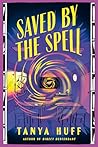
Review: Saved by the Spell

Saved by the Spell Saved by the Spell by Tanya Huff
My rating: 4 of 5 stars

The premise was immediately appealing to me: What if Harry Potter, but Canadian, from the perspective of the teachers, and the teachers are genre-savvy?

Realistically overworked and underpaid English teacher Abby Bellman has some extra headaches to contend with: the school she works at is a magic school, where kids learn to handle their powers, which can mean things like fireballs and sudden plant growth. That's bad enough, but she's just figured out that one of her new class of 14-year-olds is a Hero. Which means that somewhere there's a Villain, and Abby is the Mentor.

This isn't a world where magic is hidden. The school is a government school, and there are plenty of others throughout the world (this is the only one in Canada). The existence of magic has changed a few things, though not enough for my full suspension of disbelief, compared with our world. The same authors exist, for example. For reasons not gone into, various forms of paganism have survived into the equivalent of the 21st century, but this is completely not reflected in people's names, many of which (including Abby's, a nominal Druid) come from the Bible, as they would in our world. There are religiously bigoted protestors - with mispunctuated signs - outside the school, and they are never specifically identified as Christians, but they clearly are meant to be. Put this alongside the fact that almost everyone who has a relationship is queer in some way, and you'll know whether you are or are not the audience Huff is aiming for.

My parents were both teachers, and the way they complained about their jobs put me off the profession, so that was a touchpoint for me. I wasn't fully convinced by some aspects of Abby being an English teacher; do real English teachers try to enforce the completely made-up and only-observed-by-total-pedants rule that a preposition is something you shouldn't end a sentence with? Also, despite mentioning misplaced modifiers as something she battles against in her students' work, she commits one. In the pre-publication version I had via Netgalley, there were also a good few sentences with missing, inserted or jumbled words, one misplaced apostrophe and a few other punctuation glitches, and some vocabulary errors. They may be fixed by publication.

I did have some difficulty keeping track of all the minor characters; there are quite a few staff and students, naturally, and because the staff are known by their first names when Abby is talking to them or thinking about them and by their surnames when she's talking about them in the presence of students, and they were mostly introduced in the same scene and not all that well differentiated from each other, it becomes a bit confusing at times.

I've read a couple of Huff's books before, one of which I liked and the other I didn't, so picking up this one was a calculated gamble. I'm glad I did; leaving aside the worldbuilding weaknesses and occasional mechanical issues, it's well told, amusing in a wry way, and shows us a world-weary (and just outright weary) person who, nevertheless, will persevere in doing the right thing regardless of what it costs her, because she does actually care about the kids entrusted to her. It reminded me of Jim C. Hines' Slayers of Old , which I highly recommend, in the way it took familiar genre tropes to the next level of seriousness and asked what would really happen, while keeping an ironic detachment from the essential silliness of them and also telling a good story.

View all my reviews

Tuesday, 7 July 2026

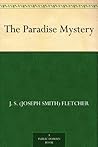
Review: The Paradise Mystery

The Paradise Mystery The Paradise Mystery by J.S. Fletcher
My rating: 4 of 5 stars

In a different approach to the mystery genre, we (mostly) follow the perspective not of a detective, but of a skeevy young doctor who wants blackmail material that he can leverage. He has just been sacked by the doctor he was assisting because he refused to stop asking the doctor's ward to marry him, something she absolutely will not do - both she and her guardian have a sense that he's not a good guy, even though they have nothing specific against him, and indeed we learn that he is an amoral schemer. When a murder is committed and it looks to the younger doctor as if the older doctor may have committed it in order to keep a secret about his beautiful ward and her younger brother, the younger doctor starts poking around for evidence, and uncovers a sordid story from a couple of decades earlier involving bank embezzlement.

There's a police investigation going on at the same time, though, and the police are suspicious of the younger doctor, who was one of the first people on the murder scene, so they keep half an eye on him.

It turns out that a number of people who knew each other long ago have, by complete coincidence, converged on a small, sleepy cathedral city (modelled, I think, on Winchester, though called Wrychester) and encountered each other, with tragic results. Several of them are now living under different names, and untangling the whole thing takes hard detective work from multiple parties and involves several more deaths (and a couple of complete red herrings: (view spoiler)). Also, (view spoiler).

Although parts of the mystery are a bit of a cheat, the unusual point of view worked well for me, and the whole thing was entertaining.

View all my reviews

Monday, 6 July 2026

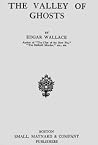
Review: The Valley of Ghosts

The Valley of Ghosts The Valley of Ghosts by Edgar Wallace
My rating: 4 of 5 stars

Read as a distraction while bored by a more worthy book, and I don't regret it, even though the ending is a bit weak.

It almost got my "not-solved-by-detective" tag, though it doesn't quite qualify because the detective does solve the case, albeit by lying in wait for the criminal and watching as he re-enacts the crime while sleepwalking. It also almost qualifies for my "thin-romance" tag, because the detective falls in love with a woman and is prepared to compromise his professional integrity to help her escape when he thinks she's the murderer, even though (as she herself explicitly notes) they have only met three times and exchanged about a dozen words. I keep "thin-romance" for cases where the couple get married after about that much interaction, though, and they do get to know each other over time after that first ridiculous declaration.

The characters are, as usual with Wallace, interesting and not purely stock. There's the reforming jewel thief, the man with a mysterious occupation who turns out to be (view spoiler), the detective himself who is a pathologist who's somehow ended up becoming an investigator, and his love interest, the daughter of an alcoholic artist who has, in the way of children of alcoholics, learned to cope with unpredictability and the cycle of bad behaviour and seemingly-sincere penitence that just keeps on repeating. The suspect for the murder is a mysterious moneylender, a type of person Wallace probably had unpleasant experience of, since he was often in debt because of gambling. This particular one is remarkable for never being seen and doing all of his business (which seems to involve blackmail as well) via letter.

There's a brief mention of "Reeder," and if, as seems probable, this is J.G. Reeder, one of Wallace's few recurring characters, this places the book within a wider Edgar Wallace Universe.

It's suitably mysterious and complicated, only has one significant coincidence which speeds up part of the plot rather than completely enabling it, and is in general a fun time.

View all my reviews

Review: Mr. Mendlebee's Pandimensional Literary Repository [and Yarn]

Mr. Mendlebee's Pandimensional Literary Repository [and Yarn] Mr. Mendlebee's Pandimensional Literary Repository [and Yarn] by Rebecca McKee
My rating: 5 of 5 stars

I picked this up (pre-publication, via Netgalley) largely because the title reminded me of Mr. Penumbra's 24-Hour Bookstore , for which I have a fondness despite its imperfections. It doesn't have many other similarities to Penumbra apart from the title (and, obviously, a wondrous bookstore); this bookstore is somehow holding the universe together, is located in a small coastal town in New England rather than in Northern California, and is only visible to people who need something from it.

We start out being told that something is awry in the state of the universe that the bookstore holds together, and then we get a long sequence of different points of view from the people who work there, a customer, and the roommate of one of the workers, all of whom are sensing some sort of wrongness they can't put their finger on and are usually doing their best to ignore, and most of whom have (it is hinted, and gradually revealed) secrets they are ashamed of. It has the feel of something that could turn much more horror than cozy. Spoiler in case you need to know which in order to decide whether to read it: (view spoiler)

This long middle section takes up most of the book, and for me moved too slowly. Just past half-way, I got bored enough with it, and uncomfortable enough with the constant hints of something wrong that wasn't yet being revealed, that I went off and read another book. But I did come back and finish it, and I'm glad I did, because the ending is compelling and pulls together the carefully-set-up backstories of the characters, all of whom needed to learn something and some of whom also needed to teach something to one or more of the others. My five-star rating is because it has a degree of psychological depth and (like one of the characters in the story) adeptly weaves together a number of threads. It's not, as I've mentioned, without its flaws - the tell-don't-show prologue, the slow-moving middle, and also a character, Violet, who I didn't feel was sufficiently developed for the weight she bears in the plot to hit as hard as it could have. But even if Goodreads would let me drop my pre-publication five-star rating to four - which it won't - I might leave it at five anyway, though it's only just in that zone. Call it a strong four-and-a-half.

The copy editing is good; I could quibble about the instances of "may" that should be "might" and the occasional missing past perfect where I personally would include one, but hardly anyone writing these days doesn't make those mistakes, and most people don't seem to notice.

View all my reviews

Thursday, 2 July 2026

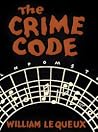
Review: The Crime Code

The Crime Code The Crime Code by William Le Queux
My rating: 3 of 5 stars

I read this author's first novel, Guilty Bonds , and found it absurd and inept. I said in part in my review: "It's melodramatic. It's implausible. It's rife with coincidence. It's heavily dependent on bad decisions by the main character. And the final explanation doesn't stack up."

Still, a lot of people who write bad first novels improve as they get more practice. How was he doing more than 35 years and roughly 150 books later (he wrote a lot of books, very quickly)?

Well, this novel is melodramatic. It's implausible. It's rife with coincidence. It's heavily dependent on bad decisions by the main character. And the final resolution is remarkably similar to the one in Guilty Bonds that didn't stack up.

I think this is my last Le Queux.

Some spoilers follow in this plot summary; without them, you wouldn't be able to tell how ridiculous it is.

Hipwell, the protagonist (if you can call him that; he's more reactive than proactive, and often more passive than active) goes to the defence of a woman who's being mistreated by a man late at night in London, on his way back from a gambling house. In the subsequent scuffle, the man draws a pistol, which goes off, killing him. The woman then shows her ingratitude by accusing Hipwell of murdering him and saying she'll set the police on him, so, to avoid scandal (his father is a prominent MP, and he also has political ambitions), he flees the scene and goes into hiding, disguised as a working-class journalist. As you do.

He happens to take lodgings in the same house as someone who later turns out, by complete coincidence, to be in the same gang of jewel thieves as the two people he encountered earlier, and what's more, making his way home through one of London's legendary fogs, he accidentally goes into the wrong house and finds the gang, including his fellow lodger, dividing up the spoils. They think he's a police spy, and, desperate, he tells them the truth, that he's hiding from the police, and why. But the woman he quixotically rescued turns up later too, and explicitly states that he was not the man who killed her lover. His fellow lodger, a young woman, says, "Let's blind him so he can't testify to our identity" (how would that even work, given that he can describe them and knows where she lives, and they've mentioned someone's first name and that he's a medical student at Guy's Hospital?) But what she actually does is inject him with a drug that makes him compliant to them and "not himself," until two years later he accidentally hits his head and snaps out of it, but can't remember those two years. Meanwhile, it later emerges, he has learned to be a jewel thief and is good at it; he has also been appointed to the responsible post of King's Messenger, or diplomatic courier, which conveniently means that his bags won't be searched during his many travels around Europe with dispatches. The gang makes no use of this as far as is ever mentioned.

Sometime during his time of "unconsciousness" he has married one of the gang, for reasons never explained, despite being in love with and engaged to a lovely girl who's the daughter of a prominent lawyer. When his wife eventually turns up, she explains a lot of stuff to him that he should already know and shows him the code of the title, which is based on musical notation.

Around this time his fiancee is abducted and disappears.

He goes to the head of the gang (taking with him a stolen necklace in his diplomatic baggage) to plead to be released from his service to the gang on his word of honour that he won't tell, honest he won't. The chief refuses, and gives him a message in the musical code for his wife, who's setting out to harm him; Hipwell has the key and could decode it, but doesn't, even though for all he knows it says "Rosenkrantz and Guildenstern this idiot." He also doesn't use the code to warn his wife about a police raid, even though he's afraid she'll shop him if she's arrested. This is what I mean about him being passive and making obviously bad decisions.

The raid indirectly leads to his fiancee being recovered, and then (as was obviously going to happen) his wife conveniently dies, freeing him to marry again; he tells his prospective father-in-law the whole story, and of course is advised that it's fine, he wasn't responsible for his actions (obviously apart from smuggling the necklace that he knew to be stolen, though that isn't mentioned), no consequences need ensue. He begs the chief of the gang to be released again, and this time it's granted, following which the chief also conveniently dies - but not before restoring the necklace to its owner. The help given to Hipwell earlier, the release, and the return of the necklace are all thoroughly out of character for this ruthless individual, who's never called an anarchist but probably is one, as was the case with the plotters in the author's first novel. He's Russian, but steals from the Soviet authorities, committing several murders without hesitation in the process.

It's basically a very similar story to the first book, with all the same flaws, except the author has apparently learned not to dangle his modifiers or miss out the past perfect tense somewhere in there. He does still hyphenate things he shouldn't and put a good many commas in the wrong places, though.

I should probably give it two stars, but I did enjoy some of the action bits towards the end enough that it just barely squeaks three. Still, Hipwell is too stupid to live.

View all my reviews
Wednesday, 1 July 2026

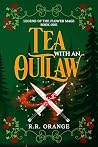
Review: Tea With an Outlaw

Tea With an Outlaw Tea With an Outlaw by R.R. Orange
My rating: 3 of 5 stars

This is the third book I've read recently from Netgalley with "tea" in the title, none of which were all that cozy, and none of which I thought were particularly good, though this is the best of the three for my taste. It's more YA than I was expecting, in the sense of being quite simplistic and also focusing on the concerns of young adults, and the narrative arc seemed off even for that.

The protagonist is a young woman who's about to turn 18. She lives in a society where parents typically make decisions like who their offspring will marry, but rebels against this and wants to make her own decisions, like not marrying at all and becoming a flower mage instead. The problem is, she isn't as good at making decisions as she thinks she is, though the ones she makes are, it turns out, often better than if she had obediently gone along with her parents. She flip-flops around on some of her decisions, too, right up to the end of the book.

The outlaw of the title is a young nobleman, loyal to the young queen, who is being pursued by the Queen's Guard on the orders of a royal advisor who is trying to kill the queen with surprisingly slow-acting flower magic.

I say "surprisingly slow-acting" partly because the flower magic is quite powerful - in fact, all the magic is quite powerful, but it isn't Sandersonian (the reader doesn't know in advance what it can and can't do, so there's always the possibility that it can be used to resolve a situation in a way that's unexpected and unforeshadowed, and therefore less satisfying to the reader). The setting is partially fantasy Italian, though among all the Italianate names there are a couple of minor characters called Edith and Brian for some reason, and several of the more major characters have what seem to be made-up fantasy names.

The protagonist helps the outlaw to escape and joins his quest, along with her best friend the 17-year-old highly-skilled alchemist, who at one point casually whips up a teleportation spell because, after all, how hard can it be? They (and a couple of other villagers, aided sometimes by a local witch and the protagonist's flower-mage mentor) run around on the advice of various creatures, picking up magic and using it. I'll put the disappointing part in spoiler tags, but it has to do with narrative expectation. (view spoiler) I got strong "the real treasure was the friends we made along the way" vibes, and it just wasn't satisfying to me. What should have been difficult was easy, and what initially seemed important turned out to not be that important, and the protagonist didn't seem able to stick to a decision.

I gather that the author is not a native English speaker, but it doesn't show too much. There's the odd idiom that is slightly off, and some of the dialog punctuation doesn't quite follow convention, but I often see far worse from native speakers.

View all my reviews