Sunday, 17 May 2026

Review: Success

Success Success by Una Lucy Silberrad
My rating: 5 of 5 stars

Not a complete pig-in-a-poke novel; I had already read this author's The Good Comrade , so I knew she wrote well and that I'd be getting something that wasn't standard or expected, but I didn't have much idea what that would be. I just picked it up off the Project Gutenberg feed.

It's not in any particular genre, and it undermines the tropes of the one genre you might think it was in ((view spoiler)). But it's thought-provoking, and well worth a read.

The central character is an engineer named Michael Annarly, a brilliant man, but hard to work with because he doesn't care much what people think of him, or try to spare their feelings if he thinks they're not doing good work, and he demands special conditions that most employees wouldn't be given, in order to do his best work. When he tells his employers that he's finally finished a design for them for an "aerial torpedo" (what we would call an air-to-air missile - this is very early 20th century, and airship warfare is what's in view), something they've been wanting to get from him for a while, they almost immediately contrive an excuse to fire him. There's a good deal of hypocrisy, unfairness and outright unethical practice involved, something that becomes clearer as the story progresses.

They're an important firm, and having been fired by them for reasons that are not publicly announced, but are rumoured to have to do with his lack of professional ethics (when in fact it was theirs), he's left in a position where he probably can't get a similar job with anyone else.

Fortunately, when he's in London to plead (unsuccessfully) with one of the firm's directors, his cousin Nan sees him walking the streets, looking devastated, and kindly invites him home, where he tells her what's happened. She arranges for her father, who sells antique furniture, to give him some technical drawing work, drawing chair backs and the like for restoration and other purposes - work well below his level, but something. The two become friends, more like siblings than cousins, and in many ways it's that relationship, more than any specific work that he does, that helps Michael hang on. Nan is a quiet woman, the sort that most people overlook, and yet her intervention and her continuing support of Michael are key to the book. She also has a lot more skill than people credit her with.

It's a wonderfully humane book, full of quotable bits about engineering as well as about life. Michael is, essentially, a brilliant problem-solver, so he can go into any context where there's a technical problem to solve and figure out what's going wrong and how to fix it. At one point, though, he's brought in to do some consulting and tells his client that he can't fix the problem - it's not the machinery, it's the people. Partly through his experience, and partly through Nan, he comes to have a much better understanding of the human side of work, and is never in danger of repeating his previous mistakes.

There are some aspects of the book that fell short for me. There's a clumsily obvious foil character for Michael, the brother of a man who works for Nan's father, who, like Michael, came up with an invention that would make his employer a lot of money, and who asked for a proportionate reward. When he was given five pounds, he tore it up, threw it in his boss's face, resigned, and has now spent years working on a better invention to make the previous one worthless, as revenge. He's bitter and miserable and makes the people around him miserable too.

Then there's the moment where Nan is calling for divine judgement on the company that fired Michael just at the moment when a process he developed for them goes disastrously wrong in a way that wouldn't have happened if he'd been there, costing the directors a lot of money. (Both characters happen to be in a location close enough to the plant to hear the bang and see the flame go up just as Nan is, uncharacteristically, ranting.) It struck me as, again, too obvious.

Most of the book is not like that, though. In fact, if anything it has the opposite fault; things just happen that don't obviously contribute to the overall thrust of the book, like the extended sequence around Michael's sister's wedding, the main upshot of which is to allow Nan to meet someone who plays a relatively minor role later on. Though, thinking about it, the wedding is probably also there to highlight the conventional expectations and values of Michael's family, in contrast to how his life works out.

It's not at all a tight plot, and, with the exception of those couple of clumsy moments, it doesn't point up the theme too strongly either, which is a strength more than it's a weakness. The title, "Success," is, in a way, the theme of the book; Michael learns, as Nan already knew, that the conventional markers of success don't really matter - money, fame, marriage, recognition by your employer or by others that you've helped, like the city council whose power station Michael helps to rescue from complete disaster because he happened to be doing a consulting job next door when it failed. What matters is that you're doing good work and that there's someone who understands you; that's success. The comeuppance that is finally served to the nefarious firm and the director most responsible for Michael's dilemma is almost extraneous.

I enjoy books that are not conventional, that are quite unlike anything else, and this is one. It also has a good deal to say about topics I'm interested in: the failures and injustices built into the way work is organized, the meaning of success, the process of solving hard problems, and the importance of human connection and kindness in the world. For me, despite a couple of weaker moments, it was indeed a success.

View all my reviews
Thursday, 14 May 2026

Review: Strange Animals: A Novel

Strange Animals: A Novel Strange Animals: A Novel by Jarod K. Anderson
My rating: 0 of 5 stars

I was misled by the blurb, because I focused on the words "enchanting," "fun" and "cozy" and skipped over the words "haunting" and "creepy."

It's a horror novel, and I don't enjoy horror. There's a creature running round the woods killing innocent people, and it's (probably, unless there are two creatures; I stopped about of a third of the way through) a large skeletal wolf with black... stuff sometimes covering and sometimes revealing its bones. It's also intelligent and telepathic.

Really well written, well edited, fresh concepts, a terrific book in many ways, but unfortunately not at all my preferred genre, and I would have appreciated more of a heads-up about that so that I could have not bought it.

View all my reviews

Review: Report of Dr. Benjamin Franklin, and Other Commissioners, Charged by the King of France, with the Examination of the Animal Magnetism, as Now Practised at Paris.

Report of Dr. Benjamin Franklin, and Other Commissioners, Charged by the King of France, with the Examination of the Animal Magnetism, as Now Practised at Paris. Report of Dr. Benjamin Franklin, and Other Commissioners, Charged by the King of France, with the Examination of the Animal Magnetism, as Now Practised at Paris. by Benjamin Franklin
My rating: 4 of 5 stars

A fascinating historical document, for a few reasons.

Firstly, it's the report of a distinguished Royal Commission, including Benjamin Franklin (then US Ambassador to France), Lavoisier the chemist, and the prominent physician Guillotin, namesake (but not, as is widely believed, inventor) of the execution device which was to see so much use a few years later - including on Louis XVI, the commissioner of the study.

Second, it's an early example of experimental method, here applied to testing the claims of Mesmer about his practice of "animal magnetism". The commission concluded that there was no evidence that such a force existed, and that the effects being produced by Mesmer and his followers (one of whom cooperated closely with the commission, while Mesmer refused to do so) were the result of the physical pressure and manipulations done by the operators, alongside the power of "imagination" - in other words, what we now call the placebo effect or the mind-body connection. They established this in part by blind (but not double-blind) trials, including performing Mesmer's prescribed operations on people who were unaware of it, and not performing them while telling the subjects that they were performing them. The effects occurred when people believed the operations were being done, even though they were not, and did not occur when they were unaware that the operations were performed, confirming that it was the belief of the patient and not the actions of the operator that made the difference. It was a thorough investigation, and their conclusions are well supported.

Third, what is said about "animal magnetism" itself - Mesmer's theory and practice, and how the public sessions of "magnetisation" were done - is itself interesting in several ways. The description of the theory of "animal magnetism" - which the report shows, using an earlier study, was wholly derived from since-abandoned theories of physicians from a couple of centuries previously - bears a remarkable resemblance to eastern ideas of chi, a power underlying everything that can be circulated in the body, and for which specific points on the body are significant. I'd be interested to know whether Paracelsus and the other theorists mentioned had any contact with China and other civilizations where similar theories were held.

Further than that, the descriptions of faith healing - not only by Mesmer, but by other people at the time or in the then recent past - are classic, and sound exactly like modern faith healing, including the charismatic services I witnessed myself as a young man. Working a large group of people up into a specific state of mind by a long and elaborate ceremony; the way in which, once someone starts to have a dramatic response, others join in; the explanations for why it sometimes fails - all of these are part of a playbook which is still in use more than 250 years after the publication of this report, showing that debunking is a work that is never completed, and that people don't change that much.

The tone, of the early part of the report especially, at times has more in common with such aggressive debunkers as YouTube's Miniminuteman than with a dispassionate scientific approach, and it's clear that the writers of the report (and the introduction to the English translation) considered Mesmer to be perpetrating conscious fraud, though they don't outright accuse him of doing so. They certainly do say, strongly, that the precipitation of "crises" in which people experience pain, vomit, void their bowels, and sometimes cough up blood is harmful rather than helpful, especially when repeated and taken as the norm.

The medical terminology and beliefs of the time are old-fashioned now, of course; most of our current medical science dates from no earlier than the 19th century, and largely from the 20th. But the commissioners were able, even within their own framework of understanding, to distinguish clearly between a physical and a mental cause of the effects they observed, and that's the key point they were making.

If you're interested in the history of the scientific method, in faith healing, in the mind-body connection or in the process of debunking frauds, this relatively short book is well worth a read. You will have to navigate the 18th-century language, but it's mostly clear enough to a modern reader.

View all my reviews

Wednesday, 13 May 2026

Review: The Golden Journey of Mr. Paradyne

The Golden Journey of Mr. Paradyne The Golden Journey of Mr. Paradyne by William John Locke
My rating: 2 of 5 stars

Essentially a midlife-crisis story, from the time when having a midlife crisis was admired, at least in men. It's much shorter than I (for some reason) expected it to be, and I read it in about an hour.

Successful lawyer Paradyne wakes up one morning and discovers he's the owner of a gypsy wagon and a horse and is travelling through France selling brushes and such, and has been doing so for several months. The last thing he clearly remembers is shortly before his departure from suburban Ealing on a holiday to France with his wife, who is not with him, though her ticket is. A mysterious, itinerant young man played a melody he'd never heard before outside his house, and that seems to have kicked the whole thing off.

He loves being a travelling brush-seller - perhaps because he was already wealthy, had a lot of money with him and still has a good bit of it, and therefore isn't living hand-to-mouth. His old life of the law was a dead life; his wife had even described him as a dead man, and he thinks of her now as a dead woman, cold and sour. He sees no downside whatsoever in just walking away from all his responsibilities and continuing his journey, and the narration doesn't contradict him in this. His options seem to be a dead life between his suburban home and his city office, or a romanticised life on the road, in the open air. There's no hint of a third way, in which he learns to truly live while also being faithful to his commitments.

It's well enough executed, but the naive romanticism loses it the third star from me. I'd hoped, at a small inflection point in my own career, that it might help me think through next steps. It did not.

View all my reviews

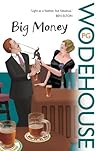
Review: Big Money

Big Money Big Money by P.G. Wodehouse
My rating: 4 of 5 stars

A standalone from Wodehouse's classic period (between the wars; this came out in 1931). It does briefly feature a minor character who was also in Sam in the Suburbs , the house agent "of druidical aspect," Mr Cornelius, and the central characters are pretty much his standard ones under different names, but he has fun with them, and so did I.

Wodehouse wrote several books with "money" in the title. As well as this book, there's Uneasy Money, Money in the Bank and Money for Nothing. His father's pension from the civil service, paid in Indian rupees because of his service in the East, had been suddenly devalued just before Wodehouse could go to university, so he knew about being a young man with a good education but minimal skills and little income, and many of his young heroes (and heroines) are stuck in this way. The typical plot involves them somehow obtaining "the needful" via comeuppance given to their stuffy, more prosperous elders, and this book has that typical plot, though with some twists. The wealthy man here decides to rip off his impoverished secretary, whose aunt left him what he believes to be a worthless mine, by buying it for less than its actually considerable worth. Meanwhile, the secretary has, by complete coincidence and without knowing who she is (or her name), fallen in love with his boss's niece, who is engaged to a close friend of his.

There's the usual tangle of multiple coincidental relationships between all of the cast members, and the usual meetings by happenstance; the hero meets his beloved three times, all briefly, and all of them involve coincidence. At this point, still not knowing her name, he proposes (which is why I give this my "thin-romance" tag). Also, of course, he has assumed a false identity, and his friend has assumed a disguise (to avoid his creditors), and everything is very complicated in the Mighty Wodehouse Manner. Courage and cleverness and a decent helping of good luck are required to untangle it all.

It's fun, though, and the prose sparkles, and I enjoyed it.

View all my reviews

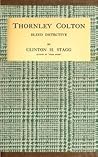
Review: Thornley Colton: Blind Detective

Thornley Colton: Blind Detective Thornley Colton: Blind Detective by Clinton Holland Stagg
My rating: 3 of 5 stars

Not the first blind detective (as far as I know, that's Ernest Bramah's Max Carrados), but very much in the same tradition as its predecessor, with the trope of the blind man who has developed his other senses to an extraordinary degree. He can read written or typed pages (or music manuscript) by feeling the back of the paper with his fingers, for example, and has particularly keen hearing. He can somehow grab accurately for someone's arm or otherwise know exactly where they are and in what position, which comes up on more than one occasion, and some people refuse to believe he's actually blind. He himself sometimes lectures about how people with sight are deceived by it, while he is not, because he interprets everything in a situation and makes a mental model of it and how it must have been.

It's clumsy at times. For example, in the first story, someone - in dialog - mentions Colton's secretary Sydney Thames and says his name is "pronounced like the river" - which would be obvious, since he'd just pronounced it. It would have been more natural to say that it was "Thames, like the river." There's a reason for the name, repeated in each of the stories (which I assume were published individually in magazines before being collected): Colton found Sydney Thames as a baby, abandoned on the banks of the London river, and adopted him. He's also taken on a young New York lad - the stories are set in New York - who's known as "Shrimp" or "the Fee," because he was the only payment received for solving a murder, of Shrimp's mother by his father. The boy is very keen to imitate his two heroes, Colton and the fictional Nick Carter, and gets as involved in Colton's cases as his guardian will allow, sometimes putting himself in danger as a result.

The openings of the stories are usually a flight of descriptive prose in the style of the time, a bit overwrought and melodramatic for modern tastes. Having set the scene, the author brings Colton into it, usually by pure coincidence - he just happens to be in the vicinity when the crime is committed - but sometimes because he's called in by people who know his reputation as a "problemist," which is what he calls himself rather than a detective. He's independently fairly wealthy, and doesn't need to have a profession or charge fees, but solves problems for the sake of the interest he takes in them and also for the good of the victims.

He places a high value on human life, though he sometimes causes innocent people emotional distress in the course of setting traps for the criminals, often to the dismay of his secretary Thames. The secretary is overawed by beautiful women, and becomes anxious in their presence, and if Colton seems to be harsh with them he protests, despite regarding Colton as a father figure.

It's tropey and sometimes ridiculous, uses some terms for various races that were common at the time but are now regarded as deeply offensive, and isn't written in the best prose I ever saw. But it's lively and vivid, the characters aren't all simply stock, and the mysteries are cleverly worked out. It has enough flaws that I put it down to three stars, but it's a high three.

View all my reviews

Thursday, 7 May 2026

Review: The Angel of Terror

The Angel of Terror The Angel of Terror by Edgar Wallace
My rating: 4 of 5 stars

A whiz-bang Wallace, with a female villain who looks like an angel but is actually a complete psychopath. Of course coincidence plays a key role in the plot, but that's more or less expected for a book of this period. Wallace manages to create an intense atmosphere of suspense around what the villain will do next (since she has basically no moral limits), and to evoke strong sympathy for the protagonist. The villain does, however, have to be a bit incompetent, and also unlucky, for the heroine to survive, and you need to suspend your disbelief a good deal and just go along for the ride.

The heroine, who has voluntarily taken on her late father's debts, is offered a bizarre proposal: marry a man wrongly condemned for murder, so that his cousins, suspected by the man's young lawyer friend of being actually behind the murder, can't inherit. She does that, and becomes wealthy as a result, but also now has a great big target on her back - and doesn't listen to the lawyer when he warns her about the female cousin.

There are some good action set-pieces, and a rip-roaring conclusion. Classic Wallace.

View all my reviews

Tuesday, 5 May 2026

Review: Beware of Chicken 4

Beware of Chicken 4 Beware of Chicken 4 by CasualFarmer
My rating: 3 of 5 stars

Two of the besetting issues of this series are that there are too many characters, and that each book has a long slow start before getting to the central conflict (if it ever does get there - this one almost does not, and then doesn't stay long).

The two things are related, and this book shows that particularly starkly. The reason it takes until halfway through - not a quarter, not a third, but halfway through - for the plot to get going is that first we have to visit about 20 character viewpoints (not a rhetorical number, it's actually about 20) and have, for each of them, a repetition of basically the same thing: a reflection on past hurt and how now, in the cozy found family started by Jin the cultivator, it's probably going to be OK. All this is interspersed with slice-of-life stuff: building onto the farm, getting new production processes up and running, celebrating festivals, playing puerile practical jokes that everyone finds hilarious and endearing, and drinking too much alcohol.

Then when something resembling a plot does get going, it consists at first of an extended flashback to ancient times as recorded on a crystal retrieved I've-forgotten-how a couple of books ago. It takes until two-thirds of the way through the approximately 120,000-word book before the present-day characters start making plans to do something, they're not quite sure what yet, about the plot problem, which has taken this long to articulate. Sure, it's a strong one. But most writers would have introduced it at about 25%, for good reason: a lot of readers don't like hanging around for 80,000 words waiting for the plot to start, even if the company is pleasant.

And then, once the problem is defined... we're back to the slice of life. There is what could have been a nice bit of intercutting of peripheral characters in a pitched battle against demons versus Jin's wife giving birth to their child, but part of what it does is show by the contrast how flat scenes can be if they lack serious challenge. The birth is a tiring but problem-free experience, with none of the potential issues that get mentioned ever eventuating. The demon fight is desperate and includes great losses, even though the outcome is never really in doubt, but it's narrated in a way that also minimises the importance of those losses.

I find the characters more memorable than the plot in these books, and maybe that's because we spend more time on character growth and insight than we do on plot progression (though the two are inevitably linked). Even though for me there was a gap of getting on for three years between reading Book 2 and Book 3, I remembered the characters fairly well - but the events quite poorly, and the fact that the author provides us with zero refresher is, therefore, an avoidable fault. For example, early in this book, Jin visits a village where Big D, the chicken of the title, has been training a disciple, and there's some sort of sign or something outside the village, and it cracks Jin up when he sees it. This sign was, I think, put there in Book 2. That was hundreds of pages and, for me, several years ago, and I have no memory of it whatsoever. But does the author give even a tiny clue, half a sentence, a few words about what it looks like so I, and other people who've forgotten, can share in the joke? He does not. Tens of thousands of words for atmosphere, but not even half a dozen for recap.

The copy editing continues to improve, though there are still awkwardly phrased sentences ("He headed down a set of stairs and began to descend them") and the odd typo, and errors like equating rabbits and hares (they're different animals). Belying is used for betraying, seller for buyer, match for march, decreed for declared, singular for single, exultations for exhortations, "cadaver" when it's not an entire body but a disembodied head, and "the first thing is first" as probably an eggcorn for "first things first."

And yet, with all these faults, it's still amusing and touching and appealing at times. It's just... it wouldn't be that hard to make it a lot better (IMO). It definitely wouldn't be hard to make it a lot shorter without losing much that I would care about.

While reading this book, I came across a Reddit AMA the author did a few years back, where he says that the published versions are already "half to a quarter" of the length of his drafts, so I hate to think how overwritten the drafts are. In that same thread, though, he specifically references "noblebright" as something he was shooting for - which he achieves, no question. Interesting that the Word of Noblebright has spread to the point that someone who is demographically different from most of the noblebright authors I know (by which I mean he's likely under 40) has heard of it and thinks it's a good thing for a book to be. We're less obscure than I thought - which, honestly, isn't hard, since "less obscure than I thought" is the direction in which there's the most space.

View all my reviews

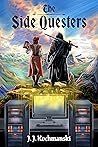
Review: The Side Questers

The Side Questers The Side Questers by J.J. Kochmanski
My rating: 4 of 5 stars

Two NPCs in a fantasy MMORPG have become conscious, able to act independently like players.

Why they've become conscious is a slight spoiler, so I won't mention it, but it creates tension and stakes in the real world as well as the world of the game, and adds a layer of dramatic irony.

This is LitRPG-adjacent, but not true LitRPG, in that the game world is explicitly a computer game, not just a gamelike isekai, and there's not a lot of time spent on stats and skills. That works better for me than the more central LitRPG experience, honestly. It's also better written than the average LitRPG, apart from some minor glitches which I'll mention to the publisher (I had a pre-publication version via Netgalley for review).

The characters, particularly Anya, the barkeep, who is the main viewpoint character, quickly won my sympathy. She's courageous, determined and intelligent, and I wanted her to succeed.

The world is a generic fantasy game world, which is more likely to be by design than from a failure of imagination on the part of the author. The players the characters encounter include some arrogant griefers who have bought their way to level 99, and some more-or-less-helpful gamers who regularly play together from widely separated locations.

The plot has an arc towards justice and love and The Right Thing, which I enjoyed. I couldn't see how the author was going to manage a resolution that produced a good outcome for everyone who deserved one, but he pulled it off admirably.

Recommended.

View all my reviews

Monday, 4 May 2026

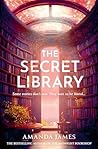
Review: The Secret Library

The Secret Library The Secret Library by Amanda James
My rating: 4 of 5 stars

A celebration of the power of fiction to inspire and uplift people, in the form of a magical-realist novel in which characters from books literally come alive through the work of authors, editors, and readers.

Lucy is introduced to us first as a 10-year-old girl looking forward to staying with her editor grandmother at her beautiful house in Cornwall. Inspired by her grandmother, she herself becomes an editor - but by the age of 30 is becoming disillusioned with the sameness (and darkness) of the fiction that's submitted to her company. She's an acquiring editor and a developmental editor, so she chooses which books to move forward with and then helps the authors make them as good as they can be. And she's finding it hard to come up with "diamonds"; everyone is writing the same book, and not doing a great job of it. I definitely empathise, because it's hard these days to find books to read that aren't just a rehash of the same few premises, most of them dark and depressing. Even in the positive speculative fiction subgenres - noblebright, cozy fantasy, solarpunk, hopepunk - there's a lot of mediocre or poorly crafted work that's just repeating the same ideas.

In light of the theme of books that stand out from the norm, it's a... bold move to invoke one of the most overused tropes of contemporary fantasy fiction: an inheritance from a relative that introduces a woman to her magical heritage. There's also instalove, not just one but two instances, and despite all of the lampshade hanging about how that's unrealistic, there it is at the heart of the story.

Lucy starts meeting characters from books, which isn't new to her, since she talked and played with Bilbo Baggins, Christopher Robin and Mary Poppins as a child. What is new is that, by editing unfinished manuscripts that her grandmother has left to her along with the house, and writing the authors, who had given up, encouraging notes, she reaches across the decades and causes the books to have been finished, and successful, and inspirational for readers. Their key characters emerge into the real world and start to play a role in the plot.

The book has ambitions to be one of those wonderful, inspirational books that lifts people up and influences them in the direction of kindness and generosity. I think it gets partway there. The reason that, for me, it doesn't get all the way there is that it's competent rather than brilliant in its execution, and overt and obvious in its message, which is sometimes more told than shown. The characters are well drawn, but they don't come alive and step off the page like the ones we're told about from the previously-unfinished novels within the novel; they feel generic to me. The hot fisherman with the sensitive soul, the disillusioned 30-year-old editor, her bouncy best friend... none of them have that extra spark of uniqueness. For that matter, the fictional characters who are so vivid to the readers that they enter the real world are not, in this novel, that vivid. The book's reach exceeds its grasp.

It's a commendable reach, though, and a good message, and an enjoyable book. I do recommend it for lovers of positive fiction and people who are thinking about giving up on their dreams.

View all my reviews

Sunday, 3 May 2026

Review: Sorcery on the Sunset Express

Sorcery on the Sunset Express Sorcery on the Sunset Express by Ronald D. Ferguson
My rating: 4 of 5 stars

Disclaimer: I requested and received a copy from the author prior to publication. We are members of the same writers' forum, where the author posted asking for readers for his upcoming book. The author explicitly stated that there was no expectation or obligation for a review.

This is a solid, enjoyable story set in an alternate North America (mainly Texas, but also Louisiana and New Mexico) in 1907. The background is that Southern wizards managed to stalemate the American Civil War and (in some way that isn't explored) transform the Confederacy into the Southern Alliance Monarchy; Texas and California are independent republics, and there is still a USA, just a smaller one. The alternate-world setting isn't just decoration. It introduces rich and powerful people who are also foreign nobility, warranting an extra layer of caution in dealing with them, and it enables the author to have both the technology of 1907 (telephones and cars - the latter more plentiful, if anything, than in our 1907) in the cities, and a version of Texas that's more like the untamed West of much earlier times in its outlying districts.

The status of slavery in the Southern Alliance Monarchy wasn't clear to me, but it's illegal in Texas, and the main characters are careful to treat the black people they encounter (serving as stewards in Pullman cars - there's a lot of train travel, as the title implies) with respect. I did find it slightly unlikely that, in the first decade of the 20th century, a young woman of respectable background would routinely travel in the same sleeper compartment as her male colleague; people do assume they're an unmarried couple, which they're not (though there are plenty of hints that he admires her considerably), but nobody acts as if it's scandalous or tries to stop them, even though there are mentions of a strong influence of Baptist morality in the Republic of Texas. Both the characters have a Baptist background, too.

Their background, in fact, is strong overall. Brandi, the female partner, has ended up as a consulting detective in part because, when she tried to study advanced physics at a university, she was told that there was no place for a woman to do so, and found herself pushed into a job as a second-grade teacher. Her father is a doctor, and she's learned some things from him. She's capable, highly intelligent, and definitely the Holmes of the pair. Unfortunately, she's also very sharp-tongued, given to lecturing her unfortunate partner Jerry not only about things he's ignorant of but also about his behaviour, which is that of a working-class Texan from a difficult family background who had to drop out of college when he was injured and lost his football scholarship. His father was a drunkard, a womaniser and a wife-abuser who pretended to be a preacher in order to get money for his other activities, meaning the family moved around a lot until he finally left his wife and son; the mother, abandoned not only by her husband but by a self-righteous congregation, struggled for a while and then died while Jerry was still a teenager. He's since been a Texas Ranger, a job he was thrown out of for taking a principled stand that wasn't politically acceptable to his bosses, and came very near to getting him lynched in the prologue.

This is a lot more character development, and a lot more worldbuilding, than I often see, though admittedly I've been reading cozy fantasy lately, which is notably weak on both of those things. Still, it means that there's some heft to the events the characters get caught up in. There are a number of violent deaths, some of innocents; serious threats and tension; and a twisty mystery to unravel.

The main mystery involves the theft of payrolls being securely (or so one would think) transported by train, watched constantly by guards, but when the train arrives at its destination the money has somehow vanished from the locked safe - not once, but multiple times, despite elaborate precautions being taken. There are also secondary mysteries, including a couple of murders.

The method of the heists is clever, and the process of solving the case entertaining, and the action scenes well described. The time and place are competently evoked, and the characters are memorable and have dimension. I recommend it.

View all my reviews