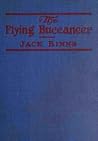
 The flying buccaneer :a novel of adventure in the skies / 1923 by Jack Binns
My rating: 3 of 5 stars
I sometimes pick up "pig in a poke" books off Project Gutenberg - obscure works of obscure authors with, at the time I pick them up, little or no blurb and little or no author information on Goodreads. Occasionally, they surprise me by being good.
This is not one of those times. By the end, it did turn into a decent adventure story, but it's very clearly a first novel (it was also the author's last, and I think that was a good call).
Whoever published it has done minimal copy editing, if any, not even correcting the many "let's eat Grandma" errors (missing commas before/after a name or term of address), which are among the clearest marks of an amateur writer. A lot of sentences phrased as questions lack their question marks. The author even spells "all right" as "alright," which is still not accepted by major style guides 100 years later, and was definitely regarded poorly in 1923. Project Gutenberg has a startlingly long list of misspellings that they corrected for their edition. It was clearly typeset by someone who didn't know what they were doing.
On top of that, his prose is caught in that unfortunate zone where it's attempting to be formal and sophisticated but doesn't have the chops to be anything but wordy and awkward. The dialog is especially stilted, and character development is not really a thing. He repeats himself. He contradicts himself (a wireless rig goes from half-meter to quarter-meter waves, for example). He repeatedly refers to "knots per hour," apparently not knowing that a knot is a measure of speed, not distance, and already incorporates the "per hour."
The plot reads like he has been reading too much Jules Verne (notably Robur the Conqueror ) and maybe George Chetwynd Griffith, both of whom wrote about how if one person had air superiority the world had better look out. In this case, it's a brilliant young inventor who, when his proposal of marriage is turned down by his beloved, despairingly accepts the overtures of sinister foreigners who encourage him to become an air pirate instead of working for the US government. (The sinister foreigners are never mentioned after their preliminary approach, and there is no explanation of how he cashes in his pirated loot or resupplies his base.)
He downs a dirigible named the Wilbur Wright - an odd name for a lighter-than-air craft - on which his crush is travelling and abducts her, causing her mother to go into a terminal decline; her military escort (she's the daughter of the air defense secretary), also in love with her and also refused by her, becomes very ill as well when it looks like he (the military man) has been responsible for her death. Everyone's emotions are extremely tempestuous and powerful, as if everyone was French; maybe more Verne influence? The novel was apparently written to highlight the advantages of heavier-than-air craft over dirigibles, in a time when zeppelins were becoming popular (the Hindenberg disaster wasn't until 1937).
The military's early encounters with the pirate are described after the fact, which takes some of the tension out and tells rather than shows. When we do get shown action directly, it's reasonably good.
The book is set in 1952, about 30 years after it was written, but wireless still uses Morse, even though by 1923 broadcast speech was coming into use, albeit Morse was probably still easier to pick up over a long distance. The author (I found when I researched him after starting the book) was a wireless operator who was the first person in history to send a wireless message resulting in a successful rescue at sea, something that occurs several times in this story. He was British, and gives American military airmen the British rank titles rather than the ones the Americans actually used, even though he'd been living in the US for years by this point, having moved there shortly after refusing the post of wireless operator on the Titanic and become a journalist.
The Wikipedia article for Jack Binns doesn't mention this book, but there's a biographical summary of him online which does, so I'm confident it's the same man, and have updated his Goodreads page accordingly.
One of those times when the author is more interesting than his book.
View all my reviews


No comments:
Post a Comment