Tuesday, 13 October 2026

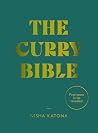
Review: The Curry Bible: The Ultimate Indian Cookbook Featuring 100 Classic Recipes

The Curry Bible: The Ultimate Indian Cookbook Featuring 100 Classic Recipes The Curry Bible: The Ultimate Indian Cookbook Featuring 100 Classic Recipes by Nisha Katona
My rating: 3 of 5 stars

The strength of this book is that the recipes are quite simple.

This is also its weakness, in that the detail they leave out is probably the difference between an OK recipe and a good recipe. Also, some of them just don't seem quite right to me.

I made the aubergine and potato curry. Most of the vegetarian recipes feature potatoes, not my favourite vegetable, but I suppose I can substitute. I didn't substitute, though, and made it basically as written, except that my "large" 500g aubergine/eggplant was almost twice as large as the "large" 300g one the recipe specifies, and the recipe says to cut it into 8 pieces, which I thought would be too big (even if I went for 16 pieces to allow for the difference), so I cut it about the size specified for the potatoes, 3cm. This gives a very rustic result, and it's difficult to get the potatoes cooked through. I happened to have more potatoes than called for, too, in about the same proportion as the eggplant, so I increased the spices slightly to compensate. I didn't double them, and was glad I hadn't; I think that would have been too strong for me. As it was, it made a pleasant curry, with slightly undercooked potatoes even though I gave them extra cooking time. I will probably make it again, but substitute carrots for the potatoes and cut everything smaller.

To accompany the curry, I made the roti recipe. The texture came out a bit cardboardy, which didn't surprise me much, since, comparing with other recipes, 10 minutes is a very short time to rest the dough after kneading, and a lot of the recipes call for resting it again after rolling into balls. Coating the dough ball in plenty of oil worked well for cooking them on the griddle without creating burned-on carbon, though, so I will take that approach with other flatbreads in future. They tasted OK, but with so few ingredients that also wasn't surprising.

The spice mix section at the front is probably the best thing in the book from my perspective, and I will be using it. I made one of the mixes as part of the curry recipe, and it was good, though, again, I probably wouldn't have enjoyed it as much if I'd used more of it.

Not a complete fail, but not one of the great cookbooks either.

View all my reviews

Monday, 12 October 2026

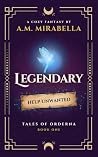
Review: Legendary: Help Unwanted

Legendary: Help Unwanted Legendary: Help Unwanted by A.M. Mirabella
My rating: 4 of 5 stars

The story of a diligent Hero (paladin-adjacent, but not religious) and a fairy who offers to help in the Hero's latest quest: retrieving the ingredients for a potion to save her prince yet again. The prince has magical blood, and everyone literally wants a piece of him, so her task of protecting him is challenging and never-ending. There are multiple references to her previous adventures protecting him, starting six years earlier, when (aged 12) she cut off the head of a sorcerer who was after his blood.

From a storytelling angle, it's strong, with plenty of good emotional beats as the hero and the fairy work together and attempt to deal with their respective trauma. Plenty of plot twists and reverses, a villain you love to boo, and encounters with interesting minor characters, who don't feel as flat as such characters often do in books like this. It's a world that's had a degree of thought put into it, with an entire kingdom that flies, plenty of legendary creatures, and magic in all directions. The sensawunda is strong with this one. At the same time, the inner and outer conflicts are believable and engaging. Some of the concerns, and proposed solutions (like taking a vacation as a way of relieving the pressure from constant stressful work), are modern rather than of the equivalent historical period, but that helps them work for a contemporary audience.

Like practically every new book I read, whether from Netgalley pre-publication like this one or from Bookbub after publication, it could do with a bit more editing, and quite a bit more past perfect tense. There are a couple of apostrophe glitches, a dangling modifier, some ambiguous pronoun usage, a few excess hyphens and an outright misspelling, as well as a continuity error. I'll point all of these out to the publisher in the hope that they get corrected.

The hero works in what's described as a kingdom, but it appears to be ruled by a prince and princess with the support of a council of sages, which would normally make it a principality (a word that does get used in another context). Also, the prince and princess are addressed as "Your Majesty" rather than the more usual form for princes and princesses, "Your Highness," though if they're the rulers this is more justifiable.

These are relatively minor issues, and there aren't a great many of most of them (apart from the missing past perfect). Overall, it's a capably told, enjoyable fantasy, and I'll be watching out for more in the series.

View all my reviews

Friday, 9 October 2026

Review: The Borough Treasurer

The Borough Treasurer The Borough Treasurer by J.S. Fletcher
My rating: 3 of 5 stars

Two prosperous businessmen run a building company in partnership in a small town in the north of England.

One is serving his second term as mayor; the other has been borough treasurer for six years, and his daughter is about to marry a wealthy local man with a bright political future.

But, completely by coincidence, a man comes to the town who remembers the pair from 400 miles away and 30 years ago, when (under different names) they were convicted of embezzling from the building society of which they were secretary and treasurer. With so much to lose, they have two options: give in to blackmail which might never stop, or... ensure he never tells anyone.

The blackmailer dies - but who killed him, and why? Being a J.S. Fletcher book, it doesn't always go in the direction I was expecting, except of course for the two very lightly sketched romances with women who barely appear in the story and certainly don't get much characterisation. There's no single detective; the one we follow most is a young barrister, the friend of the borough treasurer's prospective son-in-law (which adds its own layer of complication), but he doesn't solve the whole mystery by himself. It's a largish ensemble cast, many of them minimally developed.

The biggest weakness for me was the abundance of evidence, most of it produced by coincidence and then suppressed for reasons. An encounter on a supposedly deserted moor is witnessed by at least three people. The one document a murderer would want most to suppress is the one that falls out of the victim's pocketbook, to be found by someone with a motive to conceal it. People keep happening to be in the right/wrong place at the right/wrong time. (view spoiler)

For me, the plot loses its way (despite, or maybe because of, the abundant coincidence), and the characters are underdeveloped. It's one of Fletcher's less successful books from my point of view. He didn't write conventional detective stories, which is great, but sometimes the way in which his books are original is more a weakness than it is a strength, and this is one of those times.

View all my reviews

Tuesday, 6 October 2026

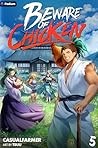
Review: Beware of Chicken 5

Beware of Chicken 5 Beware of Chicken 5 by CasualFarmer
My rating: 4 of 5 stars

A significant improvement over Book 4, in my opinion. There's a sense of progress, albeit slow, throughout, rather than just a lot of slice-of-life eventually giving way to some action most of the way through the book. True, there isn't much actual action, but there is at least the potential for conflict when Jin Ren's adoptive "grandfather," the mighty and terrible cultivator Shin, arrives at the farm with an agenda already in mind that will clash with Jin's settled purpose.

It's also partly a setup book, since near the end two groups of the (many) characters go off on different missions, leaving a third group to keep things going on the farm.

There really are too many characters, and too much backstory (which I find harder to remember than the characters, as I've mentioned in a previous review), but from what little I know about Asian classic literature, sprawling epics with many characters and not a lot of what Westerners would think of as plot are quite normal, so this is, presumably, in tribute to that tradition.

Most of the characters have points of view, and experience some form of personal growth, often because of each other, which is good. There are some touching and amusing side stories at the end of the book. All in all, I enjoyed it.

This series started out poorly edited, but has significantly improved. I did mark a couple of dozen issues, but that's about average even for a book much shorter than this one, in my experience. There are occasional odd phrasings or misused words or fumbled idioms, and a few punctuation stumbles that usually seem more like typos than someone not knowing a convention, but by current standards this is very clean.

I suspect (by the fact that the first five books all seem to be on sale at once) that Book 6 may be about to come out. I look forward to it (though I don't look forwards to it, as the author phrases it a couple of times).

View all my reviews

Monday, 5 October 2026

Review: The Case of the Canterfell Codicil

The Case of the Canterfell Codicil The Case of the Canterfell Codicil by P.J. Fitzsimmons
My rating: 3 of 5 stars

Not a bad period-setting modern murder mystery, let down by some easily fixable issues with the editing. Most prominently, the author frequently leaves out the vocative comma (the "let's eat Grandma" error), which to me is one of the most basic things that makes an author come across as amateurish. There are also a few Americanisms, like referring to Oxford University as "school" and to someone's "junior year" and giving a "commencement address," but I spotted fewer anachronisms than I expected. There is the use of "alright" as a spelling for "all right" (originated in the 1980s, and still not the most common usage or accepted by major style guides), and giving an English earl of the period of the Wars of the Roses the first name "Elmer," which is distinctively American and only started being used after the American Revolution (so it's an Americanism and an anachronism in one). There are a few vocabulary errors, too: desert/dessert, infer/imply (though even good writers at the actual period this is set in did make that mistake), passed/past, dichotomy/paradox, vindictive/invective. Occasional missing words in sentences, some garbled idioms, and a couple of other punctuation or usage issues round out the collection. It lacks, in other words, the polish I was hoping for, without which it's not a convincing attempt at a 1920s mystery, and I can't bring myself to give it more than three stars, even though it's otherwise sound.

I read a lot of actual 1920s mysteries, and if this was properly edited it wouldn't be a bad one. The main character, Anty Boisjoly (pronounced like Beaujolais), has a role similar to Albert Campion: not strictly speaking a detective, more of a fixer and finder-out for his wide circle of acquaintances. In this case, he's called in by his old rowing coxswain to clear him of a charge of murdering his uncle. He's of the Bertie Wooster class and background, a young man of the upper classes, educated at Eton and Oxford, without a specific occupation, and his observations are amusingly phrased, though they don't have the true Wodehousian sparkle any more than they have the Campion eccentricity. The other obvious comparison is to Lord Peter Wimsey, but he's sadder and more profound and, of course, his writer was an excellent prose stylist. Not that the prose here is terrible, but it's about average for the period it's set in, making it better than average for today. The other difference from all three of these characters is that he's neither an actual idiot like Wooster, nor masquerading as one to put people off their guard, like Campion and Lord Peter.

The other characters are mostly stock, as was the style in most 1920s mysteries, though there are hints of greater depth in some of them; the retired major, for example, isn't just a stereotype. The mystery is tricky and well plotted out (view spoiler), and Anty solves it cleverly. The police inspector, unlike Campion's and Wimsey's police colleagues, is a classic Scotland Yard bungler in the Sherlock Holmes tradition, while the local policeman is a good-natured yokel, leaving the field clear for Anty to shine.

Compared with other modern attempts at classic mystery I've tried, it has some potential - but personally, I can't get past the lack of attention to detail in the editing, and I wouldn't buy another for that reason. But if I ever go back to listening to audiobooks, my library has the series in that format, and I won't be distracted by anything except misused words there.

View all my reviews

Friday, 2 October 2026

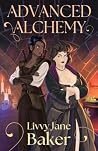
Review: Advanced Alchemy: A Novel

Advanced Alchemy: A Novel Advanced Alchemy: A Novel by Livvy Jane Baker
My rating: 3 of 5 stars

Violet is a student alchemist in her final year, which involves outplacement, in her case in the back end of nowhere. Possibly this has something to do with how she blew up part of the chemistry lab last year and is, in general, rebellious and uncooperative, despite having worked her way up from the slums by sheer determination and so being very invested in passing.

She also has been saddled with a paladin-in-training, Viessa, as a bodyguard and minder. They have an instant odd-couple dynamic, Violet being the slobby one and the paladin the neat freak, naturally. It's classic chaos vs order. A chaotic alchemist does raise some questions, since it would seem to require a good deal of precision and discipline, especially for someone who had to teach herself magic from scratch without even the advantage of inheriting any from an ancestor, but... people are complex, and it wasn't enough of a contradiction to break my suspension of disbelief.

Violet is surprised and a little disturbed, given how much she resents Viessa and finds her irritating, to find that she's also attracted to her. I was a lot less surprised, since it seems like Violet would give a tree a second look if it was approximately woman-shaped; she's lustful and promiscuous, as well as sweary and given to acts of poor judgement, none of which endeared her to me particularly. Viessa is rigid and naive (though, as it turns out, committed to principle rather than just a blind rule-follower), but also, for some reason, is attracted to Violet, again despite being intensely irritated by her. I have a quirk where I need to like both people in a couple in order to care whether they end up together, and in this case I didn't like either of them much at the beginning. Viessa did gradually grow on me, as her mistakes and weaknesses humanised her, and Violet, the main character, had a considerable character arc in which she learned and grew, so eventually I was on board with the ship - though I still had doubts about its practical feasibility by the end.

The author's reach exceeds her grasp when it comes to vocabulary, unfortunately, with a good many errors, one or two of them quite basic. I'll mention them to the publisher (I had a pre-publication version via Netgalley for review) and hopefully they will be fixed; the editing is otherwise mostly clean, apart from an occasional odd phrasing, some incorrect dialog punctuation and one chapter where the past perfect tense goes missing for a while. She has an odd habit of separating two sentences with a colon, too, but that's not wrong, just unusual.

On the upside, the writing is wryly funny in just the way I enjoy, and the story is a decent cozy-adjacent fantasy in which two ill-assorted people have to learn to work together and get along, and in which Violet learns to tame her more extreme chaotic tendencies. Towards the end, I found it powerfully engaging, with strong emotional beats. Worldbuilding in cozy and romantasy tends to be weak, often barely enough to allow the plot to happen (if that), but here some thought has gone into the world and the magic system. I didn't end up believing the source of the curse on the moor, though; it seemed (in terms of the world that had been described) too much effect in proportion to the cause. As a minor point, I'm also not sure how the person on the left side of the cover could lend the person on the right side her spare riding trousers and have them fit.

While this is (like so much fantasy these days) marketed in part as cozy, it's not deeply cozy, and I'm not tagging it as such.

Balancing out the strengths and weaknesses, for me this is a three-star book; good, but with some significant flaws. It's good enough that I'd consider reading a sequel or other books from the author, but flawed enough that I'd approach them cautiously.

View all my reviews

Monday, 28 September 2026

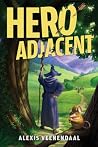
Review: Hero Adjacent

Hero Adjacent Hero Adjacent by Alexis Veenendaal
My rating: 4 of 5 stars

The failure mode of "funny" fantasy is just relying on silly names, pratfalls and parodying the most low-hanging fruit in the trope orchard, while writing a story that's mostly just a series of stupid incidents, and characters who never get any depth beyond a combination of an archetype and a plot role.

I'm happy to report that this book avoids those common pitfalls. Each of the characters we follow throughout the book has at least one extra quirk on top of their archetype and plot role, and the central character has significantly more depth than that. He's a grumpy, disillusioned middle-aged wizard who has been part of the Academy's system of Chosen Ones his whole working life, functioning as a mentor and guide for good-looking teenagers with a Destiny. (These are remarkably common.) What he would love is to be able to contribute something more to the saving of the world, and this time, he finally gets to do so. Along the way, he's forced to question all of his assumptions about Chosen Ones, the Academy, magic, wizardry, goblins, warlocks, the Hero's Journey, destiny and himself.

He's believably flawed, as are his companions, and things look dire on many occasions, but they finally manage to learn to trust each other enough to pull off their world-saving feat. Side quests develop their abilities and their bonds, and encourage the wizard to re-evaluate what he'd always believed.

It's not, of course, as good as mid-career Terry Pratchett, but what is? Certainly not early-career Terry Pratchett, which it more closely resembles. I look forward to seeing this author develop further.

I had a pre-publication version from Netgalley for review, and the commas are mostly in the right places (apart from the usual excess ones between adjectives occasionally - very few authors avoid that trap). The apostrophes are occasionally not in the right places when the noun is plural, and there are some minor vocabulary glitches as well, which I'll report to the publisher in the hopes that they'll be fixed before publication. But overall, it's cleaner than average in editing, as well as being above average in other respects.

View all my reviews