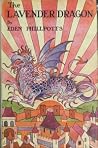
 The Lavender Dragon by Eden Phillpotts
My rating: 3 of 5 stars
Starts out as a pseudo-medieval tale of a knightly quest, told in formal English occasionally spiced with archaic and sometimes anachronistic terms (rather than William Morris's style of quasi-medieval language). It's supposedly set in the "Dark Ages," but refers to a lot of people and ideas that are post-medieval. It then quickly becomes a socialist utopian tract, more News from Nowhere than The Well at the World's End . The dragon is both a socialist (teaching that the greatest happiness is found by working for the good of others) and a rationalist, though he generously allows a good priest to minister to the people he has gathered in his utopian community. Assorting ill with the socialism is the inherent nobility of a young woman swapped at birth with a peasant (and the inherent commonness of her replacement), nature winning out over nurture.
Utopias usually involve big expository lumps; the author is self-aware enough that he has one of the characters, the dragon's strongest supporter, fall asleep while the dragon is expounding his philosophy at length, while all his other listeners have wandered off. I'm not sure why he didn't just cut it, if he knew this would be the effect on an audience.
It more or less peters out at the end, but since there's very little plot, I suppose this is to be expected.
View all my reviews


No comments:
Post a Comment