Monday, 20 April 2026

Review: Reflections of a Beginning Husband

Reflections of a Beginning Husband Reflections of a Beginning Husband by Edward Sandford Martin
My rating: 4 of 5 stars

"Reflections" is very much what this is. It's fiction, not the author's own story (he'd been married for a good many years by the time it came out, and while he and the narrator were both lawyers, the author started out as a writer and editor and became a lawyer later on). But the proportion of reflection to events is extremely high, so it's not a typical novel with a plot, more a slice-of-life book with a lot of musing.

If the musing hadn't been interesting, it would therefore have failed badly, but I did find it interesting. The setup is that the narrator, Peregrine Jesup, is in his early years of working as a lawyer, and isn't making much money, but convinces his beloved Cordelia French, the daughter of a wealthy man, to marry him anyway rather than waiting until he can keep her in the style to which she's accustomed. She's amenable, and they get on fine in a small apartment with simple food and not as much socialising as they have been used to. His parents are also well off, and both sets of parents approve of the match and are generally supportive, as are others like an older family friend who eventually takes Jesup into partnership at the end of the book. Meanwhile, the couple have a child.

That's pretty much it for events. The reflection on those events covers a number of topics. There's the relationship between men and women; Peregrine enjoys talking with Cordelia and respects her intelligence, and they have an alliance, not the War of the Sexes that's so common in American humour. There's the question of education for women. There's the question of women's suffrage, which had been around for a while (it's 1907) and would not be resolved in the US at a national level until 1920; Peregrine and Cordelia are dubious about how much difference it will really make to politics, and don't immediately buy the "natural justice" argument for it either, though they're far from settled in their minds. There's politics in general, in which Peregrine thinks he's a conservative, but not the kind that wants others to be ground under his heel; he's in favour of prosperity being more widely distributed, and is uncomfortable with the fact that, as a lawyer, he mostly works for wealthy people and their interests.

Prosperity, and what it means, is another theme (one that I'm interested in), and different attitudes to money - how much is enough, progress being driven by people wanting more of what it can buy, and the higher importance of non-material values. Peregrine and Cordelia are churchgoers, I think Methodists, though it's never made completely clear, and while it isn't a Christian book as such, Christian ideas do come in at various points.

I've given it my "comedy" tag, but it's more "humour" than "comedy," and even then pretty light. It's mainly the good-hearted tone and the wry observations about humanity that give it that feel.

It's very quotable, and I highlighted a lot of passages. I'll restrict myself to one:

"As things are, the country is run, after a fashion. The wheels do turn, and production and distribution are accomplished. To be sure, the wheels screech more or less, and the production is pretty wasteful compared with what the professional economists say it might be, and the stream of distribution runs so lumpy that it makes you laugh; but a fair proportion of the Lord’s will seems to be done, and hopeful people calculate that the proportion is increasing, though you might not always think so to read the progressive periodicals."

All of which is still true today.

While, naturally, I didn't agree with everything the author said in his reflections, he held his conclusions lightly and didn't insist on anything dogmatically, and it was interesting to get a window into the mind of one person (who represented, more or less, others of his type) at a historical moment when change was already rapid and the First World War hadn't yet hardened people.

Something I notice in a lot of the contemporary books I read is that the people who write them don't have much of a grasp on the idea that different times and places have held different ideas from theirs without being completely evil and wrong, and I wish more of them would read books like this and expand their perspectives. It's cozy and optimistic in tone, and for me the biggest fault is that it stops abruptly and without warning after the chapter in which Peregrine is given his partnership. Perhaps the author felt that this change was large enough, and disconnected enough from the domestic focus that he'd mostly been keeping, that it made a natural stopping place.

I probably mainly enjoyed it because it muses on topics that interest me too, but it's warm and easy-going and insightful, and if you don't mind it having very little plot per thousand words and find the thoughts of someone in 1907 worth thinking about, I recommend it to you.

View all my reviews

Saturday, 18 April 2026

Review: Cat Dragon

Cat Dragon Cat Dragon by Samantha Birch
My rating: 4 of 5 stars

Cozy doesn't need to mean low stakes, and this is an, at times, extremely tense story of a witch who has never quite fitted in, doing her best with her companions to stave off disaster from her home. Cute familiars and other animal companions, a loyal best friend, a love interest with reluctance because reasons, a chance-met apparent-ally-but-can-we-trust-her, and a couple of other chance-met associates round out the main cast, and were easy to keep straight, though none of them developed great depth.

Worldbuilding is not a strength of the cozy genre, sadly, but this book at least has the third-lowest-effort approach to it. The lowest-effort approach is to take the author's familiar surroundings and change a few names of things and say there's magic, without it ever impacting anything even slightly. The second-lowest-effort approach is to take the author's culture and beliefs and place them in front of some generic sword & sorcery scenery flats, which is what most cozy books do. The third-lowest-effort approach, used here, is to take whole cultures and languages from our world and just import them into the secondary world with a vaguely new geography. Latin exists, for example, and is the language used for scientific naming; photography and the wireless are mentioned, but never seen, and the world feels like the usual generic fantasy world that's vaguely at a late-medieval/early-renaissance tech level, except where it isn't.

I read it on my Kobo from the library, so I'll have to mention the specifics of the copy editing here rather than linking to Kindle notes and highlights. It's mostly good, but there are enough minor glitches that it didn't get my "well-edited" tag. There are a couple of vocab issues ("alike" for "like", "foreman" for "footman" - clearly a mistyping - and the overcorrection of "laid" to "lay"), a few missing or mistyped words ("on top everything else," "precious else left," "had been a kind a", "coming into land" where it should be "in to" - the "to" is not a preposition but part of the verb), the use of "may" instead of "might" in the past tense sometimes (but not often), the occasional dangling modifier, and of course a lot of commas between adjectives which don't need them - it's almost more common for authors to make that mistake than to not make it. It's better than average.

Like other reviewers, I did feel confused about what was happening at a few points. The author, I'm sure, had a clear idea in her head about what the events meant and how the viewpoint character understood them, but she sometimes needed to get more of it on the page for the reader to share in that understanding.

All of those minor flaws aside - and they were minor - I enjoyed it, it had a genuinely cozy feel while still being about something happening, the main character was a believable mix of self-doubt and competence, and I will happily read the sequel once it's available.

View all my reviews

Friday, 17 April 2026

Review: Spooky Hollow

Spooky Hollow Spooky Hollow by Carolyn Wells
My rating: 3 of 5 stars

Occasionally wordy and florid, never suspenseful, and I spotted the murderer very early on and never doubted my choice.

A mysterious stranger visits a wealthy eccentric's country mansion in Vermont. By next morning, the sister of the owner has been murdered, apparently stabbed inside a locked room; the stranger has vanished, leaving behind his hat and coat (both new, along with all his other clothing); and the sister's large, valuable ruby has also vanished. Suspicion falls in the obvious place, but this Henry Johnson doesn't appear to exist, and efforts to trace him fail.

Meanwhile, there are disturbing revelations about the wealthy eccentric's niece's family background - disturbing, that is, in a time when the elites mostly believed in eugenics, and the possibility that she might be the illegitimate child of an unknown mother rendered her basically a leper. Her suitor, to his great credit, sticks by her regardless, and spends his own money on investigating both her origins and the death of her aunt, to which end he calls in a famous detective (of whose series this book is part). The detective finds the criminal, and it's... exactly who I thought it was all along. I didn't figure out how the locked-room part was done, but I probably should have.

Not a great mystery story, but I've read worse.

View all my reviews

Thursday, 16 April 2026

Review: The Locked Room

The Locked Room The Locked Room by Holly Hepburn
My rating: 4 of 5 stars

Picked this up on BookBub, and I was glad I did. It's a solid cozy mystery.

The heroine, Harriet/Harry, works for the bank that sits in the part of Baker Street that includes number 221, and it is actually true that there was someone employed there for a while to answer letters addressed to Sherlock Holmes, which is Harry's job. Her job doesn't really play much into this book, and indeed she spends hardly any time at work, instead investigating several mysteries that turn out to be connected, based on a notice in the Times personals signed "Moriarty".

It's the third book in the series, and I haven't read the first two, but now I want to. There's clever investigation, daring action, disguise, and a variety of crime, just as in the Holmes stories. In fact, it feels so Holmesian that, despite the cars, telephones and jazz bands, I felt more as if I was in the 1890s (Holmes' heyday) than in the 1930s, when the book is actually set. This is probably partly because, as the granddaughter of a baron whose father is the heir, Harry is still under the same old-fashioned expectations about protecting her reputation and the kind of person she will marry that would have been the case 40 years previously. There's a slow-burn romance that's clearly been under way across all three books, with a worthy fellow, and also (sigh) a bad boy who's clearly wrong for her but thrills her.

It helps that the author is British, which saves us from the Americanisms that inevitably creep in when an American author sets their book in Britain. I didn't spot any obvious anachronisms either, though, having read a lot of fiction written in the period, I didn't get quite the same subtle sense off it of a dark, claustrophobic, rigid and hidebound Britain (where everyone constantly smokes) in the background of the events. I think I would have spotted it as a modern book even if I hadn't known, and even without the scene in which homophobia is brought up and briefly spoken against. Still, a truly authentic 1930s feel is hard to achieve, and maybe not even worth shooting for.

The copy editing is generally good, with just a few minor continuity glitches (such as which of two neighbouring houses is referred to, and briefly the gender of a street urchin), a couple of sentences where the grammar has got slightly mangled, and a single homonym error: loathe for loath, which is an easy mistake for an author to make and an editor to miss.

The characters don't have the depth of Dorothy L. Sayers, Margery Allingham or even Josephine Tey, but they're adequate for their roles, and there were plenty of early-20th-century mystery books in which the characters were thinner than this. The plot is relatively simple but well handled. All in all, it's competent rather than amazing, but sometimes that's all I'm looking for, and next time I want a pleasant, competent, fun cozy read, Holly Hepburn will be on my list of authors to consider.

View all my reviews

Tuesday, 14 April 2026

Review: Murder at the Vicarage

Murder at the Vicarage Murder at the Vicarage by Agatha Christie
My rating: 4 of 5 stars

I've seen at least one of the TV adaptations of this book, and I may well have read it many years ago from my grandmother's large Agatha Christie collection. Given that I couldn't even remember from the adaptation whodunnit, it's not surprising that I don't remember whether or not I've read the book. Like most Christie, the interactions of the characters are more interesting than the details of how the crime was committed (which isn't a criticism; I'd rather that way round than the other).

An unpopular man has been shot at the desk in the study of the vicarage. This makes a change from the usual formula of being shot (or stabbed) in his own library in the manor, but is rough on the vicar, who narrates. The middle-aged vicar has multiple trials to contend with: the gossipy elderly women of the parish; his young and unsuitable wife, who he loves despite himself; his curate, a nervous and not particularly competent young man with High Church leanings; and his teenage nephew Dennis - basically a good lad, but with the lack of discretion and foolish impulses of his age. And now murder.

Inspector Slack is determined to belie his name, to the point of being rude and abrupt and not even letting the vicar explain a key fact (that the clock in the study was always kept fast). The exact timing of the murder is important for who has and who doesn't have an alibi, because plenty of people have motive.

Miss Marple, who has the cottage next to the vicarage and is always out in her garden watching people come and go, not only supplies key information but also figures out how the whole thing was done, and explains it to the Chief Constable and the vicar. (For purposes of being the narrator, the vicar has been allowed to be a lot more involved in the investigation than is realistic, especially considering that he said shortly before the murder that if someone murdered the victim, it would be a good thing.)

It's a solid classic cozy mystery, a good start to the Miss Marple series. The idea of an elderly woman as detective was not completely new at the time - the first Miss Silver book, Grey Mask , had come out a couple of years earlier, and wasn't the first either - but Christie did a great job with the concept of a woman whose life experience was almost completely confined to a small village, but who had such a sharp mind, such a talent for observation, and such an insight into human nature that she saw through the most complicated murder plots.

View all my reviews

Monday, 13 April 2026

Review: The Bone Riders

The Bone Riders The Bone Riders by Cady Fletcher
My rating: 4 of 5 stars

A lot of urban fantasy/supernatural suspense books are written very much to a formula, which doesn't interest me. The blurb for this one suggested that it broke out of the formula, so I picked it up (from Netgalley, pre-release), and I'm glad I did. It's a solid, enjoyable piece with some original ideas.

The Bone Riders are magic users who have a specific application of their magic. They create (from the bones of dead horses) magical horses which are real and alive and behave like normal horses most of the time, but have some extra abilities when paired with their riders. For example, they can move much faster than ordinary horses when necessary, which simplifies the logistics of getting around the small city which is the setting for the story. The Bone Riders also help separate the leftover energy from things that have died if it hangs around; they have a sense of wrongness that enables them to detect it. All of this is cool, and it's not just "they're grim reapers" or "they're necromancers".

The viewpoint character, Drew (short for Andrea), came into her powers relatively recently, when she died in a car accident and then pulled herself back into her body. Her boyfriend, feeling responsible for the accident, broke up with her, but is still obsessively trying to be in her life, to a slightly creepy degree. She holds firm about them being exes, though she does rescue him at one point; she doesn't hate him, just knows they're better off not being together. He and a new guy she meets who might possibly be a new love interest down the track have names that sound similar (they're Cole and Case), which I found confusing at least once.

There's an apocalypse I wasn't expecting relatively early in the book, when the magic that has been seeping through into the city through a "rift" erupts into it and causes widespread damage, magical phenomena, and the empowerment of a number of citizens. There was both less problem with food supplies and a longer delay for aid to arrive than I suspect would be the case with a real disaster (even one that had such widespread effects), but that's largely in the background, as the Bone Riders battle the increased number of not-completely-dead humans and animals to release them, and deal with the new reality.

Right before the apocalypse, there's a set-piece that the author clearly put a lot of thought into, where Drew's terrible boss fires her for no good reason and she gives him her views on the toxic nature of employment relations in the USA.

In terms of copy editing, there are just a few typos and a number of surprisingly basic homonym errors (which I'll mention to the publisher, so they may well be fixed by publication). It reads smoothly apart from those, and as it looks like being a series, I look forward to spending more time with the Bone Riders.

Calling it now, though: Fiona is not human, but some sort of minor god-level being.

View all my reviews

Friday, 10 April 2026

Review: A Trade of Blood

A Trade of Blood A Trade of Blood by Robert Jackson Bennett
My rating: 5 of 5 stars

Robert Jackson Bennett confuses me, because I shouldn't like his books, and yet I do. In fact, I consistently rank them among the best books I've read in a given year.

This is basically SF/horror/mystery in a setting that feels like fantasy because the technology is biotechnology, and the mechanical tech is at a medieval/renaissance level, like a lot of fantasy books. I am not at all a horror reader. I usually favour cozy fantasy or cozy mystery, and this couldn’t be less similar in most ways. But what it has that cozy fantasy usually falls very short on is a high concept and a richly developed setting, and what it has in common with my more usual reading is that Din, the viewpoint character, is at heart a decent person doing his best in bad circumstances. And the mystery is well done, too.

There's extensive gore and mass murder and a gritty, oppressive-feeling empire full of people (and animals and plants) that have been horribly distorted by the biotechnology - derived from massive kaiju, though that doesn't come into this book as directly as in the previous ones in the series. It features a sweary, ill-tempered, annoying detective and her sad-boy assistant, who’s just discovered that the time when he’ll go mad from his bioenhancements is probably not as far away as he’d hoped. Also, fungal mind control.

And yet Bennett does it so well (and somehow conveys that he, too, hates how the world is, rather than celebrating it in a torture-porn sort of way like, say, Terry Goodkind) that I can’t help wanting to read it anyway.

There's a strong theme, for instance, of the cattle industry, which is the dominant industry in the area of the action, being not only wasteful of resources but also morally degrading, because of the way in which it normalises the suffering and slaughter of living creatures.

It isn't perfect, certainly. There are too many exclamation points in the dialog, too many commas between adjectives that aren't coordinate, the occasional number disagreement between subject and verb, and a couple of words that don't mean what the author thinks they mean. (I had a pre-publication version via Netgalley, so some of this may be fixed before publication.) But none of these things much inhibited my enjoyment of an excellently-crafted story with top-notch worldbuilding.

View all my reviews

Wednesday, 8 April 2026

Review: Sweet Danger

Sweet Danger Sweet Danger by Margery Allingham
My rating: 5 of 5 stars

More of a thriller than a mystery. (My working definition: in a mystery, the protagonists are trying to solve a crime that's already happened, while in a thriller, they're trying to prevent a crime from happening or otherwise battling criminal opposition.) In this case, it's a treasure hunt, racing against a powerful and unscrupulous enemy. The complicated and somewhat unlikely backstory is that there's a very small Balkan country that was granted to an English earl in the Middle Ages, and then bought by one of his descendants from Metternich when the map of Europe was being redrawn after the Napoleonic Wars, and now an earthquake has opened it up to the sea and also revealed that there is oil there - meaning it could become a refueling point for the British Navy. But the line of earls has died out - or has it? There's a family that claims to be the legitimate descendants of the last earl, but they can't prove that their ancestress was married to him, and they also need to find three items to make their claim - a crown, the medieval grant, and the Metternich receipt - which have been hidden for decades, nobody knows where.

It's packed full of eccentric English characters, from the pub owner who keeps telling everyone that he's honest and the wacky local doctor to, of course, Campion himself and his manservant Lugg. The family with the claim to the earldom and its associated tiny kingdom features a gamine young woman (not quite 18) who is running the local mill, but makes most of her income from running a dynamo to charge the batteries for people's wireless sets. It's a backwater rural village with no phone and no mains power.

On the other hand, there are some bland characters too, notably Campion's three assistants, barely distinguishable upper-class chaps who could step straight into the Drones Club and no questions asked. The miller's older sister is also quite bland and generic, and while her younger brother, the putative earl, does have some distinguishing characteristics, he isn't one of the great eccentrics either.

Campion shines throughout, manipulating events, anticipating problems, hatching complicated schemes and pulling off daring feats when things go wrong. His pose of upper-class near-idiocy fools almost nobody. The villain is appropriately sinister, an unscrupulous businessman who's used to having his own way, with plenty of loyal minions to do his bidding. The plot zips along, and the action is, as always from this author, well described and original. It's a fun ride, and I was happy to ignore the unlikely elements and be carried along by the excellent writing.

The Vintage Digital ebook edition is not the worst edition I've seen of a classic novel, but it does have a good few scan errors that have gone uncorrected, including a lot of commas missing or inserted and several misreadings, and I don't recommend it.

View all my reviews

Tuesday, 7 April 2026

Review: Big Foot

Big Foot Big Foot by Edgar Wallace
My rating: 3 of 5 stars

Not one of the great Wallace books in the end, because of a couple of cheats, but enjoyable for most of its length.

One of the big cheats/coincidences is the astonishingly mobile tramp with mental issues who manages to move by unexplained means, and for largely unexplained reasons, between the three main locations (central London, a coastal town, and a rural suburb of London), apparently solely so that he can play a key role in the plot. He also has a coincidental connection to another character.

There's a massive red herring which had me completely fooled, not least because there's at least one scene where someone tells someone else something that, given the final resolution, they ought not to have told him. (view spoiler)

There's the usual side romance, between a lawyer and the secretary of the man who has the neighbouring office; it's nothing special.

Still, Superintendent Minter (known to everyone as "Sooper") is a fun character, with his pose of anti-intellectualism covering a clever and insightful mind - a bit like Colombo in a way, pretending to be "just a plain man" while outmaneuvering someone who thinks they're his social and intellectual superior. His disreputable motorcycle is also a bit like Colombo's car, and like his later American counterpart he dresses like a scarecrow. He appeared in at least one other Wallace book, but unfortunately my library doesn't have it and it isn't on Project Gutenberg either.

View all my reviews

Monday, 6 April 2026

Review: The Early Worm

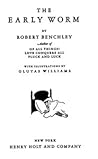
The Early Worm The Early Worm by Robert Benchley
My rating: 3 of 5 stars

Absurdist humour, which I found oddly readable for no reason I could put my finger on. Very much embedded in its time (1927), with a lot of references to contemporary people who I had to look up on Wikipedia, because in the ensuing 100 years they've dropped out of the popular consciousness.

Several of the pieces form a series, originally published in Life magazine, in which a fictionalised version of the author leads an expedition, supposedly sponsored by Life, to the North Pole by bicycle. This was the time of Byrd and Peary, and the North Pole was topical. They end up making it as far as upstate New York.

A surprisingly pleasant distraction for a quiet afternoon, but no classic.

View all my reviews

Review: Cream of the Jug: An Anthology of Humorous Stories

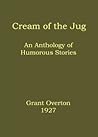
Cream of the Jug: An Anthology of Humorous Stories Cream of the Jug: An Anthology of Humorous Stories by Grant Martin Overton
My rating: 3 of 5 stars

As even the editor admits in his introduction, this is a mixed bag. Some stories are by well-known authors still known today like P.G. Wodehouse or F. Scott Fitzgerald, others by authors well known at the time but now obscure, and a couple by authors who weren't even that well known when the book came out. As in any anthology, I enjoyed some more than others.

The Wodehouse I'd read in another collection somewhere. It's the Earl of Emsworth competing against Sir Gregory Parsloe-Parsloe in the agricultural show, this time with a giant pumpkin - before the days of the pig Empress of Blandings, and indeed before Parsloe lived at Matchingham Hall. There's not a lot of protagonism on display from Lord Emsworth, who's the recipient of a good amount of luck in order for everything to work out for him, and it's not a top-flight Blandings story; nobody even goes to Blandings under a false name.

A lot of the stories have soft endings, and several of them rely on dialect (black dialect in one, Jewish dialect in another) for some, although by no means all, of their humour. The "negro" story is, at least, about a black film company from the US South shooting in Algeria, so it's not a stereotypical situation, and would still work if you took the dialect out or, for that matter, if you told it about white people. There's a third dialect story, too, told by a New York blue-collar boxer. That was one of the ways humour was done 100 years ago (think about Damon Runyon). But in all three cases, the situations provide a lot of the humour as well, and the dialect is just spice.

Overall, it's the definition of three stars for me: good enough to recommend, with some caveats.

View all my reviews

Friday, 3 April 2026

Review: The Feywild Job

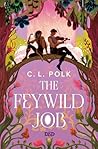
The Feywild Job The Feywild Job by C.L. Polk
My rating: 5 of 5 stars

This isn't just better than most licensed fiction; it's better than most fiction I come across.

The thing with licensed fiction is that it's often just officially sanctioned fanfic, and while there is some excellent fanfic here and there, it's not common. Usually, you're going to see a better result from an author who has come up with an original world, situation, and characters, because if they can do that, they're probably talented enough to also tell a good story. (Lots of exceptions in all directions, of course, but that's the way to bet.)

But the thing with D&D licensed fiction is that, while the author is handed a detailed and complex world, they do generally come up with an original situation and characters, and that's what this book is.

A further advantage is that modern D&D is built for creating storytelling potential. Take the idea of a warlock. Here's someone who has made a deal with a powerful otherworldly being in order to get power for themselves. That's just bristling with possible stories. Firstly, it's a relationship that involves a power differential, so you know there's going to be some exploitation happening. Secondly, the warlock has to have had a reason they wanted that power and were prepared to trade for it; what part of them is broken that caused that to be true, and how will that continue to play out? And thirdly, they're now more powerful than the ordinary people around them; how are they going to abuse that?

The central character of this novel (and it deserves to be called a novel) is a warlock, Saeldian, who serves an archfey patron and has made a career out of con games. When Saeldian's old partner, the bard Kell, is forced into doing another job with Saeldian - who left Kell after their last big score in circumstances that looked like a horrible betrayal - we have motivated protagonists in a dynamic situation, and that's always an excellent story engine.

Alongside Saeldian and Kell we have the rogue Jubilee, who's Saeldian's new partner, and the druid Lorzok, who's Kell's new partner. Jubilee needs money to help her parents, former adventurers who have been "gifted" a dilapidated manor; Lorzok is seeking a place where he belongs. They're tasked with a heist, and told that the job is reclaiming a stolen gem with minor magical powers from someone who has bought it from a thief without knowing its provenance, and returning it to its rightful owner in the Feywild without them finding out.

The heist is tricky, but not, perhaps, as tricky as it ought to be; they're given no time to prepare, yet manage to pull off something that ought to be impossible. This eventually turns out to be down to complex machinations.

Along the way, though, the true story unfolds: the relationship between Kell and Saeldian. Is it retrievable? Can they ever be honest with one another? What really caused Saeldian to leave ten years ago? And this is where the book really shines. There's a gradual but completely believable unfolding of the truth and progression of the relationship, and it flows naturally out of the specifics of how the world works, which I always appreciate in a speculative fiction work.

The rich culture of the Forgotten Realms forms a great backdrop to the early part of the book, and the wonderful and terrifying, ever-shifting Feywild is an equally effective setting for the later part. The author does an excellent job of evoking these settings without ever making them the focus; that stays firmly on the characters and their relationships, plus the twisty and surprising plot. Also, you don't need to be familiar with these settings, or with D&D in general, in order to understand what's going on.

I knew C.L. Polk was a good writer, because I'd read The Midnight Bargain and rated it five stars. This book only confirms my opinion. Personally, I would use the past perfect tense more often than it's used here (that's a general trend I've noticed in the books I read), but otherwise I have little to complain of in the copy editing either.

Strongly recommended.

View all my reviews