Thursday, 15 October 2026

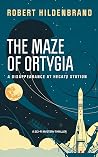
Review: The Maze of Ortygia: A Disappearance at Hecate Station

The Maze of Ortygia: A Disappearance at Hecate Station The Maze of Ortygia: A Disappearance at Hecate Station by Robert Hildenbrand
My rating: 2 of 5 stars

The most obvious problem with this one is that the dialog is so stilted, with very few contractions, and all the characters sound the same.

The lesser but still important problems include the fact that the author frequently tells us how a character is instead of showing us, and that a lot of important information seems to stay in the author's head and never make it to the page, or only make it there suddenly and with no preparation. For example, a character who has seemed up to that point to be human is abruptly announced to be a human-shaped cyborg (most cyborgs in this setting aren't human-shaped). This isn't something the other characters discover; it's just narrated.

There's a might-as-well-be-magical stuff called "ether," with abilities that are not at all defined to begin with (so it's not Sandersonian). We're just told it's useful, not how or why. Later on, it can apparently form complex illusory scenes, and convert other matter into itself (so it seems to be programmable matter, maybe). Conveniently, when a lot of it rushes out of a confined space, it only pushes named characters around a bit (and the one it bounces off the wall is enhanced to take it), but it kills an unspecified number of unnamed characters by tearing their ship apart and converting parts of the ship into more of itself, at just the point where its pressure ought to drop. It even luckily prevents a named character from being hit by laser fire at the same time. It might as well be called "makesnodamnsensium" or "plotconveniencium."

FTL isn't a thing, and we're told that backup will take an infeasibly long time to reach the system, but then we're also told in a different context that backup can be called and will arrive "soon". Ships can't operate without their transponders, but a number of duplicate ships are swapping around the same transponder, and radar doesn't seem to be picking up the discrepancy.

Add to this that the author doesn't always type the word he means ("forward" instead of "future," "would" instead of "wouldn't"), and often doesn't use the past perfect tense to position events comprehensibly in time relative to the narrative moment. In fact, it starts out in present tense for a short time, and then drops suddenly into past. There are missing commas around terms of address, fumbled idioms, and a plural conveyed by using an apostrophe after the "s". These problems aren't particularly frequent, and I saw a pre-publication version via Netgalley, so some of the more egregious errors might be corrected by publication - or they might not.

I got about halfway through and wasn't much gripped by the several mysteries, particularly since I suspected they would be solved by the use of plotconveniencium, so I started reading something else to see if I cared enough to come back to this. I concluded that I didn't.

View all my reviews

Tuesday, 13 October 2026

Review: The Curry Bible: The Ultimate Indian Cookbook Featuring 100 Classic Recipes

The Curry Bible: The Ultimate Indian Cookbook Featuring 100 Classic Recipes The Curry Bible: The Ultimate Indian Cookbook Featuring 100 Classic Recipes by Nisha Katona
My rating: 3 of 5 stars

The strength of this book is that the recipes are quite simple.

This is also its weakness, in that the detail they leave out is probably the difference between an OK recipe and a good recipe. Also, some of them just don't seem quite right to me.

I made the aubergine and potato curry. Most of the vegetarian recipes feature potatoes, not my favourite vegetable, but I suppose I can substitute. I didn't substitute, though, and made it basically as written, except that my "large" 500g aubergine/eggplant was almost twice as large as the "large" 300g one the recipe specifies, and the recipe says to cut it into 8 pieces, which I thought would be too big (even if I went for 16 pieces to allow for the difference), so I cut it about the size specified for the potatoes, 3cm. This gives a very rustic result, and it's difficult to get the potatoes cooked through. I happened to have more potatoes than called for, too, in about the same proportion as the eggplant, so I increased the spices slightly to compensate. I didn't double them, and was glad I hadn't; I think that would have been too strong for me. As it was, it made a pleasant curry, with slightly undercooked potatoes even though I gave them extra cooking time. I will probably make it again, but substitute carrots for the potatoes and cut everything smaller.

To accompany the curry, I made the roti recipe. The texture came out a bit cardboardy, which didn't surprise me much, since, comparing with other recipes, 10 minutes is a very short time to rest the dough after kneading, and a lot of the recipes call for resting it again after rolling into balls. Coating the dough ball in plenty of oil worked well for cooking them on the griddle without creating burned-on carbon, though, so I will take that approach with other flatbreads in future. They tasted OK, but with so few ingredients that also wasn't surprising.

The spice mix section at the front is probably the best thing in the book from my perspective, and I will be using it. I made one of the mixes as part of the curry recipe, and it was good, though, again, I probably wouldn't have enjoyed it as much if I'd used more of it.

Not a complete fail, but not one of the great cookbooks either.

View all my reviews

Monday, 12 October 2026

Review: Legendary: Help Unwanted

Legendary: Help Unwanted Legendary: Help Unwanted by A.M. Mirabella
My rating: 4 of 5 stars

The story of a diligent Hero (paladin-adjacent, but not religious) and a fairy who offers to help in the Hero's latest quest: retrieving the ingredients for a potion to save her prince yet again. The prince has magical blood, and everyone literally wants a piece of him, so her task of protecting him is challenging and never-ending. There are multiple references to her previous adventures protecting him, starting six years earlier, when (aged 12) she cut off the head of a sorcerer who was after his blood.

From a storytelling angle, it's strong, with plenty of good emotional beats as the hero and the fairy work together and attempt to deal with their respective trauma. Plenty of plot twists and reverses, a villain you love to boo, and encounters with interesting minor characters, who don't feel as flat as such characters often do in books like this. It's a world that's had a degree of thought put into it, with an entire kingdom that flies, plenty of legendary creatures, and magic in all directions. The sensawunda is strong with this one. At the same time, the inner and outer conflicts are believable and engaging. Some of the concerns, and proposed solutions (like taking a vacation as a way of relieving the pressure from constant stressful work), are modern rather than of the equivalent historical period, but that helps them work for a contemporary audience.

Like practically every new book I read, whether from Netgalley pre-publication like this one or from Bookbub after publication, it could do with a bit more editing, and quite a bit more past perfect tense. There are a couple of apostrophe glitches, a dangling modifier, some ambiguous pronoun usage, a few excess hyphens and an outright misspelling, as well as a continuity error. I'll point all of these out to the publisher in the hope that they get corrected.

The hero works in what's described as a kingdom, but it appears to be ruled by a prince and princess with the support of a council of sages, which would normally make it a principality (a word that does get used in another context). Also, the prince and princess are addressed as "Your Majesty" rather than the more usual form for princes and princesses, "Your Highness," though if they're the rulers this is more justifiable.

These are relatively minor issues, and there aren't a great many of most of them (apart from the missing past perfect). Overall, it's a capably told, enjoyable fantasy, and I'll be watching out for more in the series.

View all my reviews

Friday, 9 October 2026

Review: The Borough Treasurer

The Borough Treasurer The Borough Treasurer by J.S. Fletcher
My rating: 3 of 5 stars

Two prosperous businessmen run a building company in partnership in a small town in the north of England.

One is serving his second term as mayor; the other has been borough treasurer for six years, and his daughter is about to marry a wealthy local man with a bright political future.

But, completely by coincidence, a man comes to the town who remembers the pair from 400 miles away and 30 years ago, when (under different names) they were convicted of embezzling from the building society of which they were secretary and treasurer. With so much to lose, they have two options: give in to blackmail which might never stop, or... ensure he never tells anyone.

The blackmailer dies - but who killed him, and why? Being a J.S. Fletcher book, it doesn't always go in the direction I was expecting, except of course for the two very lightly sketched romances with women who barely appear in the story and certainly don't get much characterisation. There's no single detective; the one we follow most is a young barrister, the friend of the borough treasurer's prospective son-in-law (which adds its own layer of complication), but he doesn't solve the whole mystery by himself. It's a largish ensemble cast, many of them minimally developed.

The biggest weakness for me was the abundance of evidence, most of it produced by coincidence and then suppressed for reasons. An encounter on a supposedly deserted moor is witnessed by at least three people. The one document a murderer would want most to suppress is the one that falls out of the victim's pocketbook, to be found by someone with a motive to conceal it. People keep happening to be in the right/wrong place at the right/wrong time. (view spoiler)

For me, the plot loses its way (despite, or maybe because of, the abundant coincidence), and the characters are underdeveloped. It's one of Fletcher's less successful books from my point of view. He didn't write conventional detective stories, which is great, but sometimes the way in which his books are original is more a weakness than it is a strength, and this is one of those times.

View all my reviews

Tuesday, 6 October 2026

Review: Beware of Chicken 5

Beware of Chicken 5 Beware of Chicken 5 by CasualFarmer
My rating: 4 of 5 stars

A significant improvement over Book 4, in my opinion. There's a sense of progress, albeit slow, throughout, rather than just a lot of slice-of-life eventually giving way to some action most of the way through the book. True, there isn't much actual action, but there is at least the potential for conflict when Jin Ren's adoptive "grandfather," the mighty and terrible cultivator Shin, arrives at the farm with an agenda already in mind that will clash with Jin's settled purpose.

It's also partly a setup book, since near the end two groups of the (many) characters go off on different missions, leaving a third group to keep things going on the farm.

There really are too many characters, and too much backstory (which I find harder to remember than the characters, as I've mentioned in a previous review), but from what little I know about Asian classic literature, sprawling epics with many characters and not a lot of what Westerners would think of as plot are quite normal, so this is, presumably, in tribute to that tradition.

Most of the characters have points of view, and experience some form of personal growth, often because of each other, which is good. There are some touching and amusing side stories at the end of the book. All in all, I enjoyed it.

This series started out poorly edited, but has significantly improved. I did mark a couple of dozen issues, but that's about average even for a book much shorter than this one, in my experience. There are occasional odd phrasings or misused words or fumbled idioms, and a few punctuation stumbles that usually seem more like typos than someone not knowing a convention, but by current standards this is very clean.

I suspect (by the fact that the first five books all seem to be on sale at once) that Book 6 may be about to come out. I look forward to it (though I don't look forwards to it, as the author phrases it a couple of times).

View all my reviews

Monday, 5 October 2026

Review: The Case of the Canterfell Codicil

The Case of the Canterfell Codicil The Case of the Canterfell Codicil by P.J. Fitzsimmons
My rating: 3 of 5 stars

Not a bad period-setting modern murder mystery, let down by some easily fixable issues with the editing. Most prominently, the author frequently leaves out the vocative comma (the "let's eat Grandma" error), which to me is one of the most basic things that makes an author come across as amateurish. There are also a few Americanisms, like referring to Oxford University as "school" and to someone's "junior year" and giving a "commencement address," but I spotted fewer anachronisms than I expected. There is the use of "alright" as a spelling for "all right" (originated in the 1980s, and still not the most common usage or accepted by major style guides), and giving an English earl of the period of the Wars of the Roses the first name "Elmer," which is distinctively American and only started being used after the American Revolution (so it's an Americanism and an anachronism in one). There are a few vocabulary errors, too: desert/dessert, infer/imply (though even good writers at the actual period this is set in did make that mistake), passed/past, dichotomy/paradox, vindictive/invective. Occasional missing words in sentences, some garbled idioms, and a couple of other punctuation or usage issues round out the collection. It lacks, in other words, the polish I was hoping for, without which it's not a convincing attempt at a 1920s mystery, and I can't bring myself to give it more than three stars, even though it's otherwise sound.

I read a lot of actual 1920s mysteries, and if this was properly edited it wouldn't be a bad one. The main character, Anty Boisjoly (pronounced like Beaujolais), has a role similar to Albert Campion: not strictly speaking a detective, more of a fixer and finder-out for his wide circle of acquaintances. In this case, he's called in by his old rowing coxswain to clear him of a charge of murdering his uncle. He's of the Bertie Wooster class and background, a young man of the upper classes, educated at Eton and Oxford, without a specific occupation, and his observations are amusingly phrased, though they don't have the true Wodehousian sparkle any more than they have the Campion eccentricity. The other obvious comparison is to Lord Peter Wimsey, but he's sadder and more profound and, of course, his writer was an excellent prose stylist. Not that the prose here is terrible, but it's about average for the period it's set in, making it better than average for today. The other difference from all three of these characters is that he's neither an actual idiot like Wooster, nor masquerading as one to put people off their guard, like Campion and Lord Peter.

The other characters are mostly stock, as was the style in most 1920s mysteries, though there are hints of greater depth in some of them; the retired major, for example, isn't just a stereotype. The mystery is tricky and well plotted out (view spoiler), and Anty solves it cleverly. The police inspector, unlike Campion's and Wimsey's police colleagues, is a classic Scotland Yard bungler in the Sherlock Holmes tradition, while the local policeman is a good-natured yokel, leaving the field clear for Anty to shine.

Compared with other modern attempts at classic mystery I've tried, it has some potential - but personally, I can't get past the lack of attention to detail in the editing, and I wouldn't buy another for that reason. But if I ever go back to listening to audiobooks, my library has the series in that format, and I won't be distracted by anything except misused words there.

View all my reviews

Friday, 2 October 2026

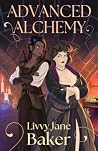
Review: Advanced Alchemy: A Novel

Advanced Alchemy: A Novel Advanced Alchemy: A Novel by Livvy Jane Baker
My rating: 3 of 5 stars

Violet is a student alchemist in her final year, which involves outplacement, in her case in the back end of nowhere. Possibly this has something to do with how she blew up part of the chemistry lab last year and is, in general, rebellious and uncooperative, despite having worked her way up from the slums by sheer determination and so being very invested in passing.

She also has been saddled with a paladin-in-training, Viessa, as a bodyguard and minder. They have an instant odd-couple dynamic, Violet being the slobby one and the paladin the neat freak, naturally. It's classic chaos vs order. A chaotic alchemist does raise some questions, since it would seem to require a good deal of precision and discipline, especially for someone who had to teach herself magic from scratch without even the advantage of inheriting any from an ancestor, but... people are complex, and it wasn't enough of a contradiction to break my suspension of disbelief.

Violet is surprised and a little disturbed, given how much she resents Viessa and finds her irritating, to find that she's also attracted to her. I was a lot less surprised, since it seems like Violet would give a tree a second look if it was approximately woman-shaped; she's lustful and promiscuous, as well as sweary and given to acts of poor judgement, none of which endeared her to me particularly. Viessa is rigid and naive (though, as it turns out, committed to principle rather than just a blind rule-follower), but also, for some reason, is attracted to Violet, again despite being intensely irritated by her. I have a quirk where I need to like both people in a couple in order to care whether they end up together, and in this case I didn't like either of them much at the beginning. Viessa did gradually grow on me, as her mistakes and weaknesses humanised her, and Violet, the main character, had a considerable character arc in which she learned and grew, so eventually I was on board with the ship - though I still had doubts about its practical feasibility by the end.

The author's reach exceeds her grasp when it comes to vocabulary, unfortunately, with a good many errors, one or two of them quite basic. I'll mention them to the publisher (I had a pre-publication version via Netgalley for review) and hopefully they will be fixed; the editing is otherwise mostly clean, apart from an occasional odd phrasing, some incorrect dialog punctuation and one chapter where the past perfect tense goes missing for a while. She has an odd habit of separating two sentences with a colon, too, but that's not wrong, just unusual.

On the upside, the writing is wryly funny in just the way I enjoy, and the story is a decent cozy-adjacent fantasy in which two ill-assorted people have to learn to work together and get along, and in which Violet learns to tame her more extreme chaotic tendencies. Towards the end, I found it powerfully engaging, with strong emotional beats. Worldbuilding in cozy and romantasy tends to be weak, often barely enough to allow the plot to happen (if that), but here some thought has gone into the world and the magic system. I didn't end up believing the source of the curse on the moor, though; it seemed (in terms of the world that had been described) too much effect in proportion to the cause. As a minor point, I'm also not sure how the person on the left side of the cover could lend the person on the right side her spare riding trousers and have them fit.

While this is (like so much fantasy these days) marketed in part as cozy, it's not deeply cozy, and I'm not tagging it as such.

Balancing out the strengths and weaknesses, for me this is a three-star book; good, but with some significant flaws. It's good enough that I'd consider reading a sequel or other books from the author, but flawed enough that I'd approach them cautiously.

View all my reviews

Monday, 28 September 2026

Review: Hero Adjacent

Hero Adjacent Hero Adjacent by Alexis Veenendaal
My rating: 4 of 5 stars

The failure mode of "funny" fantasy is just relying on silly names, pratfalls and parodying the most low-hanging fruit in the trope orchard, while writing a story that's mostly just a series of stupid incidents, and characters who never get any depth beyond a combination of an archetype and a plot role.

I'm happy to report that this book avoids those common pitfalls. Each of the characters we follow throughout the book has at least one extra quirk on top of their archetype and plot role, and the central character has significantly more depth than that. He's a grumpy, disillusioned middle-aged wizard who has been part of the Academy's system of Chosen Ones his whole working life, functioning as a mentor and guide for good-looking teenagers with a Destiny. (These are remarkably common.) What he would love is to be able to contribute something more to the saving of the world, and this time, he finally gets to do so. Along the way, he's forced to question all of his assumptions about Chosen Ones, the Academy, magic, wizardry, goblins, warlocks, the Hero's Journey, destiny and himself.

He's believably flawed, as are his companions, and things look dire on many occasions, but they finally manage to learn to trust each other enough to pull off their world-saving feat. Side quests develop their abilities and their bonds, and encourage the wizard to re-evaluate what he'd always believed.

It's not, of course, as good as mid-career Terry Pratchett, but what is? Certainly not early-career Terry Pratchett, which it more closely resembles. I look forward to seeing this author develop further.

I had a pre-publication version from Netgalley for review, and the commas are mostly in the right places (apart from the usual excess ones between adjectives occasionally - very few authors avoid that trap). The apostrophes are occasionally not in the right places when the noun is plural, and there are some minor vocabulary glitches as well, which I'll report to the publisher in the hopes that they'll be fixed before publication. But overall, it's cleaner than average in editing, as well as being above average in other respects.

View all my reviews

Friday, 25 September 2026

Review: The Adventures of Jimmie Dale

The Adventures of Jimmie Dale The Adventures of Jimmie Dale by Frank L. Packard
My rating: 4 of 5 stars

Another good recommendation from my wife, who listened to it on Librevox. She did warn me that the two sequels are pretty much the same, so reading them all in a row - as she did - isn't recommended. The first is the best, she says, because the premise is still fresh.

It's a good premise, too. Jimmie Dale is a wealthy young New Yorker, having sold his late father's burglar-proof safe company for a tidy sum. To his friends at the highly exclusive club he belongs to, he appears to be an idle man-about-town, but he has a secret identity as the wanted criminal the Grey Seal (not the animal; he leaves grey stickers at the scenes of his exploits).

Initially, he was doing this as a lark, a personal challenge. He didn't steal anything, just broke in and left his calling card. But a mysterious woman somehow discovered his double life, and blackmails him into doing jobs for her - jobs which also make use of mysteriously acquired and very detailed knowledge (it's never explained exactly how she gets this, and at one point she knows the name he has given his hideout, even though nobody else is in his confidence and he would presumably never have said its name aloud). But rather than harming the innocent, his "crimes" on her behalf protect them at the expense of the corrupt and greedy.

He has yet another identity as Larry the Bat, a nocturnal lowlife embedded in the criminal world of New York City, where he is known to one and all as a guy who is generally just around. (We're shown that he's a supposed drug addict living in squalor who hasn't ever been associated with a specific crime, but told that he's considered one of the "aristocracy" of the criminal classes. The grey seals are not the only decals in use in this book, in other words.) His role as Larry provides him with useful information, and he also has a bolthole with three separate entrances which he rents under the Larry persona, enabling him to change between his identities.

It's action-packed and gripping, along the lines of The Black Star . As well as the individual jobs Jimmie pulls, there's an overall story problem of his search for the mystery woman (Robyn Hood, as I nicknamed her, though, for reasons, he ends up calling her Tocsin), and, early on, his cat-and-mouse game with his old college friend, the editor of a major newspaper, who admires the Grey Seal but has no idea who he is. This thread slowly thins and is completely gone by the end - it's a long book.

The author does have a bad habit of using ALL CAPS rather than italics for emphasis, and dangles a few modifiers, but I forgive this for the sake of the engaging story. He also makes the common mistake (more common in 1917, when this was published, because automatics were new) of referring to an automatic a few times as a "revolver." There's the odd typo or uncorrected scan error in the Project Gutenberg edition, and I'll pass these on to them - they usually fix such things quickly. Otherwise, it's a fast-moving, well-told adventure story in the "gentleman thief" genre, with the twist that the thief is actually committing his crimes in a good cause. As the book goes on, the danger to Jimmie escalates; not only the police, but the criminals are out to get him after he turns in some of their number for a brutal murder, and then he and the mystery woman go up against a hidden criminal conspiracy that she's been hiding out from for five years, and the screws really tighten. There are plenty of moments of suspense and thrilling action, and the role of coincidence is kept to a minimum. There is one Convenient Eavesdrop, but it doesn't end up making a big difference to the outcome, just raises the stakes for Jimmie. The increasingly flimsy secret of Jimmie's three identities does end up being preserved a couple of times by a fortunate chance, though.

I wouldn't be at all surprised if Bob Kane, originator of Batman, had read it. It even has the "Batman problem" of why the wealthy man doesn't do anything with his money to relieve poverty and suffering that he's well aware of (something that the mysterious woman, it turns out, does do, though not without benefit to herself), instead putting his efforts into sneaking around at night beating up criminals, but there we are; it's a thriller, not a novel of social consciousness, and as a thriller, it's well done. It did put some strain on my suspension of disbelief occasionally, but any thriller, and especially one from 1917, is going to do that; it's significantly more likely than, say, the Tom Cruise Mission Impossible movies, not that that's a high bar, and it comfortably earns four stars from me.

View all my reviews

Monday, 21 September 2026

Review: The Middle of Things

The Middle of Things The Middle of Things by J.S. Fletcher
My rating: 3 of 5 stars

Fletcher was a good mystery writer, and this one is engaging and well written for most of its length, but doesn't stick the landing.

Viner, a "young gentleman of means and leisure" living in a nice part of London, returns home from an evening walk via a narrow passage between houses that offers a short cut. There he finds the dead body of a man who recently moved into the area, who he knows by sight. He saw a ragged-looking man running from the passage shortly before. The ragged man is picked up trying to pawn the man's ring to buy much-needed food, and found to be, by complete coincidence, an old schoolmate of Viner's from Rugby, down on his luck. (I haven't tagged the book "plot relies on coincidence" because, although there are some coincidences, they're not vital to the plot.) Viner is convinced he's innocent, for reasonable reasons (there was plenty of cash on the victim, which is missing, and if the suspect had cash to buy food he would have done so rather than try to pawn the ring, which he says he just snatched up from the ground in passing, thinking the victim was drunk).

It turns out the murdered man was also carrying some papers relevant to the succession to a noble title, and Viner and the several lawyers he involves (mostly in an attempt to clear his old schoolmate) are convinced that this is the motive for the crime. Multiple witnesses emerge from all directions with important clues, and the group gradually piece together the mystery. There's no one detective; Viner, a couple of the lawyers, Viner's sharp elderly aunt (who's addicted to murder mysteries) and a couple of other characters all contribute to the eventual solution.

Unfortunately, while the working out of clues and red herrings is engaging and well written, the resolution is at least two kinds of cheat, and not "fair play." The murderer is barely mentioned until right at the end, and was introduced early on only as someone with a minor and conventional function. Among a huge cast of minor characters, most of the others are more noticeable and memorable. Actual spoilers for whodunnit in the spoiler tags, because I want to complain about a plot point that makes no sense whatsoever: (view spoiler)

Those issues, and the thin romance that is also a solution to an impasse that I saw coming fifteen miles off, lost the book its fourth star. It's one of those that's enjoyable right up until the end, but then kind of falls apart.

View all my reviews

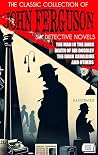
Review: The Classic Collection of John Ferguson (Six Detective Novels). Illustrated: The Man in the Dark, Death of Mr. Dodsley, The Dark Geraldine and Others

The Classic Collection of John Ferguson (Six Detective Novels). Illustrated: The Man in the Dark, Death of Mr. Dodsley, The Dark Geraldine and Others The Classic Collection of John Ferguson (Six Detective Novels). Illustrated: The Man in the Dark, Death of Mr. Dodsley, The Dark Geraldine and Others by John Ferguson
My rating: 4 of 5 stars

I had read The Man in the Dark: An Ealing Mystery in the Project Gutenberg edition, and it was so good I looked for others and found this collection. I had hoped that it would have the rest of the MacNab mysteries (there are four books in total plus a short story), but about half of the "detective" novels in this collection are actually thrillers, and only a couple of them are MacNab stories. That's a labelling and packaging issue, not an issue with the original books, which are excellent.

It's produced in Ukraine, and predictably imperfect in its punctuation (mainly missing commas, though there are also some missing periods, misread letters like "corning" for "coming," "!" read as "I," quotation marks missing, added, or on the wrong side of the space, and random extra punctuation or characters). Also, while it's technically true that it's "illustrated," the illustrations consist of random vintage pinup art (most, but not all, clothed) that has nothing whatsoever to do with the text. Not a great edition, but (aside from the pinups) no worse than some I've seen from major publishers. Still, you might want to look for better editions elsewhere.

I've already reviewed The Man in the Dark: An Ealing Mystery , so I won't repeat that review. Let's start with The Death of Mr. Dodsley.

An elderly dealer in rare books is found at his desk, shot through the forehead sometime in the early hours of the morning. His nephew, also in the business, is engaged to the daughter of a prominent politician who is rising in the direction of being Home Secretary before too long, but father and daughter are estranged. The suspicious thing is that the daughter's recently-published detective novel is remarkably similar in some aspects to the real-life crime.

MacNab, the private detective who is Ferguson's series hero, has previously been called in by the late bookseller because rare volumes have been going missing, so he gets involved in the case, alongside the Scotland Yard inspector Mallet and his long-suffering sergeant, Crabb. There's a limited pool of suspects: the nephew, his fiancee, her brother, and the three shop assistants (one male, two female). Also involved is the politician's private secretary, a good friend of both the victim's nephew and the nephew's fiancee (the secretary's employer's daughter); he introduced the couple, in fact.

Much hinges on the beat policeman's identification of the drunken young man who distracted him, probably while the crime was being committed. Was that man involved? Is he one of the young men in the case? Clues at the crime scene suggest that a man and a woman committed the murder together. Which pair could it be, or are those clues misleading? It's a clever mystery, and I was fooled right up to the reveal.

The Dark Geraldine takes place in a fictional small Scottish town that has been previously mentioned in one of the other books - the constable is MacNab's father, I believe, which is the only connection to the MacNab series. It's narrated by a young lawyer who finds himself caught up in a mysterious intrigue involving a Munchausenesque retired soldier of fortune, his beautiful daughter (who, in a departure from the expected that I appreciated, the hero sensibly does not fall for (view spoiler)), an American purporting to be a travelling salesman but who is clearly something more, some mysterious thugs, and a drawing with a strange cypher embedded in it. The rather stuffy lawyer and his more free-spirited, action-oriented colleague take the sensible step of enlisting the village constable, who proves capable and effective. It's very much not a standard tropey detective story, and I enjoyed it all the more for that reason.

Night in Glengyle is a thriller more than a mystery, and is not a MacNab story. The narrator Maitland, a currently-out-of-work actor, is recruited by an old friend in the Foreign Office to steal some documents at a country house by means that will not be inquired into, in what sounds like a very dodgy and implausible setup. He's led to believe that a Cabinet Minister (probably, by the name and description, based on Winston Churchill) is behind the request, but doesn't see any actual proof of this. He manages to manoeuvre his way into being taken on there as an extra servant, but only by swapping identities with a man who ends up murdered. Was it because of Maitland's mission, or coincidental?

Coincidence does play a role in the plot, and unlike the other books so far this one exhibits some racial prejudice: the Irishman is stereotyped, the black man dehumanised, and a slur is used for people from the Mediterranean. This book was the one that got the overall collection the "plot-relies-on-coincidence" and "casual-racism" tags. But it's a gripping thriller for all that, and if you enjoyed The Thirty-Nine Steps, this is in a similar vein. Notably not othered and stereotyped are the tinkers who help Maitland, apparently for no gain, since he has nothing to pay them.

There are significantly fewer punctuation and scanning errors in this book than in the previous two.

The Secret Road is back to a higher number of scan errors, though. This is another thriller, this time an espionage thriller set in British India after World War I, where a rebellion is planned. The hidden mastermind's plot is to use a legendary diamond (or another diamond that resembles it, at least) to trigger the uprising. The main character is a young Englishman who is already experienced as a spy in India; like his missionary father, he picks up languages easily and with high fidelity, and can pass as Indian, as can a number of his comrades. (This involves brownface makeup.)

The complication is that the British resident in the native state where the plot looks like it's going to kick off is the uncle of the young man's crush, who's a school friend of his sister's, and a slightly older man with political ambitions is also staying there - and is engaged to the crush.

There's a lot more interpersonal maneuvering than in the other stories, possibly because there are two prominent female characters and an aspiring politician among the cast, and that crosses with and complicates the espionage/foiling-the-uprising plot. It's a gripping thriller.

Stealthy Terror (the man could certainly title) is another thriller, this time starting in pre-World War I Germany, where a young Scottish doctor is studying psychology. He is, of course, taken for an Englishman by the Germans. Happening to frequent a particular cafe, he stumbles on a plot, and when he attempts to rescue a man ends up with the MacGuffin, a mysterious parcel of documents. His only friend in Berlin has gone back to England, as he discovers when he flees his adversaries at night without shoes, hat or money.

By fortunate coincidence, the young woman he approaches for help is also Scottish, and helps him get away. But that's by no means the end of his gripping adventures, as the ruthless adversaries come after him for the MacGuffin. There's an extended tease of what the MacGuffin is; every time he's about to look at it, a crisis interrupts him. Then, when he finally has leisure to look at it, it appears to be nothing special - or is it? Plenty more action ensues, and all in all it's a thrilling time.

This one, unfortunately, is full of distracting scan errors and doesn't appear to have had the most basic editorial attention. At least it doesn't have any extraneous pinups.

In summary, then: good books, well written, but mostly poorly produced in this edition.

View all my reviews
Friday, 18 September 2026

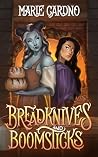
Review: Breadknives and Boomsticks: A Sapphic Cozy Fantasy about Terrible Baking

Breadknives and Boomsticks: A Sapphic Cozy Fantasy about Terrible Baking Breadknives and Boomsticks: A Sapphic Cozy Fantasy about Terrible Baking by Marie Cardno
My rating: 5 of 5 stars

Don't let the slightly shonky cover put you off. The writing is much better.

I'm used to cozy fantasy having extremely minimal worldbuilding, barely (or even not quite) enough to enable the story. This is a welcome exception; in fact, the worldbuilding is essential to the plot, which is what I feel should preferably be the case with any kind of speculative fiction. The setup is that there was a war between liches long ago, and after it was over, one of the survivors cast a spell which causes all cursed things to be drawn to a single place, a volcano crater known as the Cauldron. Our protagonist Runa is not a world-weary warrior or (conventional) adventurer, as in so many fantasy cozies, but a guide who takes people, mainly wizards, into the crater and protects them from the many deadly dangers there while they study whatever it is they're interested in, or try to take things from the crater that have got caught up and dragged along with some curse or other.

The inciting incident is that Runa is flung out of the crater and has to recuperate in a cozy village just outside the rim (which was dragged there by a passing curseland). Everyone is nice to her, and nothing is trying to kill her, which is an odd experience for her after so long as a crater guide. She keeps thinking about an attractive woman she'd rescued shortly before her ejection from the crater, and (about halfway through the book) that woman turns up through a portal, adding complication to Runa's life. She already has some complications, in that she's living in the abandoned bakery, which has a mysterious inhabitant most of the villagers are wary of, and in order to try to contribute to the village that's being so generous to her, she's trying to bake.

She's terrible at it, which is another welcome departure from the cozy formula. Realistically, unless you've been developing some skill as a hobby for years, you will be terrible at it when you start trying to do it. She does, very gradually, get better, despite not understanding most of the instructions in the recipe book she finds, which is directed at journeyman bakers who already understand the basics which she has no idea about.

The story is Runa getting to grips with who she is if she's not being a cauldron guide, and indeed who she is in general (she's half volcano nymph and half troll, and didn't fit in with either group), and where she belongs, and if she belongs there with the woman she keeps rescuing, who has her own secrets and conflicts going on. It's a gradual unfolding, where nothing is too easy, or reliant on coincidence, or on people being idiots or acting out of character, which is also refreshing.

Another thing I'm used to with cozy (and with books in general) is terrible copy editing, and again I was pleasantly surprised. Sure, the pre-publication version I had for review via Netgalley does have a very small number of minor errors - an excess apostrophe, a couple of missing periods, a typo. But that's vanishingly little compared with most books I see, and can easily be fixed before publication.

The writing isn't just tidy, it's capable, with a wry sense of humour and a knack for expression that doesn't draw too much attention to itself. Overall, it's at the standard I always hope for, and very seldom find, in books I pick up from contemporary authors. It's what I wish cozy fantasy was all the time.

One way in which this is like many other cozies is that it's full of queer people. That may be a plus or a minus for you; I just mention it, though the subtitle should have tipped you off already.

View all my reviews

Monday, 14 September 2026

Review: Dead Men's Money

Dead Men's Money Dead Men's Money by J.S. Fletcher
My rating: 3 of 5 stars

J.S. Fletcher writes great mysteries, thrilling and not at all formulaic. This is just as good as any of his others in many ways, but I've knocked a star off because of the utter idiocy of the protagonist/narrator. Turns out I find this just as irritating in a young man as in a young woman, even though I see that variation a lot less often.

Talking in more depth about how Hugh Moneylaws, the narrator, carries the Idiot Ball involves some mild spoilers. The initial setup is that his mother's lodger has fallen seriously ill, and sent Hugh (a 21-year-old lawyer's clerk) to a lonely spot to meet someone he has an appointment with and tell the person that he can't come. When he gets there, Hugh discovers a recently deceased corpse.

(view spoiler)

The rest of the book is great, full of tension, plenty of good action, a complex mystery that takes a lot of clever work (mostly by Hugh's boss) to unravel. But far too much of it relies on Hugh being dumber than bread.

View all my reviews

Monday, 7 September 2026

Review: Breeze Felt at Moonrise

Breeze Felt at Moonrise Breeze Felt at Moonrise by Lynn Buchanan
My rating: 0 of 5 stars

The good: Sanderson-style deep worldbuilding that's central to the premise and plot.

The less good: dark and tragic backstory, though with the potential to turn.

The annoying: commas after adjectives of quantity and number, which are never coordinate and should not be treated as such. Also, fortunate and unfortunate coincidence as plot drivers, though there may be an in-world explanation for why things are so conveniently or inconveniently timed.

The balance: I stopped reading at 20% because it was just too dark for my taste. I even looked at the end to see if it was ultimately completely tragic, and even though it wasn't, I decided I'm not in the mood for tragic consequences of greed and revenge visited on the next generation.

View all my reviews

Review: The Star of Kilnaely

The Star of Kilnaely The Star of Kilnaely by Grace Daly
My rating: 4 of 5 stars

An unusual one, which is largely why I picked it up.

Set in the American Midwest, but in a town inhabited apparently exclusively by Irish people, so (having forgotten the blurb) I was confused for a long time about where we were. I remained confused about when we were, since the frame story and the last of the stories that it frames were apparently present day, but the majority of the stories seemed to be set in about the 1920s, based on the technology level and what was said to be new - and yet the characters, while they aged, were not over 100 years old.

There was also the occasional vocabulary glitch, which I'll mention to the publisher; I had a pre-publication version from Netgalley, and there may still be a chance to fix them. Otherwise, the copy editing was reasonably good, apart from "may" instead of "might" in past tense and at least one apostrophe in the wrong place.

The frame story shows us a small town spoiled by the advent of a rapacious software corporation, which is degrading the environment (especially the built environment), driving up land prices and displacing long-term inhabitants who can no longer afford to live there. The inner stories, told to a hapless salaryman from that corporation in a bar, are something in between Irish legendary tales and American tall tales of the Paul Bunyan variety, except instead of a blue ox the Star of Kilnaely has an enormous dog, big enough for even him to ride on. He's a larger-than-life character, charismatic, strong, handsome and blessed, in addition, with a brilliant younger sister, who (it soon becomes obvious to the reader, if not to the slightly inebriated listener in the bar) is the person telling the stories.

The hero tales are fun, and to my mind would have worked better without the frame, but they work well enough. Some have high stakes, others low stakes, but all of them show us the Star solving problems one way or another. Again, some draw on Irish mythology and show us the Good Neighbours and gods and goddesses, while others are more general small-town situations.

Pleasant and enjoyable, if a little confusing chronologically.

View all my reviews

Friday, 4 September 2026

Review: Alistair Fall and the Restless Dead

Alistair Fall and the Restless Dead Alistair Fall and the Restless Dead by Marianne Gordon
My rating: 5 of 5 stars

The reason I persevere in picking up books for review via Netgalley, despite many of them being mediocre or worse, is that sometimes I get one like this.

In a lot of authors' hands, this would have been predictable and bland. The setup looks like a slow-burn grumpy/sunshine romance, based on the blurb - the FMC is actually called Sunny. But it's not that. She isn't the perky, cheery sort her name suggests; she has a dark backstory, and she engages with it, doesn't bury it under a fake sugary veneer. She's sarcastic and smart and capable, but also realistically self-doubting and slow to trust. Sure, she'd like to be a cozy fantasy protagonist - she loves baked goods, and has a favourite little tea shop and a calico cat named Butterscotch - but who she is and where she is mean that she ends up fighting a conspiracy of necromancers instead.

Her opposite number, Alistair Fall, is bad with people, but he knows and regrets it. He'd like more friends, but unfortunately almost his only real friend is murdered early in the book, and he's tasked with investigating. Sunny looks like the prime suspect, but he's a good investigator and doesn't believe it, instead recruiting her to help him find the real killer, which would clear her name. They build a partnership and what might well become a friendship over the course of the book, but it's not a romance, which I appreciate; from time to time it's nice to read about two people who are just good colleagues. Both of them bring genuine strengths to the partnership, as equals.

Solving the mystery happens well before the end of the book, because just knowing who was behind it isn't enough; the pair also have to thwart the antagonists' plot, making the last part of the book more of a thriller. They are significantly at a disadvantage in doing so, and it takes all their courage and ingenuity. And they don't do it in either of the two ways I thought of.

I'm also so used to inadequate worldbuilding in current fantasy novels that it's cause for celebration to read one with worldbuilding that actually matters to the plot, and has had some effort put into it, and is different from the usual generic off-the-shelf scenarios. In this setting, through events which aren't explored in depth, almost 40 years before the story starts the prevailing pagan religion was banned in favour of atheism, imposed by the State of Order, which... is less authoritarian and despotic and dystopian than it could easily have been, though certainly some people are discontented under it, while others are good Statists and parrot the prejudices that the State encourages. One of those prejudices is against the use of magic, which is associated with paganism, and since Fall is a sorcerer (albeit sanctioned by the State), he comes in for a lot of persecution, petty and otherwise.

Yes, the trope of oppressed mages has its problems. Here, though, it's a bit more justified than usual, more of a parallel with, say, the persecution of intellectuals under some Communist regimes. These mages are oppressed because they potentially threaten the State's declaration that the gods are mythical, and the mechanism of their oppression is not so much official persecution as encouraging ordinary people to despise and distrust them.

The worldbuilding, in other words, matters to the characters' circumstances, and it also turns out to be highly relevant to the plot (for spoilerific reasons).

Names (and phrases, and concepts) from our world did make their way in, and the names are the usual mixture of made-up fantasy names and familiar ones from various cultures in our world (including a couple of biblical ones in this world without that cultural context, which is something I should probably give up complaining about, since nearly everyone does it).

There are also married same-sex couples in this setting that's otherwise similar to our world's late 18th/early 19th century. But that's a passing detail, not a central feature as it would be in so many current fantasy books.

Other things I appreciated: Fall's sorcery is limited; not something he can deploy quickly, and it can't just do anything, so it isn't used to cheat on the plot. The editing is also excellent, unlike most books I see via Netgalley (or BookBub), with just a couple of minor vocabulary issues that I'll flag to the publisher, meaning they may well be corrected before publication.

Overall, it's sound, solid, and achieves enough depth in its exploration of the characters and their society that I'm giving it five stars, not something I do often. I definitely want to read more from the author and in this world, and it looks like being a series, so I should get my wish.

View all my reviews

Tuesday, 1 September 2026

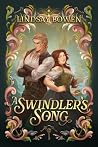
Review: A Swindler's Song

A Swindler's Song A Swindler's Song by Lindsay Bowen
My rating: 3 of 5 stars

This was a mixed bag for me.

On the one hand, I do love a heist. On the other hand, the heist crew weren't as capable or cohesive as I could have wished, and there was a lot of reliance on convenient chance to enable them to pull off the job. I'll put all the lucky breaks in spoiler tags, though some of them come out quite early: (view spoiler)

In other words, the author stacks the deck heavily in favour of the characters. They do still have to work for their success, and one of them does so while dealing with a chronic illness, and there's genuine danger from the despotic "warlords" (I would have just called them lords; warlords implies a more improvised situation than the multi-generational rule they represent). But it reduces the characters' agency to see them helped along like this, and character agency is an important part of the heist genre for me.

The romance subplot progresses rapidly from spur-of-the-moment hookup to enemies to fake married to soulmates having outrageously blissful sex (on-page, so if you prefer not to read that, this isn't your book). I wasn't a fan of the speed-run, or really of either of the partners much. The author gave them heartstring-tugging backstories and laudable goals, but somehow I never fully warmed up to them. I also spotted the big "twist" at the end 40% of the way through.

It was far from the worst copy-edited book I've seen lately, though the author's apostrophe game is weak when it comes to plural nouns, and there's the occasional missed opportunity to use the past perfect tense. A number of idioms are not quite rendered correctly (it's subtle), and a few sentences don't say exactly what they mean. I saw a pre-publication version via Netgalley, and there may or may not be more editing to come.

The worldbuilding is the usual not-particularly-coherent mix of standard sword-and-sorcery world with random bits of our world wherever there's a gap to be filled. The names, for example, as is so often the case, are a mix of made-up fantasy names, names out of the Bible (in a setting where such religion as there is is Basic Fantasy Paganism, but with the gods absent because of reasons), and names from specific ethnic backgrounds in our world standing in for countries in a completely different geography. There's been some effort put in - the absence of the gods and (at least theoretically) of magic, though I've seen both of those before - but it's mostly generic.

All in all, I was lukewarm on it, and it wasn't quite for me. I'd not be at all surprised if it was for plenty of other people, though.

View all my reviews

Friday, 28 August 2026

Review: The Secret of the Silver Car Further Adventures of Anthony Trent, Master Criminal

The Secret of the Silver Car Further Adventures of Anthony Trent, Master Criminal The Secret of the Silver Car Further Adventures of Anthony Trent, Master Criminal by Wyndham Martyn
My rating: 4 of 5 stars

This sequel to Anthony Trent: Master Criminal is, if anything, better than the first, more of a thriller in the mould of The Thirty-Nine Steps (but without the heavy racism) than the gentleman-thief story of the first book. It starts with immediate action, a man (Anthony Trent, as it emerges) jumping off an ocean liner just as it leaves the dock and landing, unhurt, on the quay, whence he hurries off. Why did he do this? We're not left wondering for too long; there's a flashback.

The hero, who has made a fortune as a burglar, ended the first book fighting in World War I because of his sense of duty. He's been wounded and is unconscious, and another man, who has found him and bound his wounds, has dragged him to what he thought was safety. But! A shell has buried them in the ruined building, and they're running out of air. Thinking they're both about to die, Trent confesses his criminal past, giving the man his name.

But they don't die, and Trent goes in search of the man, who holds his freedom in his hands, and whose distinctive voice he had heard on the dock. There's a very substantial reward offered for the apprehension of the (to the police) unknown man who did the crimes for which Trent was responsible. What he finds quickly gets into spoiler territory, but the upshot is that Trent volunteers for a dangerous and unofficial undercover mission into Croatia to retrieve a compromising document. There, he contends with a despotic Balkan count, pulling off daring but reasonably plausible feats of espionage, theft and escape.

There's a love interest, too, who Trent considers himself unworthy of because of his criminal past. All of it is good, solid stuff, unfortunately marred by another terrible editing job by the original publishers (see my review of Book 1). I really am seriously considering editing these public-domain books myself to a decent standard, so that others can enjoy them in the state they deserve to be in. They're entertaining, they're not anything like so far-fetched or reliant on coincidence as most action thrillers of the period, and they have sound emotional beats and a strong character arc. They just need several hundred more commas and a few other relatively easy fixes.

View all my reviews

Review: Anthony Trent, Master Criminal

Anthony Trent, Master Criminal Anthony Trent, Master Criminal by Wyndham Martyn
My rating: 4 of 5 stars

In the "clever gentleman thief" subgenre that started in English with Raffles, though I think Arsene Lupin was before him in French. Trent is closer to Lupin, who, in a long and varied career, was often a helpful vigilante or even a detective, not just a master criminal. He works alone; Raffles corrupted his old schoolfellow Bunny, who had a hopeless crush on him, and treated him worse than a dog, while Lupin often had confederates, who he looked after, but Trent has studied how criminals fail, and feels that working alone is safest.

He's studied criminals as part of his original occupation as a writer of crime fiction. He wanted to do this really well, and went so far as to work for a burglar alarm manufacturer in order to research how their devices work. But this means he wrote only about a story a month, and his publisher couldn't pay him more than two cents a word for them, so when the story opens he's living in a boarding house with a rented upright piano and dreams of someday having a big house with a grand piano so he can compose. (His musical ambitions and abilities don't really come up again after this.) He concludes that his dreams are only feasible if he turns to crime, which he believes he can get away with, given his studies.

He's a man of some contradictions. Apart from being a thief (targeting the rich and unworthy), he maintains the moral code of his Ivy League background; he also steals things he knows he can't sell, because dealing with fences would make him vulnerable to detection. Several of his heists are for jewels which he substitutes for the coloured glass in his brass Benares lamp, simply because he fancies the idea.

Ultimately, he refuses to compromise his principles, and is saved from public disgrace only by a combination of good fortune and the loyalty of his housekeeper, who has divined his secret but knows him to be basically a good man. He then decides he will join the army and go to fight in World War I, having a couple of times foiled German spies. This also nearly leads to his exposure, and sets up for the start of the second book, which I read immediately after the first one.

Trent is a privileged protagonist. I use this term slightly differently from "spoiled protagonist," by which I mean a protagonist who's showered with unearned help from unlikely quarters. A privileged protagonist is someone who is firmly convinced, and perhaps convinces us, the readers, that anything they do is all right, even if it's illegal, because it's them doing it, and they are One of the Right Sort. Not only that, but they get away with it, essentially because they're the protagonist. Harry Potter and his friends are privileged protagonists; they break the rules all the time, and end up being commended rather than punished. Even though Trent does have his moral qualms about his way of life, he doesn't actually stop, at least until (in Book 2) he meets the love of his life, which is what usually reforms these characters. Cleek: the Man of the Forty Faces is another example, though I found Trent's adventures more plausible than Cleek's. There are all kinds of obvious issues with privileged protagonists, and I plan to explore them in a blog post sometime, but personally I'm still able to enjoy stories that feature them, even as I note the trope and its problems.

This book was clearly cheaply produced by a slapdash publisher with a typesetter who should not have been employed in that field. The Project Gutenberg edition has an extensive list of obvious typos at the back that were corrected during the conversion process; it includes an "it's" that should be "its," but they missed a "who's" that should be "whose." Unfortunately, they haven't attempted to insert the many missing commas, mostly the ones that provide subtle grammatical pointers to help the reader parse the sentence, but also the vocative comma (the one that makes the difference between "let's eat Grandma" and "let's eat, Grandma"). Also, a good many of the apostrophes are in the wrong places. Some of this is probably down to the author, who has also mistakenly used the name of Trent's fictional criminal a couple of times where the reference is to Trent himself.

It's so dire that I'm seriously tempted to create my own edited edition so that people can enjoy it as it should be enjoyed, though I'm not sure how I'd distribute it. If this kind of thing bothers you as it bothers me, perhaps listen to the Librevox recording; my wife did, and recommended the book to me, which is why I picked it up.

View all my reviews

Tuesday, 25 August 2026

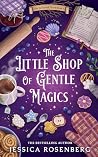
Review: The Little Shop of Gentle Magics

The Little Shop of Gentle Magics The Little Shop of Gentle Magics by Jessica Rosenberg
My rating: 3 of 5 stars

I found this one frustrating because it just didn't quite make sense or come across as plausible to me. Someone with a stronger ability to suspend disbelief may enjoy it considerably.

The editing is good (apart from one word choice by the author which I'll point out, when I give feedback to the publisher via Netgalley, is probably not the word she means). But I kept getting tripped up by little oddities in how things unfolded.

Firstly, Meg, the spoiled protagonist. This is a term I came up with for protagonists who get showered with unearned help by everyone they meet. The little Scottish town where this Scottish-descended American protagonist pitches up, a little while after a bad divorce, instantly and unanimously takes her to its heart and begins helping her set up her tea-and-decorated-cookies shop, which she has (unusually for her, we are told) impulsively spent all of her divorce-settlement money on. At least, we're told a couple of times that all her money has gone on buying the lease, but she still seems to have money to spend on fitting it up and getting inventory. It's not clear whether all the tradesmen who are relatives of her neighbours are working for free or just at a discount, but certainly the conveniently-available second-hand shop fittings and kitchen equipment and the tea and baking supplies aren't free. The unconditional help and support, by the way, comes from everyone including the owner of the coffee shop right across the street, who you would think would have at least some thoughts about direct competition for the tourist dollar, but no.

Of course, her new instasoulmate Art (who she met and had one amazing date with in the US, then cut off in a brief message with no explanation because she had to go to Scotland and find herself) moves in with her almost immediately, and is presumably paying something, since his company posted him (conveniently) to Scotland and has an accommodation budget for him, but the question of his contribution to the household finances never comes up. Money in general never comes up, despite the fact that this is probably the number one worry of a new small business owner apart from marketing.

The marketing almost takes care of itself, despite the fact that on the day the business opens, the shop still doesn't have a name. Art's daughter does some social media stuff Meg doesn't understand, despite being 40 years old in 2026, and they're packed to the doors all day, but Meg can still take time out for interpersonal drama, since the entire community is, as previously mentioned, supporting her.

Meg has grown up being dumped on by her awful mother and aunts because, unlike them, she has no (apparent) witchy powers, and this prepared her to marry an equally if not more awful man who made it all about him, so that she had to completely efface herself in order to manage his emotions for him. But when she starts to finally develop powers (because of the ancient magic of Scotland, which is apparently more magical than America; maybe white people can't access the inherent magic of the land in America?) it doesn't seem to be a big deal for her, as I would have expected. She is worried about telling Art, but of course when she finally does, he's OK with it, because no conflict lasts much more than a short chapter in this book. Even Art's surly teenage daughter is intermittently pro-Meg from quite early on, and his five-year-old son loves her just as instantly as his father does.

There's a good deal of sizzling-hot kissing on page, but no actual sex; it's strongly implied that Meg and instasoulmate just cuddle the first night, and after that it's never directly addressed.

A lot of things are way too easy, and because it's set in a version of the real world, that stands out more than if it's in a lightly-sketched sword-and-sorcery secondary world. At least there are interpersonal (and intrapersonal) dynamics; I wasn't fully convinced by all of them either, but there are some. For example, Art, who is usually a perfect foil for her awful ex-husband, does occasionally make decisions for Meg without consulting her, which she resents, despite, or perhaps because of, the fact that she'd subjugated her own preferences to her ex-husband for 20 years. It seems like these two near-perfect people can only have conflict by both of them acting a bit out of character.

The whole thing is in broadly the mould of all midlife women's paranormal cosies: divorce, small business, new love, discovery of powers, helpful community. It isn't quite what I call This Damn Thing Again, which also involves an inheritance from a relative, returning to one's hometown, discovering for the first time that the supernatural exists, and having a basic mystery to solve, but it's a close cousin. Sure, that's what a genre is, a set of expectations, but this particular genre seems to adhere more closely than most to the exact same setup each time.

Within that setup, for me it didn't come across as plausible. The fiction I admire most starts with a premise - preferably one that hasn't been done a thousand times before - and some well-realized characters and grows the events organically from the setting, the premise and the characters interacting in a natural and believable way. I didn't feel this book was doing that. Maybe I'm wrong, and I'm sure plenty of people will enjoy it a lot, and I do commend the excellent standard of editing. It just didn't quite work for me.

View all my reviews