Monday, 9 February 2026

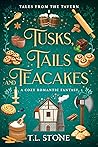
Review: Tusks, Tails and Teacakes

Tusks, Tails and Teacakes Tusks, Tails and Teacakes by T.L. Stone
My rating: 4 of 5 stars

If the cover and the format of the title didn't clue you in, this is cozy fantasy of the Legends and Lattes variety. Sword-and-sorcery/D&D world (with tieflings carefully renamed as "hellkin" and tabaxi as "panthera" for legal distinctness), in which an adventurer leaves the life and settles down in a nice little town running a hospitality business. It isn't just one of the several clones, though; it has its own original plot and characters in the same subgenre, so if you're a Travis Baldree fan you can read it and enjoy it without feeling like it's just an inferior ripoff.

The reason for the protagonist, a half-elf rogue named Lira, to come to a small-town tavern and start working there is a strong one, not less so for the fact that it's a version of the inciting incident for half the cozy mystery/romance books set in small towns: she's originally from there, and left after her grandmother died, in order to go on the road with an adventuring party. Now, in the wake of the loss of a companion (told in the prologue), her party has broken up, and she's come back to get something she stashed when she left with them originally some years previously: her grandmother's recipe book, all she has of the woman who raised her apart from the memories. Unfortunately, she buried it in the tavern cellar, and someone has since built a stone wall on top of the spot (it never becomes clear who, or exactly why, or when), complicating the retrieval.

Presumably at some point she came back, because there's also some gold buried with the book, and she didn't have any when she left with the party; it was apparently from a subsequent quest. This is a bit of continuity that didn't fully make sense to me.

As she works, along with a dwarf woman who she caught attempting to rob the tavern, to tidy the place up and bring in more clientele as a cover for plotting to get her book back, she discovers that she likes it here and likes doing this and is making friends. But then the past comes back to bite her, and there's a confrontation, in which one of my not-favourite tropes occurs. (view spoiler)

Before I proceed to more critique, I want to say that I did enjoy this considerably. The worldbuilding, while off-the-shelf, felt a lot less like scenery flats than in some other books in the genre, the plot mostly made sense and progressed organically, the characters felt like they belonged in their world rather than ours (although with some up-to-date attitudes that are de rigueur in the genre), and the wee beastie - a stoat, not a racoon as per the blurb - was endearing. It managed to sit firmly in its subgenre without just being made from box mix, and shows decent writing ability.

The stove pinged my worldbuilding geekery briefly, though. Both the oven and a "burner" on the stove get "turned off," implying that this isn't a coal or woodburning range but (probably) gas. Where is the gas coming from? It's not magic, because in this setting magic has become relatively uncommon, after the teaching of magic was forbidden some decades previously. It just seemed not to fit well with the general tech level.

The editing is just a little scruffy, too. Most of the issues are with commas where they shouldn't be, and most of those are between adjectives that are not coordinate, but lots of people make that mistake. Most of the other commas where they shouldn't be are after "of course" when it's just confirming a previous statement; word processor grammar checkers are not sophisticated enough to distinguish that from the case where you do need a comma, because you're providing completely new information. Apart from these usage issues, though, there are a number of words that are either mistyped or not typed at all, and therefore missing from the sentences that require them. I've seen plenty of books far worse than this, and I didn't spot any vocabulary being used incorrectly, but it has room for improvement.

The other thing that I wasn't completely sold on was the rapid progression of a couple of romances, one of which hit marriage and the other moving in together after about a month of dating in both cases. And in the case of the second one, it was between people who hadn't known each other long or very well before they started dating (I may as well call it that, because even though that's not a concept that was around in the time periods of our world that sword & sorcery approximately evokes, relationships in this book's world follow modern practice). There was no plot reason for it to be only a month, either; it could have been longer. I won't give it my "weak-romance" tag, because that's for people who decide to get married after barely spending any time together, and this isn't that, but it does seem precipitate.

So there are ways in which it could be better (from my point of view; some or all of these things may not bother you whatsoever), but I liked it, and want to continue with the series.

View all my reviews

Sunday, 8 February 2026

Review: Majera

Majera Majera by Gideon Marcus
My rating: 4 of 5 stars

Six years after the publication of the first book, what looks like being the final book in this four-book series is here (for certain values of "here"; I received a pre-publication review copy from the author, because I'd reviewed the previous books in the series).

Time for a retrospective.

Book 1: Pacy, dramatic, scientifically reasonably plausible. An accidental circumstance means a group of young people have to work together to overcome a serious issue and get back home, and they work together well. There's some light flirting that doesn't come to anything.

Book 2: People who aren't action heroes have to cope with rescues, escapes and drama caused by engineers not thinking about safety (that part I found implausible). There's a coincidence in which they arrive at the exact right moment to be of help, but I forgave it because of good pacing and overall good execution. We learn that all of the human crew are bisexual, though romance and sex are emotional complications during the action rather than a focus.

Book 3: Still lots of action, lucky and unlucky chance, and the protagonist seems to distort narrative probability around her so that a rag-tag young crew can achieve what they shouldn't be able to. There's a political dimension, but they choose sides based on emotional connection rather than principle, which I thought was a missed opportunity for more depth. Some pairing up occurs, and more is attempted but fails because it's not the right time.

Book 4: Some action still, and again they arrive just in time to help after a disaster (this one probably centuries in the making), but can't really do much other than call in help from their government this time. In the course of their investigation of the circumstances, they're in some danger a couple of times but manage to avert it relatively easily; the circumstances are more significant in activating the characters' past trauma than in actually threatening their lives or physical wellbeing. We get some theories about what happened, but no definitive answer. There's a much stronger focus on relationships, which are now poly as well as bi, with clearly implied (but not described) sex, and the biggest question is (view spoiler).

For me - and others will no doubt differ - there was a steady, though not sharp, decline in how much I liked the books through the series. More coincidence, less focus on action and more on relationships, and in this last book less of a compelling threat than previously and less working together in desperate circumstances to resolve it. It doesn't drop out of the four-star level; it's still solid YA space opera, well executed. But for me, the first book was the best, and the others were, while still good, not quite at the same level.

View all my reviews

Thursday, 5 February 2026

Review: Wildflower: A Novel

Wildflower: A Novel Wildflower: A Novel by Becky Jenkinson
My rating: 3 of 5 stars

The worldbuilding is not a strength in this one, which isn't unusual in its particular type of current fantasy, but I felt the story was solid.

The character names are a classic "Aerith and Bob" situation, some of them botanical or otherwise nature-related, some of them from various origins in our world (including several from the Bible, in a setting where religion is conspicuous by its almost total absence and where the two brief passing references are to Standard Fantasy Paganism), and some completely made-up fantasy names, with no obvious schema to account for the mixture. The characters themselves mostly feel like mid-2020s people cosplaying (or, in at least one scene, just wearing modern clothing) in a generic ren-faire setting, and the setting itself feels too small, with places that seem like they ought to be a long way off instead being in easy walking distance. The review copy I had didn't have the map yet, but based on the travel times mentioned, the whole kingdom is about the size of the six boroughs of New York City (roughly 35 miles across). And yet a character who has long wished to visit a wonderful library just to the north has never found time to make the two-hour journey by horse (meaning about 10 or at the most 15 miles), and an afternoon's walk from the citadel, which occasionally gets snow flurries, takes you not only to but also up a mountain with a permanent snowcap and blizzard weather. The small size of the kingdom presumably accounts for the fact that, although there's a royal family (consisting of a king, a queen, and two princes), there doesn't appear to be an aristocracy, and both the queen and the older prince's fiancé are commoners.

The flower lore is interesting, though it has an obvious real-world model in the Victorian "language of flowers". It's the most original part of the worldbuilding.

The magic system is largely undefined, and what it can and can't do appears to be driven entirely by what the plot requires.

On the upside, even the pre-publication copy I received via Netgalley for review was well edited, apart from the occasional dangling modifier, fumbled idiom or clumsy phrasing, and a few cases where two words that are not synonyms are used as if they are. The emotional beats are sound. The plot is a proper plot, not just a slice of life, and it's driven by the decisions of the characters, some of which are bad ones such as real people make, and they make them for believable reasons. It's cozy in its presentation (after all, it's about a magical florist), but it has stakes and tension and losses and tragic backstory and desperate struggles and a strong climax.

The main character, Felicity, was born with a curse which prevents her from saying anything that isn't the truth. The rules seem to change a bit during the book; at one point she can say something that is her opinion, even if it's not commonly shared, but later on it's as if the very fact that she can say something means it's definitely true. Can't she be mistaken? Of course, this is also the point at which people stop believing her, because she's saying things they don't want to believe.

The queen has been using her as a snitch, which has made her unpopular, but when we see her being interviewed by the queen she's perfectly capable of concealing a lot of information, so that's a tell-versus-show mismatch, what I sometimes call a decal.

Perhaps the biggest strength of the book is that it depicts Felicity's inner life so well. Because she's unpopular for her truth-telling, she tries to be reliable and compliant and trustworthy and non-confrontational and a people-pleaser, and stuffs her feelings down and lets people walk all over her (like her only friend, a rather self-involved extravert who strongly reads "bard," though I don't think he has an occupation other than "prince's fiancé"). All of this starts coming apart quite early in the book, so we're, again, more told about her people-pleasing than we are shown, but it is emotionally accurate to someone who is this way. There are some highly emotional scenes, for Felicity and her love interest both, but they're justified by events and not just the characters being over-dramatic.

Emotionally sound writing balanced by basic and unconvincing worldbuilding and some elements that didn't ring quite true brings this in at three stars. A lot of people who don't demand much from worldbuilding will love it unreservedly, I'm sure.

View all my reviews

Monday, 2 February 2026

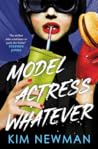
Review: Model Actress Whatever

Model Actress Whatever Model Actress Whatever by Kim Newman
My rating: 3 of 5 stars

This is one of those books like A Clockwork Orange - not, fortunately, in the sense of the old ultraviolence, though there is some non-ultra violence, but in the sense that it's thick with its own jargon that takes a bit of getting used to. I did get used to it after a while, but it made for heavy going at first, and contributed to a sense that everything was happening at a manic pace while there was also not much plot per thousand words. It contributed to a sense of alienation and confusion, which may have been deliberate, because that's where the characters were emotionally a lot of the time. It's set in an alternate present-day Britain, with that underlying sense of hopelessness in the face of ineluctable corporate evil that a lot of modern British writing has, but it keeps a kind of dark sense of humour through it all. Some of the jargon and cultural references would be immediately understood by British people, but not by non-British people, of whom I am one, and I wasn't always sure what was a real British thing and what was part of the alternate world until I looked something up that had a Wikipedia entry and discovered it was a real British thing. The relative seamlessness between the real and made-up ones is a strength, I suppose.

The main "alternate" part is that there are superheroes (known as "capes") and supervillains ("cutthroats") in this version of history, especially since the Beatles did a psychoactive album in the 70s that awakened a lot of people to their powers, although there were some prior to that as well. Queen Victoria II is on the throne.

The heroine of the title, Chrissie, loses her job as a supporting cast member on a long-running TV crime drama, because she's getting too popular and threatening the fragile ego of the star, and when she breaks her long-time starvation diet of celery and distilled water and gets some actual calories in her, her powers come online for the first time. She's inherited a family tendency to shadow-based superpowers - one of her non-superpowered ancestors was Dr Shade, and powers seem to follow a law of nominative determinism, like someone with the surname Wax being able to manipulate wax figures. This is on brand for superhero fiction, of course. (Actually, as the book went on I concluded that the author was just using silly names as part of the comedy, which is one of my least favourite comedy tricks.)

Anyway, it turns out Chrissie's really good at using the powers, and her close friend also has abilities she hadn't ever found the right moment to talk about. They help to contain a breakout in a secure psychiatric facility for criminally insane - or at least psychologically troubled - powered people, and then get involved with a reality TV show that's supposed to be selecting a replacement for a recently-retired member of an elite superhero team. But there are wheels within wheels, a conspiracy that's manipulating events, including a team of villains being set up as the opposition for the hero candidates on the show, and it's not clear for a long time whether the motive is corporate greed, sheer insane evil or a combination. We get a recurring viewpoint from the sanest of the villain team, as well as from Chrissie and her friend Loulee, and from the lead on Chrissie's old show who also becomes the host of the reality show. There are a few guest viewpoints too, some of them in "debrief" or confessional-to-camera mode that give hints of what's coming up or going on behind the scenes.

There are a few too many characters to keep track of easily, especially since, like in a Russian novel, most of them are known by more than one name (their real name and their superhero "trade name"). Most of them are distinctive enough as characters that I didn't often get confused, but along with the jargon blizzard it made for a book that isn't easy to read.

The writing mechanics are reasonably good, just the odd hyphen where it shouldn't be and a large number of sentences in the simple past tense that should be past perfect (because they refer back to a time prior to the narrative moment). There are a couple of homonym errors, which is not many for a supers novel, though it's more than I would have hoped for from an experienced author and a major publisher. There is one extended dialog exchange where two people are talking, with no tags, and if you count the alternations to figure out who's saying what - which you shouldn't have to do - it comes out wrong, as if even the author has lost track, or else the author or editor has mispunctuated some of the dialog so that two consecutive paragraphs from the same speaker seem to be from different speakers. There are sentences with words missing, something that's hard to spot unless you have the knack. Note that I read a pre-publication copy via Netgalley, and there may be further editing yet to come, though it's unlikelyto resolve all the issues, especially the past perfect tense issue, the most prevalentand to me most annoying one.

Overall, what with one thing and another I didn't love it, though I certainly didn't hate it either. It's a bit darker than I prefer, and was hard work to follow because of the jargon, cultural references, large cast, and tense issues (which kept whiplashing me between the narrative moment and an earlier moment without signalling). It also felt wordy, and therefore slow-moving overall, even though it was describing a lot of fast-moving action at times and many of the chapters are short. While I was sympathetic with several of the characters in their predicament, they didn't ever get much depth, and Chrissy sometimes seemed competent when that felt unlikely. The humour was less funny to me than it sometimes seemed to think it was, and on the dark side. The vicious satire on the TV industry made me wonder just how that industry had hurt the author.

Going in, I thought it might not be for me at all, partly because I know the author writes horror, and partly because the main character was clearly going to be from a milieu where people are encouraged to be shallow and artificial. Coming out, I'd say it's not my ideal book, but I can see its strengths: imagination, consistent worldbuilding, good action set-pieces, a cast tied together by believable though simple relationships, a relatively complex plot with multiple strands woven skillfully. It was interesting enough for me to want to finish, rather than abandon in the middle.

In summary, then, I wouldn't recommend it to my earlier self if I could time travel, but it might be a good fit for you, depending on your taste. Even though at least one minor mystery (why the Deputy Prime Minister seems to be in charge, and what happened to the PM) remains unelucidated in this book, I won't be reading the author's other books in hopes of an answer.

View all my reviews
Review: The Eyes of Max Carrados

The Eyes of Max Carrados The Eyes of Max Carrados by Ernest Bramah
My rating: 4 of 5 stars

A low four stars, but it has nothing specifically wrong with it to take it down to three - except that the mysteries feel a bit soft. Most of them turn out not to be crimes at all, even the ones that start out looking as if they are. You could look at this as creativity and not being bound by the usual conventions of the genre.

They're not "fair play" stories, either, which the reader could work out from the information given. The blind detective has developed his other senses to a hard-to-believe degree, making him basically Daredevil, though in this volume he doesn't have to use his abilities to fight as he did in the first collection. He's also highly intelligent, so the entertainment is that you get to watch someone very clever solve unusual puzzles in an unusual way.

The last story, uncharacteristically, introduces a supernatural element. I didn't feel it was particularly successful. Still, they're enjoyably told and out of the ordinary, and on balance I enjoyed them.

View all my reviews

Tuesday, 27 January 2026

Review: The Book Witch

The Book Witch The Book Witch by Meg Shaffer
My rating: 5 of 5 stars

I thought I didn't much care for metafiction. I'm glad I took a chance on this anyway; it changed my mind.

The problem I've had, I think, is that I'd never previously read a metafiction book that really worked for me as a novel, apart from the premise. Not that you could separate the premise from this one; it's thoroughly premise-driven, which is how I like my fiction. But more than that, it has the kind of reflection on the human condition, on finding meaning in life, and on human relationships that takes a book up to five stars for me. Not to mention reflection on the role of fiction and reading in the lives of book lovers, and how it can be more than just "escapism." (Tolkien's words in On Fairy-Stories are relevant here: "Why should a man be scorned if, finding himself in prison, he tries to get out and go home? Or if, when he cannot do so, he thinks and talks about other topics than jailers and prison-walls? ... In using escape in this way the critics have chosen the wrong word, and, what is more, they are confusing, not always by sincere error, the Escape of the Prisoner with the Flight of the Deserter.")

The whole book is a love-letter to reading and stories, and to the way fictional characters can inspire us and teach us to be better, stronger people in our difficult moments, even in fiction that's usually thought of as juvenile and lacking in literary merit. (There's particular love here for Nancy Drew.) The villains - who are, honestly, a bit cartoonish - are the Burners, people who want to destroy books they think are in some way unworthy to exist, because they're unable to see the merit in them.

They do this by going into the books and wreaking destruction, opposed by the Book Witches, whose goal is to preserve fiction as it is. It's kind of the same dynamic you get in a lot of time-travel stories, where the heroes want to preserve the timeline and the villains want to disrupt it.

The struggle against the Burners, though, isn't the main plot. The main plot is that the particular Book Witch who's narrating most of this book, Rainy March (the absurdity of the name is acknowledged right upfront), has fallen in love with a fictional character, the noir detective known as the Duke of Chicago, and the rules don't let them be together. Also, she wants to solve several mysteries, such as what was up with her mother disappearing for a while, returning pregnant with Rainy, refusing to say who the father was, and dying shortly after Rainy's birth? Also, where has her grandfather, who raised her, disappeared to?

The meta gets multi-layered before the end, with at least four levels of fictionality/reality, and it all contributes to the plot and makes sense, which is a feat in itself.

What boosted it into the Platinum tier of my annual book recommendations was not the assured execution, the well-thought-out reflections, or the appealing characters, including a non-speaking but intelligent cat familiar. Those took it to five stars, but what catapulted it to the top was that it made me feel something genuine, not manipulatively but through depicting a human moment - a funeral of someone beloved for her work and its impact - with empathy and warmth. In fact, I had to read a bit further than I'd intended and delay going off and doing something adult that required me to be in control of my emotions because of that scene. (That's the opposite of a complaint.)

It's one of those books that you want to keep reading, but also want to save because it's so good and you can see that you're getting closer and closer to the point where it stops, and then you won't have that experience anymore.

If you love books because of the way they tell human stories that matter, this is a book you should definitely take a look at. It's a strong recommendation from me.

View all my reviews

Sunday, 25 January 2026

Review: By the Pricking of My Thumbs

By the Pricking of My Thumbs By the Pricking of My Thumbs by Agatha Christie
My rating: 5 of 5 stars

By the time Christie wrote this, she'd been writing for fifty years, and I'm glad to say she wasn't stuck in the style of the 19-teens; she'd learned, grown, taken on extra dimensions of psychology without making it obvious or all about her research, and was writing a deeper, more satisfying story than the rather silly (though entertaining) one that begins the series. This gets complex, and dark, and suspenseful.

Tommy and Tuppence have aged in something at least approximating real time - their exact age isn't specified, but they're roughly in their sixties, it seems, which is consistent with being in their early 20s at their first appearance in 1922. Their two children are married, with children of their own. (There's no mention of Betty, who they spoke of adopting at the end of N or M?, so presumably that didn't happen for some reason.) Tuppence continues to belie her real name, Prudence (as her daughter remarks, nobody would associate that name with her), going off investigating something that's pinged her remarkably accurate spidey-sense without leaving any record of where she's going, and this leads to some anxious moments for Tommy and Albert. (Albert is back to being their servant, having presumably given up the pub he owned in the previous book.)

There are a lot of threads in the book. An elderly woman who was in the same rest home as Tommy's aunt, who has been removed from there apparently without trace. An entirely legitimate-seeming lawyer who pings Tommy's also accurate spidey-sense, after which he sees the lawyer being followed by a detective he knows. A painting of a house that Tuppence thinks she's seen before, given to Tommy's aunt by the now-missing elderly woman. Garbled stories from the local gossip about who used to live in the house. A criminal gang who hide their loot in various places. A series of child murders which took place years before. A cadaverous knight with a woeful countenance. An elderly vicar. A woman who runs everything in his parish.

Eventually, they come together. Some turn out to be not especially important, while others go in a direction I absolutely had not expected. And Tuppence ends up in danger more than once, to Tommy's enduring frustration.

One thing I sometimes don't like about these books is how often the couple split up and follow separate investigations, when they're so good as a pair. We get to see them working together a lot in the short story collection, Partners in Crime, but in the other three books I've read so far (with one to go), they're often apart. It does give an opportunity to contrast Tuppence's erratic and intuitive brilliance with Tommy's dogged and systematic focus, though, which might be more obscured if they were always in the same scenes.

I'm looking forward to Postern of Fate.

View all my reviews

Friday, 23 January 2026

Review: The Man with the Club Foot

The Man with the Club Foot The Man with the Club Foot by Valentine Williams
My rating: 2 of 5 stars

There's "plot relies on coincidence" - often the case with early-20th-century books - and then there's whatever this is. Pantheon ex machina? Basically, the author keeps creating incredibly lucky encounters for his hero to get him into the next stage of the plot, though to be fair he does go through some suffering (mostly of the "have to endure discomfort" sort), and occasionally solves his own problems by taking courageous, though seldom particularly intelligent, action.

Spoilers below, which I haven't tagged. I'm not going to recommend reading it, and the spoilers reveal why. I was alerted to the book's existence by a mention in Agatha Christie's Partners in Crime , where her characters Tommy and Tuppence take on the methods of various fictional detectives of the time; I'm not sure why they bothered with this guy.

The protagonist and narrator, Desmond Okewood, has been put on medical leave from the army during World War I with a head injury and "shell shock" (what we would call PTSD). Neither of these seem to hinder him much in his adventures (like whatever Hastings' unspecified injury was in The Mysterious Affair at Styles ) - unless the head injury is why he's such an idiot - but they account for the fact that he is at a loose end and able to follow up a cryptic clue to the whereabouts of his brother, who is "in the intelligence" and seems to have vanished somewhere in Berlin.

Of course, a young English officer without intelligence training or support would have no chance of getting to Berlin during the First World War, right?

Except that in Rotterdam, where he's gone to follow up the clue and can't get a hotel room on a rainy night because he's bad at planning ahead, he speaks in German for no particular reason (he and his brother both happen to speak fluent German with no English accent) to a hotel porter. The porter, who happens to be German, thinks he's German too, and directs him to a hotel run by Germans. There, an American man who is also a member of the German secret police (with a badge in his effects to prove it) happens to die of natural causes right outside our hero's room, and conveniently happens to resemble Desmond closely enough that Desmond can use his papers to get to Berlin. The badge comes in handy too a couple of times, until he carelessly loses it. The American was also carrying half of a letter, which is the book's McGuffin.

He has to make a daring escape from the hotel to avoid an interview with someone who has met the man he's impersonating, and goes to the railway station. There, a British undercover agent conveniently happens to notice before any of the numerous German agents there that he's wearing a British regimental tie (because idiot), and helps him to avoid people searching for him by a mechanism I didn't quite follow, and get on the train to Berlin. Before he does so, he stashes the half of the McGuffin in left luggage and posts the ticket to a friend in England (showing some sense, at least).

In Berlin, he goes through a series of adventures, including meeting the Kaiser (whose many personal faults he enumerates, in the expected manner of a British person during WW I), slips out of the palace and goes to a hotel before anyone can tumble to the fact that he isn't who he says he is.

At the hotel, he's coincidentally discovered by someone he'd met before at a stop on the journey, who was already rightly suspicious (since when he speaks English he does so with an English accent, even though he's meant to be American). This man takes him to see the villain and title character, who has the other half of the McGuffin. Desmond knocks him out - fortunately the stone windowsill was loose and could be used as an improvised and unexpected weapon - and flees with McGuffin part 2, but how will he escape? Well, he very conveniently happens to bump into a woman who was his neighbour (and his brother's love interest) growing up, and is now married to, though living separately from, a senior German official - she's one of the very few people in the part of the hotel he flees to, where she happens to have left a party to visit a friend in the middle of the night, and has coincidentally just emerged into the corridor when he gets there - and she helps him get out of the hotel and gives him a place to stay.

At this point, I was still reading mainly because I wanted to see how much more ridiculous it could get. Actually, though, that was the peak of the silliness. The lady helps him escape, he has numerous vicissitudes, reconnects with his brother, re-encounters the man with the clubfoot, and (mainly through his brother's cleverness rather than his own) they manage to get away. There's really only one more fortunate coincidence, when they happen across an escaped British POW in the forest who can conveniently sacrifice himself as a distraction so that they can get across the German frontier. He's a lower-class man with a heavy regional accent, so this is his natural role, of course.

The whole thing is extremely silly and contrived, and although there are some decent scenes of suspense and conflict, they don't make up for the shonky way the plot has been knocked together to compensate for the fact that the protagonist couldn't plan a cat fight if you handed him two cats and a small sack. It's also, of course, heavy-handedly propagandistic in its condemnation of the faults of the awful Germans; living among them long enough to have learned their language fluently doesn't seem to have endeared them to him, and he depicts them as having no positive features whatsoever.

There were several sequels, but I don't think I'll bother with them. Of course, sometimes a first-time author manages to correct their faults in later books - I've seen it several times - but this is a terrible start, and given that the author now languishes in probably-deserved obscurity, I'm not eager to pick up the next volume.

View all my reviews

Thursday, 22 January 2026

Review: Partners in Crime

Partners in Crime Partners in Crime by Agatha Christie
My rating: 4 of 5 stars

This is a bit of fun, and not to be taken too seriously.

Following their success in the first book, Tommy and Tuppence, now married, apparently received a big whack of money as a reward for their help, because money no longer seems to be a consideration for them (and at one point one of them says they are "rich," though this seems to be an exaggeration). Tommy is able to quit his office job with the Secret Service and take on a detective agency with only occasional clients, which is a front for some kind of Russian spy operation that has been taken down. The Chief, their contact in the Secret Service, wants it kept running as a honey-trap and says they can run it how they like and take whatever cases they care to. Perhaps he's paying them, but if so it's never mentioned. They can clearly afford to employ Albert, the young lad who helped them in their previous case, as an office boy, as well as keep up their own establishment.

They then, basically, play at being detectives, inspired by various fictional sleuths, which is an occasion for gentle parody from Christie of her contemporaries (and herself; one of the models they select is Poirot). They have fake personas - Theodore Blunt (the name of the man who owned the front business) and his "confidential secretary" Miss Robinson - and their standard shtick when a client comes is to pretend that Mr Blunt is in conference with Scotland Yard and engaged on other important cases for important people, but can manage to spare the time for the new client somehow. The cases they take on are real, though, at least after the first publicity-stunt one, and they're mostly successful (with one embarrassing exception). They solve murders, thefts, a disappearance, and eventually - through a suspenseful struggle - foil the Russian spies they were put there to trap.

Some of the cases are clever, and others, to me, were painfully obvious before they solved them, like (view spoiler). Coincidence plays an important role sometimes, though more in smoothing the story and making it more compact than in getting them out of trouble as such; for example, they are talking through a case in the newspapers in a cafe and their Scotland Yard contact happens to be sitting at the next table and overhears their solution, which, again, was pretty obvious to me but appears to be fresh to him.

I've read a few of the other classic detectives that are parodied, though most of them were new to me, and I've picked up one of them as a result of this book (it's extraordinarily far-fetched, and I can see why it fell into obscurity). Christie clearly read widely in her genre, as befits a popular genre writer; there are references to other well-known contemporary novelists in some of her other books, too, as there naturally would be when people are discussing crime in a time when crime fiction was so popular. This is a combination of parody and actual detective writing, varying in quality like most short story collections, but overall entertaining.

View all my reviews

Monday, 19 January 2026

Review: Mystery Mile

Mystery Mile Mystery Mile by Margery Allingham
My rating: 5 of 5 stars

Margery Allingham knew how to write a gripping and complex mystery, and this is one.

An American judge whose career has been spent on a crusade against a specific criminal gang has had several narrow escapes from death in New York, and has now come to England with his son and daughter. They connect up with Albert Campion (not his real name, nor the only one he goes by), a disowned scion of the aristocracy who acts as something adjacent to a private detective or situation fixer, with some flexibility about his methods, and has a number of criminal contacts, some of whom he draws on in this book.

Campion brings the judge down to stay in the country with old friends, on a peninsula with only one entrance by land, surrounded by dangerous tidal mudflats. From this location, the judge disappears mysteriously and seemingly impossibly. The sister of the young squire is then kidnapped, and Campion, the girl's brother, the judge's son (who is in love with her, as Campion also is), Campion's ex-con manservant and the manservant's dodgy friend launch a thrilling rescue.

Meanwhile, they're trying to discover the identity of the gang leader, who has almost never been seen even by his subordinates. The judge had collected a clue in a children's book - which he doesn't know how to interpret.

Characters ranging from yokels to Cockney criminals to a remarkable Turkish art expert to a beloved old rector all come vividly to life, and in a couple of cases to death, in the course of the story, and our heroes get severely battered fighting for the right. It's gripping and thoroughly well executed, like Edgar Wallace if he had had a higher-class background and more education (which isn't a slight on Wallace; he did what he did extremely well).

I look forward to reading more in this happily long series.

View all my reviews

Review: Small Magics for the Traveling Wizard

Small Magics for the Traveling Wizard Small Magics for the Traveling Wizard by S.A. McKenzie
My rating: 4 of 5 stars

I did something unusual for me with this one: I bought a book that wasn't on sale.

I read far too much to pay full price for every book I read, especially since I seldom know going in whether it will be any good, but in this case, I wanted to support a fellow NZ author, and the preview had convinced me that I would be in good hands.

Having said that, it did have a couple of editing issues that didn't turn up until after the preview. One was dialog punctuation. The convention that isn't observed here is the one that says that if you start a new paragraph of dialog with the same speaker and no tag in between, you don't finish the first paragraph with a closing quotation mark. This tips the reader off that the speaker is still the same. This book several times includes the closing quotation mark, and in at least one case misses out both the closing and opening quotation marks when starting a new paragraph.

Also, if you put a dialog tag in the middle of a sentence of dialog, you don't treat the end of the tag as the end of a sentence, close it with a full stop and start the second part of the dialog with a capital; instead, you use a comma at the end of the tag and continue the dialog with the same capitalisation it would have if the tag had not been there.

There are some misplaced apostrophes as well, mostly to do with plural nouns and constructions like "a few days' journey," where, because we would say "a day's journey" and not "a day journey," the apostrophe is required, and comes after the s.

Otherwise, though, the copy editing was good, the prose smooth and capable. Most people wouldn't even notice the issues I've mentioned, apart from maybe being confused about who was speaking a couple of times without necessarily knowing why.

This is more epic fantasy than my preferred cozy fantasy, with a high body count among named characters who we've got to know and, in some cases, like. But what I liked about it was that it wasn't just made-from-box-mix standard epic fantasy. Yes, the protagonist (view spoiler), and there's a quest with a lot of walking. But there's a fresh twist on the tropes that are used, and the worldbuilding isn't just ordered by the yard from the generic fantasy world shop; some thought has gone into it. For example, there are three gods and three moons. Ninety-nine fantasy authors out of a hundred would then have a legend in which the three gods and the three moons were identified with each other in some way, but this one doesn't. And there were several other little touches that made me think, "Here's someone who understands something about how our actual world works, has taken note of the little oddities and asymmetries in real culture, and has built a world that feels authentic as a result."

Having said that, it had what is currently the norm for cozy fantasy, a culture in which gender is fluid and not binary, and also where plural marriage is common - though it was called out that the same was not true in other nearby cultures. This can easily feel like 2020s-progressive-orthodoxy box-ticking, and because neither of these cultural features was particularly important to the story, it did feel a bit that way to me, but it wasn't too obtrusive either. And it was well incorporated into the background culture, not just a difference that made no difference.

The characters had a good balance of capable-but-self-doubting, especially the protagonist, whose viewpoint we're in, and their backstories drove their current actions in ways that made sense. The bard worked a wonderful and completely bardlike trick at one point which resolved a dangerous situation solely through cleverly chosen words said confidently. The very elderly wizard was believably dangerous because he wasn't always completely in touch with reality. The fights were not overdescribed slogs, but quickly resolved and fairly deadly, which added a note of realism. I could mostly keep the minor characters straight and distinguish between them, and since there were about half a dozen, this is something not every author can achieve.

All told, it was an enjoyable adventure with appealing characters in a well-thought-out fantasy world, definitely at a higher level of ability than a lot of fantasy writing I've come across. The author has put in some thought and some work in places that often get neglected, and it shows.

View all my reviews

Review: N or M?

N or M? N or M? by Agatha Christie
My rating: 4 of 5 stars

I was thinking for a while that this was unaccountably bad for a Christie book, especially given that she'd been writing for about 25 years by the time it came out. For example, there was a Cavalry Rescue that seemed staggeringly unlikely, both in its last-second timing, its apparent silence, and even its existence at all. But later, it's given a more than adequate explanation, and I revised my opinion. It still does rely a bit on people saying random things that turn out to be significant, but the plot is not outright dependent on coincidence.

The strength of Tommy and Tuppence is that they're a great pair, with a strong relationship, and they balance each other's weaknesses. Tommy is solid and reliable, but not very bright; Tuppence is clever, but can be erratic. So they're at their best when working together, but in this book, as in the first book of their adventures, they spend a significant amount of time separated, after Tommy does something boneheaded and gets captured. There's some good tension, though, the villains are clever but not quite clever enough, and overall it's a good time.

It was an interesting choice to let the characters age in real time. They're now middle-aged (in their 40s), rather than the inexperienced young people they were when we first met them, and everyone including their newly-adult children treats them as past any usefulness when it comes to action, espionage, detection or other direct contributions to the war effort (it's now World War II, in the book as in real life at the time it was published). The subverting of these expectations is one of the strengths of the book.

It's not clear what they've done in the interim; the second book of the series, which I thought I'd read but apparently haven't, has them running a private investigation agency, but at the time of this book they don't seem to have any occupation, nor is a previous one mentioned. Perhaps they inherited some money, enough to live modestly on, but why not continue private investigation anyway? Perhaps they wanted to focus on raising their children.

This book apparently got Christie a visit from the authorities, who wondered why she had called one of the characters Bletchley when nobody was supposed to know about Bletchley Park. They seem to have been satisfied by her explanation that she'd spent an unpleasant few hours at the station of that name on a railway journey once. It reflects paranoia that was no doubt current at the time; in the fiction, the British government, police force and military are rife with fascist sympathizers and fifth columnists, and the goal of the story is to uncover their network by identifying the leader, who is codenamed either N or M. N is known to be a man and M a woman, so that doesn't narrow the field. Pretty much everyone at the seaside boarding-house where the spymaster is thought to be staying is suspected for one reason or another, but the resolution is still surprising.

It's a good period piece, and encourages me to continue with the series (and go back and read those short stories in Book 2).

View all my reviews

Friday, 16 January 2026

Review: The Big Town

The Big Town The Big Town by Ring Lardner
My rating: 4 of 5 stars

A comedy of errors, told in the voice (and dialect) of a cigar salesman from South Bend, Indiana, whose wife and sister-in-law inherit a bundle from their war-profiteer stepfather and decide to relocate to New York and find a rich husband for the sister-in-law.

The narrative voice is wry, even cynical. The women are 1920s "dames" - there's a bit of a war-of-the-sexes theme, though I got the sense that the narrator's relationship with his wife was a lot stronger than he likes to make out, and that the jibes that he and his sister-in-law trade are at least somewhat affectionate.

They stay in several different places - an expensive hotel, a rented apartment on Riverside Drive, a high-end Long Island boarding house, and last of all a theatrical hotel that's a bit more downmarket, since the income they have from the interest on the money is starting to run low. Everything in New York, at least if you want to move in the circles they want to move in to get a husband for Katie, is viciously expensive. Along the way, they meet a variety of potential suitors, including a Wall Street trader, a rich older man, a daring young aviator, a racehorse owner and a comedian at the Ziegfeld Follies. There's something wrong with all of them, but it's a different thing each time, as is the reason the relationship fails to click. The changes of location and the various characters mean that it isn't just the same try-fail cycle repeated with minor variations, though it definitely has an episodic feel.

The situations and characters are both absurd and believable, and the overall shape of the plot makes sense. It's a solid piece of comedy writing, not as lighthearted as Wodehouse or Jerome - more in the vein of a midwestern 1920s Mark Twain - but, to me at least, amusing and enjoyable. I'll watch out for other books from this author.

View all my reviews

Wednesday, 14 January 2026

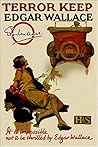
Review: Terror Keep

Terror Keep Terror Keep by Edgar Wallace
My rating: 4 of 5 stars

This J.G. Reeder novel shows us a couple of different sides of the usually intellectual detective. For one thing, he's in love, with his secretary. She's a good deal younger than him - a generation younger - but apart from that, she is a Plucky Gel who manages to get herself out of some bad situations, which makes her a fitting partner for him. And he abandons some of the mannerisms that make him seem older than his years in the course of the adventure.

And an adventure it certainly is. We have a mad criminal who doesn't hesitate to kill, escaped from Broadmoor and targeting Reeder; an old house and its grounds, the Keep of the title, crammed to capacity with secret passages and underground caves leading down to the sea; a gold heist, which is treated as almost a distraction by Reeder; and plenty of thrilling action, everything from a knife thrown in the dark to gunplay to desperate escapes and crashing scenery. Reeder's concern for Margaret raises the stakes, and both of them have some suspenseful moments.

It doesn't seem to have been filmed, unlike a lot of Wallace's work (he was the most filmed author of the 20th century and probably still holds the record), perhaps because the bigger set-pieces would take more budget than was usually allocated to those films. It's a pity, because it's even more cinematic than most Wallace books. Perhaps in a few years someone will do a generative AI film version of it, since it's in the public domain.

It's a good old rip-roaring pulp novel in the best sense of the term.

View all my reviews

Sunday, 11 January 2026

Review: The Clue of the Silver Key

The Clue of the Silver Key The Clue of the Silver Key by Edgar Wallace
My rating: 3 of 5 stars

A thrilling piece of pulp writing, with plenty of mystery, reversals, barely-averted disasters and multiple crimes (several murders, blackmail, forgery and embezzlement). It has one of Wallace's characteristic capable and independent women as a secondary detective, and she (eventually, after a lot of mysterious concealment of what she's even thinking) reveals several important clues that allow the official detective, Surefoot Smith of Scotland Yard, to break the case. Even after he knows whodunnit, though, he still has to catch the criminal, and there are some tense moments as he strives to do so and falls into danger himself.

Unfortunately, this whole section is rife with coincidences, some of which help and others of which hinder the protagonists, and because I prefer a lot less coincidence in my fiction, I dropped it down a star from where it would otherwise sit. If that doesn't bother you, and you enjoy pulp action, this could well be the book for you.

View all my reviews

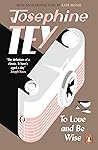
Review: To Love and Be Wise

To Love and Be Wise To Love and Be Wise by Josephine Tey
My rating: 5 of 5 stars

To me, the best mystery novels take the familiar framework of the mystery story - which, along with the romance, is one of the two most familiar and prevalent story shapes in modern western culture - and build something more on top of it, a story of human relationships and emotions that makes the term "novel" an apt one. This is one of those.

It's not even clear for a long time what crime, if any, has been committed. A good-looking young man's advent in a village which has become fashionable with the arty set has set everything askew, so when he vanishes overnight, it might well be murder, by any of several suspects. Or he might have been kidnapped, or fallen in the river, or jumped in the river, or just walked away of his own accord for his own reasons. It's up to Inspector Grant of Scotland Yard, who knows some of the people living in the village, to find out which.

The answer, when it comes, is surprising, but not contrived; it makes complete sense. And the observation of human nature that we get along the way, along with that unexpectedness in what can easily become a genre full of cliches, is what earned it five stars from me. I also appreciated the fact that Grant admires his friend Marta but realizes, being an adult, that they wouldn't really work as a couple, so he enjoys the friendship that they have - another instance of averting the easy trope.

It's true that Josephine Tey has a strong vein of contempt running through her books for people who, in one way or another, are not quite Her Sort, and I would have preferred less of that. But it doesn't become as distorting or distracting as in one or two of the earlier books, particularly the first one, and the whole thing is so well crafted that it deserved its high rating.

If you want to write this well, you have to practice a lot. Although she didn't write many novels, she did (under a masculine pseudonym) write a good many successful plays, and it shows in her characterization, her dialog, and her plotting.

View all my reviews

Wednesday, 7 January 2026

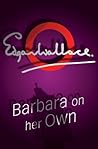
Review: Barbara on Her Own

Barbara on Her Own Barbara on Her Own by Edgar Wallace
My rating: 4 of 5 stars

"Save the business" is a genre, or at least a plot type, and in the right hands it can be compelling. Wallace's are the right hands, even though he was notoriously bad at business himself and constantly in debt, and this genial comedy proves it.

Barbara works as a secretary for her godfather, Mr Maber of Maber & Maber's Department Store, an old and fossilized institution that is about to be bought by their competitor across the road. Before the sale can go through, Mr Maber gets drunk on Boat Race Night (having, in his university days, rowed stroke for Cambridge) and is arrested and imprisoned for biting a policeman. Naturally, nobody can know about this, and he gives Barbara his power of attorney, assuming she will complete the sale negotiations.

Instead, she decides to shock the business into life, to advertise and hold a sale (two things the store has never done before). She knows a young man, who is in love with her despite her discouragement, who sells advertising space; she buys some. One of the executives becomes an ally, the other an antagonist. Various past indiscretions come into play, people leap to conclusions (Barbara has married Mr Maber! Barbara has done away with Mr Maber!), the competitor incites his subordinates to commit minor crimes, farcical consequences ensue... it's all good fun.

The ending, I felt, was weaker than the rest of the book, wrapping up too much too abruptly. But the journey there I thoroughly enjoyed. It's like a P.G. Wodehouse book written by Edgar Wallace, which means middle-class people with jobs instead of upper-class people with private incomes are the participants in the farcical shenanigans.

View all my reviews

Monday, 5 January 2026

Review: The Franchise Affair

The Franchise Affair The Franchise Affair by Josephine Tey
My rating: 5 of 5 stars

This is technically an Inspector Grant novel, in that he appears in it, but he isn't the one really investigating, and for all the development he gets it could be any other Scotland Yard detective.

This is because the story is not proving that someone committed a crime, but that they didn't, which isn't what the police generally set out to do. A teenage girl, missing for several weeks, turns up disheveled and bruised at her home, and tells a story about being held captive in a distinctive house by two women, who she describes. Such a house, owned by such women, exists, and when a tabloid newspaper breaks the story they become the target of abuse and harassment.

Fortunately, when first interviewed by the police they called on the services of a middle-aged country solicitor from the nearby small town, where he works in an old family law firm, doing mostly conveyancing, wills and the like. This is fortunate for them in that, given the chance to break out of his mundane lifestyle, he becomes a surprisingly good amateur detective. He does eventually call in the services of a professional private detective, but most of the work is done by the lawyer, Robert. In the course of doing it, he falls in love with Marion, the daughter of the mother-daughter pair, who's around his age and, like him, has never married.

Marion's late father was one of those improvident men who crop up in English literature, always sinking money into some stupid scheme and never getting it back again, and although she and her mother have inherited a large, old, ugly house named The Franchise from a relative, they have little money. The house is also remote, and it's hard to get servants to come out to it, so Marion does much of the household work (shocking at the time for a woman whose origins are middle class, at least to other middle-class people like Robert's young law partner). This lends some credence to the teenage accuser's story that she was kidnapped in order to be forced to work for the two women.

The whole story turns on who people find credible and why. The teenager looks outwardly innocent, and easily cast in the role of a victim; Marion is dark-complexioned and looks "Gypsy." On the other hand, the teenager keeps reminding people with a wide experience of the world of some liar or wanton that they've known, and Robert and his law partner believe Marion and her mother immediately and unwaveringly. There's a strong vein of disdain for ordinary people who don't understand the difference between claims and evidence, and whose thinking is wooly generally; the law partner is engaged to the daughter of a bishop who always stands up for criminals and never seems to give any sympathy to their victims, except that in this case he does the opposite for some reason (probably that the girl is of a lower social class than her accused abusers), prolonging the public profile of the case. But everyone, Robert definitely included, is basing their assessment of where the truth lies on their estimation of people and their unconscious biases, at least until the facts can be unearthed; several people base their assessment on the colour of someone's eyes, generalizing about the type of personality that goes with a given eye colour.

It's a story that's, if anything, more relevant in these days of social media outrage than it was at the time of original publication, and it's this additional thought about people and issues, on top of solid storytelling, that takes it up to five-star level for me.

That's not to say that I necessarily agree with all of the ideas. Tey is coming from a conservative position, that criminals are criminal because they're ultimately self-centred, possibly having inherited that tendency from their parents. She pillories the bishop's belief that all criminality is produced by environment - the old nature-versus-nurture debate, in which the truth probably lies somewhere in the middle, though I would put it slightly closer to the bishop's end of things given that criminality is more likely to occur where people have limited resources and few options. As a middle-class descendent of generations of (as far as I know) honest working-class people, I obviously don't believe that the working class are inherently and genetically disadvantaged - less intelligent, less capable, more likely to be criminals.

I also found that I predicted a couple of the story beats in advance. (view spoiler)

It's in the lower portion of the five-star space, then, but it is thought-provoking and well done.

The Cornerstone Digital/Penguin edition has only a few errors in it, though it looks like the author had a persistent fault of writing "infer" (to reach a conclusion through indirect evidence) when she meant "imply" (to hint at a conclusion indirectly), and her original editor did not correct it. I noticed it in previous books as well. This edition also has an introduction, which I recommend skipping at least until you've read the book or even entirely; it's crammed with spoilers and tells you what to think about it, coming from a very modern viewpoint.

View all my reviews

Review: A Shilling for Candles

A Shilling for Candles A Shilling for Candles by Josephine Tey
My rating: 4 of 5 stars

The second Grant novel improves on the first substantially, in my view, making less use of coincidence and having the detective actually solve the mystery this time instead of getting a spontaneous confession from someone who wasn't previously a suspect.

The victim is a film star who's risen from a poor background in Nottingham by determination and perseverance, and perhaps ruffled some feathers along the way. The title refers to her bequest to her brother, a religious charlatan and one of the numerous suspects.

It's a solid investigation plot, but the characters and their interactions are what really makes it, like most of the best detective fiction.

The HarperCollins edition has fewer errors than theirs often do (and significantly fewer than their edition of the first book in the series), though I suspect that's more likely because the original book was printed more clearly and produced fewer scan errors than because they put extra effort into editing it.

View all my reviews

Review: Jack O' Judgment

Jack O' Judgment Jack O' Judgment by Edgar Wallace
My rating: 4 of 5 stars

A thundering good pulp novel from a master of the craft.

A ruthless gang of criminals have a clever approach to making illicit money. They buy stolen letters from burglars, and if they find anything compromising against someone who has some valuable property or a business, they blackmail them into selling it to the gang at far below its value. They've made a legitimate payment, they don't have to account for money given to them for apparently no reason, there's nothing illegal in paying less than an asset's worth for it if the seller agrees to the price, and all in all it's netting them a nice income.

The police know what's going on, but can't prove it in court. Likewise, they pretty strongly suspect that the death of a drug addict and dealer, "Snow" Gregory, was connected to the gang, but again, they can't prove anything. Enter the mysterious masked vigilante calling himself Jack O' Judgement, whose mark is the Jack of Clubs left at the scene of his vengeance. He isn't constrained by the laws of evidence, and his crusade against the gang wears away at their nerves until they're all ready to flee with what assets they can lay hands on quickly.

Wallace does an excellent job of misdirection, making us believe that Jack is any of several different people (one of whom does take on the persona at one point), only to reveal a completely unexpected identity at the end. There are armed confrontations, there's a kidnapping (of the main investigator's fiancée, who's also the daughter of a member of the gang who's trying to leave it and go straight), it's all strong stuff, and in Wallace's trademark pacy style. If he has a fault, it's that it's not always easy to tell who is talking in some of the extended dialog sequences; he could have done with adding a few more tags (in his books in general, not just this one).

View all my reviews

Thursday, 1 January 2026

Review: Patissier et Etranger

Patissier et Etranger Patissier et Etranger by Laurence Raphael Brothers
My rating: 4 of 5 stars

My last read of 2025 was this novella, set in Paris in 1967 at a patisserie school. George Drake, the English narrator, is the only ordinary person (it turns out) among the people he knows there, but ends up playing a key role. In exactly what would be a spoiler, but let me just say that I suspect one reason the title is in French even though the book is in English is that "Étranger" has at least three different translations in English, and the one to choose might not be the one you would initially think of.

There's plenty (but not, for me, too much) of patisserie research, and 1967 Paris research, on show, enough that it feels authentic but not so much that it becomes unduly foregrounded in the "I suffered for my art, now it's your turn" way that it's so easy to fall into (looking at you, Connie Willis and Tim Powers). I thought, going in, that it might be a "cozy," because baking, and nearly everyone is nice and well-intentioned, but the baking is a background to the interactions between the characters, and to the plot.

Because it's short, it's not a complicated plot, but it has its moments of tension, mystery and suspense. The spec-fic element also isn't the point of the book, any more than the baking is, but it provides an essential element to make the plot possible.

I will mention something that, for me, didn't completely work, though I'll have to use spoiler tags for part of it. I'm one of those peculiar people who actively dislikes sweet things. Sugar makes me feel really unwell, and so I avoid it. That probably contributed to the fact that I didn't fully believe (view spoiler)

While it does suffer from the usual novella problem of being a bit simplistic, this feels like a story that's being told at the right length for what it is. It's complete and satisfying, makes good use of its setting and its premise without going too deeply into either for their own sake, and keeps the focus on the characters and their relationships. I enjoyed it.

Disclaimers: I am on a writers' forum with the author (I don't know him well), and received a pre-publication copy via Netgalley for review.

View all my reviews