Sunday, 28 September 2025

Review: My Big Goblin Space Program: An Astronaut Reincarnation LitRPG

My Big Goblin Space Program: An Astronaut Reincarnation LitRPG My Big Goblin Space Program: An Astronaut Reincarnation LitRPG by Scott Warren
My rating: 4 of 5 stars

I keep forgetting that I've read books by Scott Warren before. The first was The Dragon's Banker , and the second Ought to be Dead . But wait! Before The Dragon's Banker I also partly read Devilbone , so this makes three and (nearly) three-quarters books by him that I've read. I'm happy to report that in this one, for the first time, he's got himself a really good editor and/or finally learned not to make so many mistakes in the first place, because the other three were spectacularly awful in this regard.

And that was a pity, because I otherwise enjoyed two of them (not Devilbone, which was way too dark for me), and thought they deserved much better editing to bring out their other excellent qualities, namely being well-plotted and original in concept.

This one is also well-plotted and original in concept, though it does remind me of a couple of things. One, of course, is isekai manga, where someone is reincarnated in another world, sometimes as a monster, and speed-runs technological development using the resources to hand. The other is Andy Weir, because of the astronaut aspect to this story. Yes, the reincarnator was an astronaut, who died in a rocket explosion, and now he's a goblin king. His ambition: to lift the tech level of his tribe of goblins to the point that he can finally visit the moon, albeit not Earth's moon but a larger and closer and quite likely inhabited one orbiting his new planet.

Since goblins are chaotic and accident-prone and not all that bright, but highly enthusiastic, this is something of a challenge, which he rises to. Aided by some evolved goblins who have specialist skills, he begins to develop various technologies, though (as is so often the case with these clever-engineer stories) he notably neglects technologies relating to food and cloth, which historically have been extremely important - but don't leave much archaeological evidence, and tend to be mainly "women's work" in a lot of societies.

This world is complete with a System, which has a personality but plays its cards close to its chest, and the usual trappings of a video game, like anything from the original Warcraft through Civilization or Sim City to Clash of Clans. As the isekaied first-person narrator notes, the rules of physics and, apparently, biology don't conform to those of our world. Goblins, for example, are not born through sexual reproduction, but spawn mysteriously overnight, while the existing goblins sleep. This neatly disposes of any messy relationship issues, leaving the narrator free to think about engineering (and the wellbeing of his tribe) all the time.

It's clearly some form of a simulation, which raises the question of whether the narrator's previous world was too, but he doesn't spend a lot of time worrying about it; he's an engineer, not a philosopher (dammit, Jim). He just gets on with climbing the Goblin Tech Tree in the direction of a moon landing.

This is only Volume 1 of a story that started life as a serial on Royal Road, and it ends at a fairly arbitrary point, rather than feeling complete in itself. Also, it's not the kind of book that has a plot, as such, being more in the manga or light novel style of being a series of challenges relatively easily overcome by an overpowered protagonist, though he does face some suspenseful moments. I enjoyed it, though, and found it funny, and was vastly relieved that it was better edited than the previous Scott Warren books I've read, so I will definitely be looking out for Volume 2.

It would make a good anime. The goblins are inherently cartoonish, for one thing.

View all my reviews

Thursday, 25 September 2025

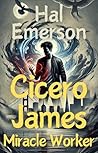
Review: Cicero James, Miracle Worker

Cicero James, Miracle Worker Cicero James, Miracle Worker by Hal Emerson
My rating: 4 of 5 stars

This is strong. It's the author's eleventh book, or so, and it shows. Very definite Dresden Files vibes, but from the point where Butcher had started to get a good handle on his craft, rather than the less successful early books.

The main character is a wizard-but-not-called-that (they're called "Miracle Workers" or just "Workers"), one of maybe a hundred thousand worldwide, who just wants a quiet life but ends up getting caught up in what amount to cosmic politics. He's snarky and in many ways immature, but whatever his faults, being on the side of evil, or even on the side of ignoring evil when he has the ability to oppose it, is not one of them.

There's swearing, not constant on every page, but in situations in which there would realistically be some. There's also torture, but it's not delighted in (the opposite, in fact), and it's not gratuitous - it's central to the plot.

The editing on the pre-publication review copy I had was good, with occasional small glitches such as might be left over after a skilled editor had gone over an average-quality manuscript (average-quality in terms of editing, I mean, not storytelling; that's excellent). The author covers himself with the fictional frame that this is a book written by an ordinary guy over a few days, so it may have some typos in it.

He also lampshades the fact that the whole scenario becomes reminiscent of the X-Men. There's a clear Magneto character, who I'd identified as such before the lampshade was hung, though I hadn't thought of the narrator's mentor as Professor X until he said it.

It's exciting and action-packed. There are chases and escapes and explosions and fights and monster encounters. There's a heist, or almost. There are emotional ups and downs, and if there are more downs than ups, it still manages not to be too dark in tone, and ends with an appeal for an attitude of hope, cooperation and mutual respect that I wholeheartedly endorse. There's intelligent observation about the state that San Francisco is in these days, without adopting either political extreme.

The worldbuilding is original, and well conveyed; we know pretty well what the magic can and can't do, so when it comes time to use some, the action isn't slowed down with explanations. It doesn't make it all the way to a fully realized "secret history", but it does the job it needs to.

The secondary characters are distinct and memorable, and each has a significant role to play. Their relationships have variety and feel real.

Even though it's not my usual fare (cozy secondary-world fantasy), I enjoyed it considerably, and will be looking forward to more in the series.

View all my reviews

Monday, 22 September 2025

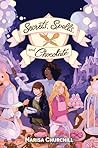
Review: Secrets, Spells, and Chocolate

Secrets, Spells, and Chocolate Secrets, Spells, and Chocolate by Marisa Churchill
My rating: 4 of 5 stars

I haven't read a lot of "magical academy" books, because they all tend to be the same: Harry Potter redone ineptly, with the serial numbers lightly filed off (but often hitting the exact same plot points with suspiciously similar characters). Frequently with extra cruelty, because what would YA be without some cruelty?

This one is clearly heavily influenced by HP, but it isn't just a bad fanfic or a rewrite. It's a book by someone who has read HP and thought, "Well, sure, but what if it was a magical cooking school? Also, female main character, ditch the Dark Lord, and amp up the whimsy." It's cozy in tone, though there is a bit of a dystopian situation going on.

It has, in other words, a little more originality than some, and since the author is a chef, the cooking aspect is done thoroughly and plays a key role.

The magic world is all related to cooking, and the worldbuilding is largely edible. Magical people ("Sages") go through a ritual when they're young that gives them a Blade, a chef knife which acts like a wand; for unknown reasons, you can only do this once, so if your Blade is destroyed or lost, you can't get another one. Spells are part recipe, and a lot of magic is infused into food and drink. It's reasonably well thought through, and well sustained throughout.

The main character is Sylvie Jones, whose mother was accused of cheating at the big magical cooking contest, the Golden Whisk, some years previously. There wasn't sufficient proof (partly because she didn't actually do it), and now she has been allowed to come back for Golden Whisk All-Stars, while Sylvie is being allowed to take the six-week course that can grant her entry to magical cooking school if she finishes successfully and manifests her Blade at the end. However, a dystopian Minister of Magic - uh, I mean, President of the CCS, the international authority over all magical cooking people - I forget what the abbreviation stands for - is setting them both up to fail. (Unfortunately, this is partly explained in a document which, because of a formatting issue with my review copy, I was unable to read, along with a couple of other documents that were important to the plot.) He's also introduced a hierarchical ranking system for Sages, is prejudiced against people who are from a Scullery (Muggle) background, and his daughter, who's at the school, is a cheat and a bully.

Sylvie's roommate is the daughter of Scullery parents who are not only magical, but can't cook. They're from Louisiana, but not at all participants in the rich Cajun or Southern cooking traditions. The two girls get off on the wrong foot at first, but then manage to get over it and form a key alliance.

Sylvie has a lot of trouble, in fact, deciding who can be trusted and who can't; most of the people she meets come under suspicion at some point, and the final culprit is someone she hadn't suspected, because their motive was, frankly, insane. This makes for plenty of suspense and some surprise reversals.

We're not spared from a few tropes at which I rolled my eyes. Sylvie's name appears on a magical apple that indicates that she is prophesied to do great deeds, so she's sort of a Chosen One, although as it turns out, not a full-on Chosen One, and, thankfully, not one of those spoiled characters who refuses to do any work and then gets their powers at the last moment by sheer plot convenience. She's smart (for a 14-year-old), she's a great cook, and she's creative in her solutions, though sometimes that creativity takes a somewhat destructive turn and causes chaos.

There's also a Convenient Eavesdrop, my absolute least favourite plot device, but it's brief and not pivotal.

What ought to be pivotal to the plot, given how much time and how much risk by Sylvie gets invested in it, is the subplot where she has to deliver a written message from the Resistance to the school's principal at a particular time (the day of the Golden Whisk competition). Because of the formatting issues, I didn't see exactly what was in the message, and unless I missed something the delivery was never shown to have happened, although there's a scene in which it's assumed that it was delivered. It also wasn't ever clear to me why it made more sense for Sylvie (a relatively low-powered kid with a big target on her back) to hang on to the message for several days, rather than giving it to the powerful and canny principal straight away and having her protect it from the suspected mole in the school in any number of ways, including just keeping it to herself and not telling anyone.

The book has a number of small flaws like that; things that don't quite make sense, like the school at night being protected by a number of magical traps but not locked, and scattered examples of a lot of common editing errors, particularly apostrophe errors, lack of a comma before a term of address, missing question marks from questions, missing opening and closing quotation marks and missing past perfect tense. There's a scene early on in which Sylvie goes into her and Georgia's shared room and there are "two boys and a girl" in there with Georgia, but only one of the boys ever gets mentioned or described, suggesting one had been revised out and then the earlier mention had been overlooked. It's just a little scruffy, and needs another pass or two, in other words. Since I saw a pre-publication version from Netgalley, perhaps it will get them.

All these small issues add up, and along with the fact that it's so very based on HP (though with more originality than some I've seen) keep it down in the lowest tier of my annual recommendation list. Still, if you enjoy cozy, like cooking, are a fan of Harry Potter/magical school stories, and don't think too hard about the plot, you'll probably enjoy this considerably. Sylvie is brave and clever, her motivation is clear and compelling, and all her mistakes are honest ones.

View all my reviews

Friday, 19 September 2025

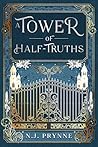
Review: A Tower of Half-Truths

A Tower of Half-Truths A Tower of Half-Truths by N.J. Prynne
My rating: 4 of 5 stars

I was almost put off by the author's content warning right at the front, but I'm glad I decided to give it a go anyway. Yes, there is violence, but it isn't glorified, and the bad consequences are shown clearly. Yes, there is sex, but it isn't trivialized or casual, and when it gets explicit (which it does), it's after a lot of character development, and in a committed relationship that we've watched develop over time.

In fact, this book is strong in ways that a lot of books I come across are weak: worldbuilding, character development, and especially the romance plot. I don't believe I've seen a better romance plot, in fact, one in which the couple are both genuinely appealing; they actually have excellent reasons for not acting on their attraction and sensibly decide not to do so until those reasons are resolved, like adults; and the tension is built up masterfully over a long period of the development of the relationship, rather than the all-too-common "instalove, now fall into bed" approach. Top marks for the romance.

The worldbuilding is subtle, without a lot of infodumping, but it has plausible month names and day-of-the-week names, a 28-hour day, a pantheon with assigned areas of responsibility (that some people believe in and some don't), and several different schools of magic. Standard stuff, but it's dealt with in the background rather than being placed where you'll trip over it. There's an appendix that explains it all, but you don't need to read it to keep from getting confused, because it's revealed in context that makes it clear, as worldbuilding should be.

The main characters are, as I said, appealing, but damaged realistically by their backstories (not in a way that turns them awful, though). It's like a T. Kingfisher book in that way. The secondary characters also have a bit of depth to them; they're not just one-note. They can be a loyal friend who's also annoyingly boisterous and not that deep, a mother who's cold but, in her own way, caring, a toxic ex who's also going through his own stuff and has a genuine grievance, and so on. They have layers.

In terms of editing, the commas and apostrophes are in the right places (which is notable, these days), and the past perfect tense is used where it needs to be (also notable), though sometimes the form of the verb in the past perfect is wrong, and there are other verb tense slips. There are also quite a few mangled idioms, and some passages of probably the worst pseudo-archaic dialog I've ever seen, which is saying something. That last factor was bad enough to drop it down a tier in my annual Best of the Year rankings; it was going to be Gold, but I can't give a Gold-tier ranking to a book that murders early modern English grammar like that. Note, as always, that what I saw was a pre-publication version from Netgalley, and may not reflect the state of the published book, especially as I plan to alert the publisher to some of the more egregious issues via Netgalley's feedback form.

Overall, with a bit of a tune-up it would be excellent, and even as it is, it's solidly above average. I hope there will be more in this world and with these characters.

View all my reviews

Review: A Tower of Half-Truths

A Tower of Half-Truths A Tower of Half-Truths by N.J. Prynne
My rating: 4 of 5 stars

I was almost put off by the author's content warning right at the front, but I'm glad I decided to give it a go anyway. Yes, there is violence, but it isn't glorified, and the bad consequences are shown clearly. Yes, there is sex, but it isn't trivialized or casual, and when it gets explicit (which it does), it's after a lot of character development, and in a committed relationship that we've watched develop over time.

In fact, this book is strong in ways that a lot of books I come across are weak: worldbuilding, character development, and especially the romance plot. I don't believe I've seen a better romance plot, in fact, one in which the couple are both genuinely appealing; they actually have excellent reasons for not acting on their attraction and sensibly decide not to do so until those reasons are resolved, like adults; and the tension is built up masterfully over a long period of the development of the relationship, rather than the all-too-common "instalove, now fall into bed" approach. Top marks for the romance.

The worldbuilding is subtle, without a lot of infodumping, but it has plausible month names and day-of-the-week names, a 28-hour day, a pantheon with assigned areas of responsibility (that some people believe in and some don't), and several different schools of magic. Standard stuff, but it's dealt with in the background rather than being placed where you'll trip over it. There's an appendix that explains it all, but you don't need to read it to keep from getting confused, because it's revealed in context that makes it clear, as worldbuilding should be.

The main characters are, as I said, appealing, but damaged realistically by their backstories (not in a way that turns them awful, though). It's like a T. Kingfisher book in that way. The secondary characters also have a bit of depth to them; they're not just one-note. They can be a loyal friend who's also annoyingly boisterous and not that deep, a mother who's cold but, in her own way, caring, a toxic ex who's also going through his own stuff and has a genuine grievance, and so on. They have layers.

In terms of editing, the commas and apostrophes are in the right places (which is notable, these days), and the past perfect tense is used where it needs to be (also notable), though sometimes the form of the verb in the past perfect is wrong, and there are other verb tense slips. There are also quite a few mangled idioms, and some passages of probably the worst pseudo-archaic dialog I've ever seen, which is saying something. That last factor was bad enough to drop it down a tier in my annual Best of the Year rankings; it was going to be Gold, but I can't give a Gold-tier ranking to a book that murders early modern English grammar like that. Note, as always, that what I saw was a pre-publication version from Netgalley, and may not reflect the state of the published book, especially as I plan to alert the publisher to some of the more egregious issues via Netgalley's feedback form.

Overall, with a bit of a tune-up it would be excellent, and even as it is, it's solidly above average. I hope there will be more in this world and with these characters.

View all my reviews

Monday, 15 September 2025

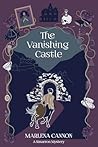
Review: The Vanishing Castle: A Simarron Mystery

The Vanishing Castle: A Simarron Mystery The Vanishing Castle: A Simarron Mystery by Marlena Cannon
My rating: 4 of 5 stars

A strong piece of work with a likeable protagonist, the self-doubting centaur Simarron. Cast out of his herd, he's come to the city (where centaurs mostly do manual labour) to work as a magical safety inspector. I love a fantasy civil servant, and I also like centaurs, so this was immediately a couple of points in the book's favour.

Simarron isn't supposed to be investigating the murders of a couple of alchemists, but he keeps feeling that it's his duty (he's very dutiful), and risks his job - which means a lot to him - rather than walk away from helping others. I liked him for that, and for his openness to befriending the other characters, even though they were very different from him and not without their annoying individual quirks. These did help to distinguish them from one another, though I found myself looking up names sometimes to remind myself who someone was; making the characters more memorable is an aspect that could be strengthened.

There are some other minor flaws. For example, there's an oddity of timing. At one point, Simarron casts doubt on the idea that the castle of the title might be developed as a resort because it takes a couple of hours to get there from the city. But later, he and a friend take from before lunch until nearly sunset to get to another part of the city - admittedly, it's winter, and we don't know how far north it is, but it still seems like across the city is further than out to the castle.

There was also a scene where a murder suspect was being interrogated, not in a closed room, but in what seemed to be the foyer of the police station, in front of a reporter and the main character. That seemed like an odd place and situation to use to interrogate someone.

Editing is mostly good, apart from the occasional place where I felt the past perfect tense was missing, the use of "may" where it should have been "might" (not every time, but sometimes) and a couple of minor and subtle vocabulary slips or poorly phrased sentences. I had a pre-publication version via Netgalley, and I will provide feedback to the publisher, so these may be resolved by time of publication.

In terms of worldbuilding, there's a bit of "Aerith and Bob," the use of this-worldly names and made-up fantasy names mixed together (sometimes a this-worldly forename and a made-up surname, sometimes a forename and surname that are both from a particular this-world ethnicity) with no apparent plan or consistency that I could make out. But the way the magic system works is, if not presented with full Sandersonian rigor, at least given enough detail that I gained a feel for what it could do. It mostly wasn't what the plot was built on or how things were resolved.

The mystery aspect is solid, with a fully developed mystery plot, not just a gesture in the direction of one like I sometimes see. There's no romance; Simarron notices the attractiveness of several people he meets, but doesn't do anything about it, and given that he's a centaur and they're not, that avoids a world of possible complications.

All in all, a capable piece of work, and the start of a series that I will be keeping an eye out for. The best thing about it is the main character, but it's also well plotted and does a decent job with the worldbuilding.

View all my reviews

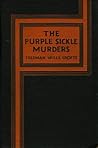
Review: The Purple Sickle Murders

The Purple Sickle Murders The Purple Sickle Murders by Freeman Wills Crofts
My rating: 4 of 5 stars

I recently read the sixth Doctor Thorndyke mystery, by Austin R. Freeman, Freeman Wills Crofts' contemporary, and felt that the series was going downhill, with the author recycling his material and not coming up with much that was new. In contrast, this fifth Inspector French book shows improvement over the earlier ones, and growth in the author's abilities.

Firstly, French is less of a generic Everyman or a crime-solving plot device and more of a developed character. The fact that he talks to his wife about the case is part of this. He's done that once before in the series, but more briefly, and this longer interaction provides characterization for both of them. What's more, French displays emotion and uncertainty, his minor mistakes (and the bad, but very human, choices of other people) have consequences that increase the tension, he has an emotional connection to another character, and instead of a relatively brief action sequence at the end of a plodding police investigation, as in the earlier French books, there's an extended period spanning multiple chapters in which we're kept in suspense about the fate of a character and in which multiple action sequences, chases, fights and desperate attempts to escape occur.

It's a strong piece of work, with (as is usually the case with this author) clever criminals defeated by the perseverance and sound police work of the detective. While Austin R. Freeman's "reverse mystery" approach gave the TV series Columbo its most famous feature - that the audience knows who committed the crime from the beginning - the beloved scruffy detective himself owes a lot more to Freeman Wills Crofts, in whose books clever, arrogant criminals are brought down by persistence and sound methodology employed by a policeman with an ordinary background.

While I won't be reading more Austin W. Freeman, at least for a while, I definitely want to read more Freeman Wills Crofts, if this is any indication of the future direction of his work.

View all my reviews