This is my twelfth annual roundup of recommended books that I read in the previous year. My
summary page links to all the previous roundups.
In the early years, I arbitrarily matched the number of top books to the number of the year (so I had 14 books on the list in 2014). I abandoned that practice after the first four years, and in 2022 I loosened the criteria even further and included almost anything that I gave four or five stars to. Next year, I'm going to change what I do again, re-aligning the star ratings to be more consistent with what they are supposed to mean according to Goodreads and Amazon.
What I mean is that for the last few years I've been running a rating system of four tiers (bronze, silver, gold and platinum), of which the first three are given four stars, indicating that I enjoyed the book to a greater or lesser extent, and the platinum tier get five stars for being amazing. Next year, I'll re-jig this as follows:
- The top tier will still be five stars, but I'll collapse Gold and Platinum together. I may still single some books out for special praise (equivalent to the old Platinum), but I haven't decided yet.
- The former Silver tier, which was for solid books that weren't outright amazing but had few and forgiveable faults, will still be four stars.
- The former Bronze tier, which was for books with significant issues that I still at least partially enjoyed and felt were good enough to recommend, will now be three stars rather than four.
- Books with faults that I think are significant enough that I don't recommend them, though they did have some positive qualities, will now be two stars, where they used to get three.
- Books that I think are pretty much a disaster right across the board, which used to get two stars, will now get one star. I haven't used the one-star rating in years, so in practice my range started at two stars.
For this year, I will be keeping the "legacy" rating system, since I decided to change it partway through 2025 and didn't want to go back and adjust everything I'd done up to that point. This year's recommendation list once again has the largest number of books so far, at 133, out of the 159 books I read in their entirety in 2025 (counting standalone novellas and boxed sets both as one, which is what I've done in previous years, but not counting anything shorter than a novella). That's what two or three days a week of commuting by train will do: increase my reading by almost 60%, apparently. If my calculations are correct, the total number of recommendations across the 12 years is now 524. I had to adjust these numbers after my initial post, because I posted this roundup on the morning of the 31st, thinking I wouldn't complete more than my current book before the end of the year, and ended up reading another novella in the afternoon and evening.
There were another 24 books I started but decided not to finish, not counting a couple where I wasn't ever going to read them from cover to cover (like cookbooks). I'll mention below where I got them from. Also, I re-read two of my own books in preparation for writing a sequel, and I don't rate my own books - I think that's tacky. This is why the total number doesn't add up to 159.
Here are my figures in a table, for the last time before the reboot of the rating system (I'll start again fresh next year):
| 5 star | 4 star | 3 star | 2 star | Total |
| 2025 | 5 | 128 | 22 | 1 | 156 |
| 2024 | 8 | 92 | 13 | 0 | 114 |
| 2023 | 6 | 82 | 12 | 2 | 102 |
| 2022 | 6 | 59 | 13 | 4 | 82 |
| 2021 | 5 | 54 | 29 | 3 | 90 |
| 2020 | 8 | 53 | 21 | 0 | 82 |
| 2019 | 11 | 36 | 17 | 1 | 65 |
| 2018 | 5 | 72 | 15 | 2 | 94 |
| 2017 | 10 | 56 | 19 | 0 | 85 |
| 2016 | 11 | 53 | 12 | 1 | 77 |
| 2015 | 11 | 68 | 19 | 2 | 101 |
| 2014 | 9 | 70 | 23 | 2 | 104 |
| Total | 95 | 823 | 215 | 18 | 1152 |
| Average | 8 | 68 | 18 | 2 | 96 |
So, out of more than 1000 books I've finished in the past 12 years, I've only rated about 8% at five stars. About 71% have been rated four stars, leaving just over 20% at three stars or below. This is because I do a lot of pre-filtering based on blurbs, other people's reviews and, sometimes, previews, and weed out the ones that are obviously going to be awful. Occasionally, I get fooled. I probably filter out some good stuff now and then as well, if the authors make their books sound generic or make an obvious mistake in their blurb, or don't hook me early enough in the preview, or if they get a lot of reviews that make it sound like I won't like their book even though I actually would if I tried it.
If I re-jigged this year's figures to reflect next year's scoring system, the numbers would be: 25 5-stars (6 platinum and 19 gold), 70 4-stars (silver), 39 3-stars (bronze), 22 2-stars (former 3-stars), and one 1-star (former 2-star). This is a more informative spread, I feel, and I should have made the shift to this approach earlier.
Tier Rankings
Here's the link to all of my "Best of 2025" books, and here are my
Platinum tier (6 books),
Gold tier (19 books),
Silver tier (70 books) and
Bronze tier (39 books).
A note: I've figured out how to link to lists of books on Goodreads that have the same tag (or "shelf") and were read in the same year. I will take the risk of using these links, knowing that if GR revises their code - which is honestly long overdue - the links may well stop working. I will give brief rundowns on the Gold and Platinum books below.
Discovery/Sources
As with the previous three years, I read a lot of classics, mostly from Project Gutenberg. This is partly because my previous best sources, Netgalley and BookBub, have been disappointing over the past few of years, featuring a lot of unimaginative cookie-cutter books, many of them in genres I don't care for. I read
85 books from Project Gutenberg: five I rated Gold, 41 Silver, and 23 Bronze, 14 at three stars and one (
Tom Swift and his Submarine) at two stars. There were also eight that I stopped reading before I finished them, which I haven't counted in the total of 85. So a quarter of the Gold-tier books and almost two-thirds of the Silvers and Bronzes came from Gutenberg, which represented not quite half the total books I read.
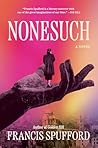
Twenty-nine of this year's books came from NetGalley, reversing a trend of declining numbers in the last four years (16 in 2024, 20 in 2023, 25 in 2022 and 41 in each of the previous two years). Only one made Platinum (Francis Spufford's
Nonesuch: A Novel), five Gold, nine Silver, nine Bronze, and five which earned only three stars. Because NetGalley books are pre-publication, I generally don't use my Needs Editing tag on them, since at least in theory they could get more editing before publication (though, honestly, they most likely won't), but three of them were so significantly bad that I did tag them, a three-star and two Bronzes, and one of the Bronze books got the Seriously Needs Editing tag. It was a superhero book, which for some reason are often particularly poorly edited. Six of the Netgalley books, though, got the Well Edited tag.
In addition, as in 2024, I again got 8 books from NetGalley that were either sufficiently bad or sufficiently not to my taste that I didn't finish them. I usually filter the books I pick up carefully, but on Netgalley (where I can't read a preview) I will take a risk on something that sounds like a fresh premise. Sometimes this works out; sometimes, as with these books, it does not.
I bought only
nine books through BookBub this year that I finished, which is also up from previous years, one tagged as "Needs Editing" and two as "Seriously Needs Editing," none this year as "Well Edited"; four of them made Bronze, three Silver and one (Hannu Rajaniemi's
The Quantum Thief) platinum, indicating that BookBub, like Netgalley, has slightly improved as a source of books for me, after several years of steady decline.
I picked up two more books via BookBub that I didn't finish, only one of which I actually bought; the other I dropped after reading the sample.
I read
18 ebooks from the library, fewer than last year, consisting of one Platinum, seven Gold, ten Silver, and no Bronze-tier books, plus a three-star. I also borrowed
4 physical books from the library, all by P.G. Wodehouse, of which three made Silver and one Bronze. In addition, I borrowed
six e-audiobooks from the library, a Platinum, two Golds, a Silver, a Bronze and a three-star, plus two I didn't finish. That's a total of 30 library borrowings, with two Platinum, nine Gold, 14 Silver, two Bronze, two three-star and two not finished.
I maintain a large wishlist (80-odd titles) on Amazon entitled "Await Ebook Price Drop," and monitor it regularly. I bought
only one book from my wishlist this year, a Silver, which I'd already had as an e-audiobook (in a full cast recording, and I wanted to re-read it in text because a full-cast recording drops some of the internal reflection of the characters).
I'm part of the Codex writers' forum, and occasionally pick up a book by a fellow Codexian, though I've not been on the forum much for a while. I picked up two books from Codexians this year. One I decided against after reading the sample (it was a pastiche of an author I'm a big fan of, and I didn't feel the book pulled the pastiche off), but
the other made the Silver tier.
I bought no books based on an Amazon recommendations this year, at least not that I recorded. I may have missed one or two.
Best of the Best
I'll again just highlight the Platinum and Gold books this year, a total of 25 (up from 17 last year). Don't despise the
Silver or even
Bronze tiers, though; those are still recommendations, still books I enjoyed.
Gold Tier
Let's start with the
books I liked a lot but that didn't quite make it to the highest possible level. In alphabetical order by author (links to my Goodreads reviews), this year with the source noted:
- Drake Hall and City of Serpents, both by Christina Baehr (library e-audiobooks). Books 2 and 4 in a strong series, of which the first made the list at Silver in 2024, and the third is on this year's list at Platinum. Dragons in Edwardian England, with the strongest grasp of period authenticity I've seen in a while.
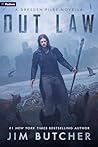
- Out Law: A Dresden Files Novella, Jim Butcher (NetGalley). Harry Dresden teaches Being a Decent Human Being 101 to a scared criminal who wants to reform, but there's no lack of action and tension while he does so.
- The Seven Dials Mystery, Agatha Christie (Project Gutenberg). It's a pity Superintendent Battle never became as popular as some of Christie's other sleuths. I like him. Less like a Christie book and more like a Wodehouse book that collided with an Edgar Wallace book, to the benefit of both.
- Cicero James, Miracle Worker, Hal Emerson (NetGalley). Urban fantasy set in San Francisco, which manages to look realistically at the city's problems without falling into either of the main ideological camps, and while telling a suspenseful story of a man who's willing to sacrifice for the benefit of others.
- Slayers of Old, Jim C. Hines (NetGalley). I think Hines is underrated, and this "Buffy meets Golden Girls" tale of a retired supernatural slayer pulled back into the life as a consequence of youthful mistakes demonstrates why I think that. Particularly recommended if you're over 50.
- Lady of Magick, Sylvia Izzo Hunter (library ebook). That spelling would normally put me right off, but the first book made Silver last year, as did the third this year, and the series as a whole is solid and entertaining. An alternate Britain in which the Tudor line survived into the 19th century and magic is practiced.
- The Geomagician, Jennifer Mandula (NetGalley). Another alternate Britain with magic, but this time it's linked to fossils, and there's a pterodactyl which becomes a fossil-hunting woman's key to get into the boys' club. Based largely on real historical figures, and with strong reflection on important issues that doesn't bog down the story.
- The Mark of Zorro, Johnston McCulley (Project Gutenberg). Here's where the legend began (not only Zorro's, either, it inspired aspects of Superman and Batman), and it's as swashbuckling as you could wish, written with a delightful brio.
- The Summer War, Naomi Novik (NetGalley). A determined and capable young woman, my favourite type of protagonist, takes on a version of Faery that feels like the tales and ballads in order to save her brother.
- The Garden of Resurrection: Being the Love Story of an Ugly Man, E. Thurston Temple (Project Gutenberg). A moving, human and humane story of the attractiveness of being kind, from a now-obscure author.
- The Astonishing Adventure of Jane Smith and The Fire Within, Patricia Wentworth (Project Gutenberg). Another determined and capable young woman in a tensely plotted thriller, and what at first seems like it will be a standard murder mystery but isn't that at all; instead, it's an insightful novel about manipulation, guilt and redemption through love.
The rest of the Gold-tier books are all by P.G. Wodehouse and were all borrowed from the library as ebooks:
- Mulliner Nights. One of Wodehouse's great raconteurs gives us a series of unlikely but always entertaining tales about his various relatives and connections.
- Blandings Castle and Elsewhere. A collection of short pieces featuring some of the author's most beloved characters and locations.
- Full Moon. A Blandings Castle farce with the usual multiple impostures, young love thwarted and then triumphant, and all the trimmings.
- Young Men in Spats. A collection of shorts including the first Uncle Fred story (my favourite character in all of Wodehouse), and some fine stories from the Drones Club and Mr Mulliner.
- Cocktail Time. An Uncle Fred novel, in which that differently moral peer interferes effectively in the affairs of basically everyone.
- The Luck of the Bodkins. One of Wodehouse's satires on Hollywood, where he worked for a time writing for the movies. The farce is strong with this one.
Platinum Tier
And now,
the very best of this year's reading, also in alphabetical order by author.
- Castle of the Winds, Christina Baehr (library e-audiobook). Another determined, capable young woman facing genuine peril bravely, with depth of reflection on any number of issues. Third in a strong series.
- Brigands and Breadknives, Travis Baldree (library ebook). I consistently rate Baldree's cozy fantasies highly, and it's because it's more than just cozy fantasy. This one even challenges the standard cozy trope that owning a small business will make the protagonist happy.
- Hogfather, Terry Pratchett (paperback, owned for years). Funny, tense, and thought-provoking, and any one of those is hard to pull off individually, let alone together.
- The Quantum Thief, Hannu Rajaniemi (BookBub). The first book in what I found, unfortunately, to be otherwise a disappointing series, but read as a standalone it's brilliant and different from almost anything else out there.
- Nonesuch: A Novel, Francis Spufford (NetGalley. The last on the list alphabetically would be the top-rated book if I was still putting them in order. It says "A Novel," and it is, but it's not the usual literary self-indulgence in which passive characters sink into over-described tragedy. It reminds me of the best parts of Connie Willis and Charles Williams, without the faults of either, and the ending left me stunned. Come for the summoning of biblically accurate angels in the London Blitz to fight fascism, stay for the skillful description, excellent character arc and thundering plot.
Conclusion
Though NetGalley and BookBub seem to have improved a little, I still read a lot of classics this year, a trend that started in 2023, and made good use of the library. The books I loved came from multiple sources, as did the books I loved less. I hope, if your taste is anything at all like mine, that you can find something you'll enjoy through my recommendations.
 Croft and Tabby: The Complete Collection by Brad Magnarella