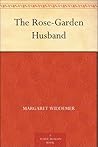
 The Rose-Garden Husband
by
Margaret Widdemer
My rating:
4 of 5 stars
A sweet romance from 1914. Not my usual fare, but I do like an occasional sentimental romance.
The backstory is tragic, but the present-day story is the opposite. Allan is a young man who, a few years ago, crashed his car, leading to the death of his fiancee (who was a lifelong friend) and injuring him so badly he can no longer walk or use one arm. His rather foolish mother has spent the subsequent years weeping over him, indulging him, and keeping him in a dark, quiet room. He is understandably depressed.
Now the mother is dying, and her brilliant solution is to get a wife for Allan who will look after him in her stead, because she doesn't trust his attendants to do so properly (even though his manservant is deeply loyal to him). She talks to an old school friend, who happens to know a candidate.
This candidate is our heroine, introduced at the beginning of the book as the "Liberry Teacher," which is what the children who come to the library where she works call her. Her given name is Phyllis. She's the orphaned daughter of a minister, left without much money when he died, and having to work long hours in not great conditions to scrape a living. She has no prospects of meeting anyone she'd want to marry, and she wants to escape her drudgery (even though she likes the children), so she agrees to marry Allan - a marriage of convenience, she thinks.
Of course this leads to mutual pining, misunderstandings, and an eventual happy-ever-after, because this is a romance, after all. It's well told, though, and I found it moving at times.
Certainly one could choose to disapprove of Phyllis. She's always a little conscious of being raised for better things and higher culture, and wishes that the poor immigrant children who use her library were cleaner and less... foreign. She uses a few terms about them and about the black servants she eventually has that wouldn't be used by someone like her today, though she's affectionate towards both groups. She's clearly in a wish-fulfillment fantasy along the lines of today's billionaire romances, though lower key (she just wants a rose garden and enough money to buy anything she wants, which turns out to be relatively minor extravagences). She's what the Regency would have called "missish" and this book calls "maidenly," which means she's very spooked by the idea of actually being married to a real man who she would have to...
associate with. But she's unfailingly kind, naturally cheerful (even if some of her cheerfulness comes from a sense of obligation), and mostly sensible and capable, though naive and with a limited experience of life, and sometimes emotional for understandable reasons. I chose to go with how the author clearly wanted me to regard her, and enjoyed the book as a result.
I found the book through a description in the back of another book I read from the same early-20th-century publisher, and picked it up off Project Gutenberg.
View all my reviews
 Magicians' Rivalry by H.L. Burke